6 Types Of Foods Against High Cholesterol
 Author: Ivan Red Jr.
Time for reading: ~1
minutes
Last Updated:
August 08, 2022
Author: Ivan Red Jr.
Time for reading: ~1
minutes
Last Updated:
August 08, 2022
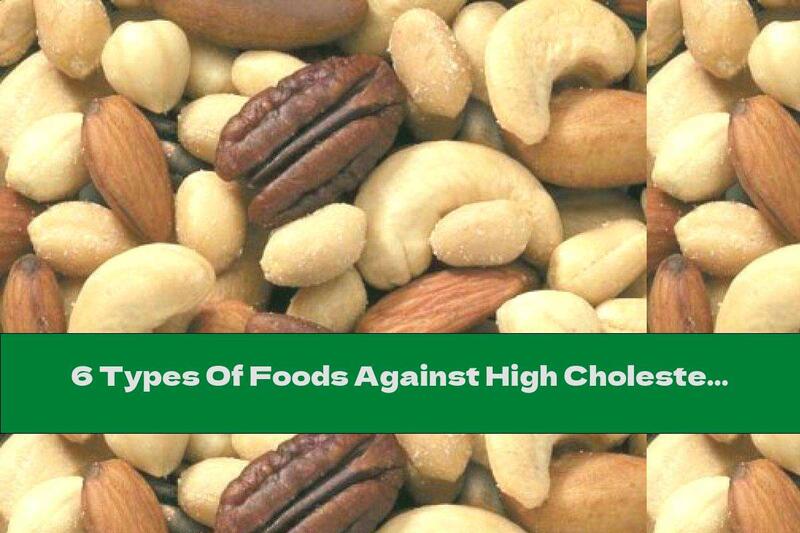
In order to achieve a balance in the levels of good and bad cholesterol, it is necessary to introduce very few lifestyle changes ...
Cholesterol is needed by the body to maintain certain functions and as a "building block" - for example, to synthesize hormones, is used to build cell membranes and to protect the nerves. It is a fatty substance that is synthesized by the body. Newly synthesized and absorbed through food cholesterol enters the liver. There it binds to proteins and lipoprotein complexes are formed, thanks to which it is possible to transport it in the blood.
We measure two types of lipoproteins, low density (LDL) and high density (HDL). The former is huge compared to those with high density. They "roll" from the blood into the arteries, where it is possible for cholesterol to separate from the surrounding proteins and enter the arterial wall, which over time leads to its thickening and reduction of its lumen.
Due to the smaller lumen, blood flow becomes difficult, conditions are created for the formation of blood clots. If thrombosis is present, the health risk of a cardiovascular or cerebrovascular accident becomes extremely high. These are the reasons why we call low-density lipoproteins "bad" cholesterol.
The action of small high-density lipoproteins in the arteries is radically opposite. What is special about them is that they "clean" the fatty substances from the arteries. That is why it is important to constantly monitor the type of fat we consume and maintain a balance in their levels. How does this happen and which fats give "bad" and "good" cholesterol in the blood?
Total and bad cholesterol in the blood jump when consuming saturated fats, those found in meat, milk, cream, butter, and more.
To achieve a balance in the levels of good and bad cholesterol, it is necessary to introduce very few lifestyle changes, for which it is not necessary to give up favorite foods such as eggs, cheese, red meat, and chocolate, say, British experts. Total cholesterol in the blood can be reduced by 20% in just three months, with the inclusion of appropriate foods in the menu, they say.
Related Articles
- The Role of Flour in Nutrition: Types, Benefits, and Recipes
- Nutrition for Respiratory Health: Supporting Your Lungs with the Right Foods
- The Ultimate Guide to High Gluten Foods: Benefits, Sources, and Recipes
- The Ultimate Guide to High Gluten Foods: Effects, Benefits, and Recipes
- The Role of Additives in Nutrition: Types, Common Additives, Regulations, and Health Concerns