Apples, Pears And Cauliflower Help To Lose Weight
 Author: Leticia Celentano
Time for reading: ~1
minutes
Last Updated:
August 08, 2022
Author: Leticia Celentano
Time for reading: ~1
minutes
Last Updated:
August 08, 2022
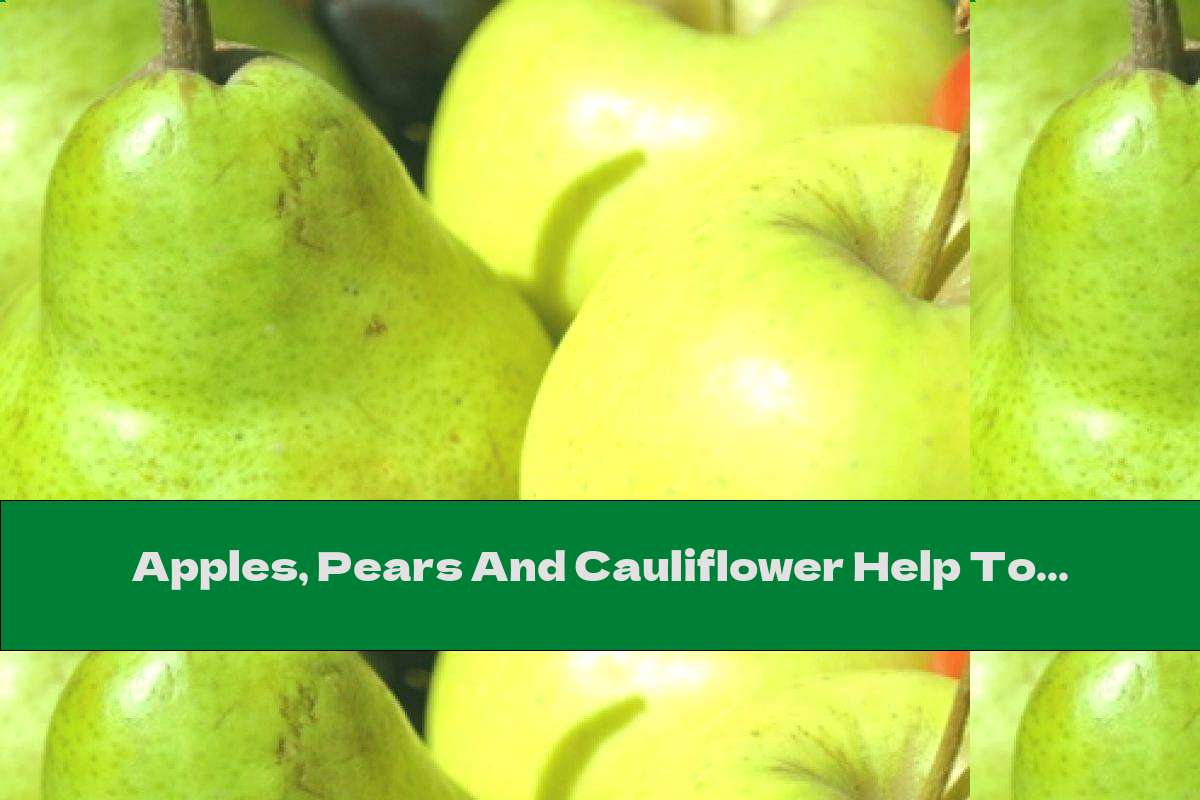
In this article, learn more about Apples, Pears And Cauliflower Help To Lose Weight. Included even as an extra portion during the day in the long run..
According to researchers from the School of Public Health at Harvard University, Bost, USA, consumption of certain vegetables and fruits can shorten the time to achieve results if you want to lose weight. While this may surprise people, whose menu usually includes fruits and vegetables, the results of the study show that apples, strawberries, berries and starch-free vegetables "work" for our finesse in the long run .
The researchers looked at data from 13,000 Americans who gave detailed information about the food they ate for a week every four years. The study is conducted over a period of 20 years.
Participants' body weights were also monitored, but more frequently every two years.
People who consumed an extra serving of fruits such as apples, pears, strawberries, berries, lost weight unintentionally and effortlessly - the researchers found that they are thinner by an average of 400 grams at the end of a four-year period. Far from these achievements were those who ate additional fruits - only 200 g, or vegetables - 100 g for the same period.
However, the achievements of the group were exceptional, consuming vegetables such as cauliflower, cabbage, Brussels sprouts, alabaster, turnips, radishes, green leafy vegetables and soy.
Additional achievements were reported when 5% of the daily caloric intake of other foods was replaced with these fruits and vegetables, and not just added an extra serving of them - plus another 400 g for 4 years.
Americans usually consume fruits and vegetables from their menu in the form of juices. The main vegetables they include are potatoes. This provoked experts to refine the guidelines for healthy eating , which are distributed to the population under government programs, so that people can make the right choice of foods suitable for maintaining the figure and prevention of obesity and related diseases.
The results of the study are published in PLoS Medicine.
Related Articles
- The Role of Water in Nutrition: Importance, Hydration, and Weight Management
- The Ultimate Guide to Hormone Type 5 Diet for Weight Loss and Health
- The Role of Hormones in Nutrition: Impact on Diet, Weight Management, and Health
- The Impact of Lifestyle Choices on Weight Management: Nutrition and Habits
- Lifestyle Choices Impacting Weight Management: Nutrition and Healthy Habits
Top Nutrition Articles Today
- . Dishes From Neighboring Countries That We Love: Potato Panca...
- . The Ultimate Guide to Vitamin E in Nutrition: Sources, Benef...
- . What To Cook With Sweet Potato
- . The Essential Role of Copper (Cu) in Nutrition: Sources, Ben...
- . Foods High In Folate And B12
- . Chicory: 15 Health Benefits, How To Drink, Contraindications...
- . Nutritional Benefits of Pizza: Key Nutrients, Healthier Opti...
- . The Role of Samarium in Nutrition: Benefits and Food Sources
- . The Delicious and Nutritious World of Minibrownies: A Guide...
- . Nutritional Benefits of Sheep Tallow: A Healthy Addition to...