Basic Principles Of Healthy Eating. Continuation
 Author: Alexander Bruni
Time for reading: ~3
minutes
Last Updated:
August 08, 2022
Author: Alexander Bruni
Time for reading: ~3
minutes
Last Updated:
August 08, 2022
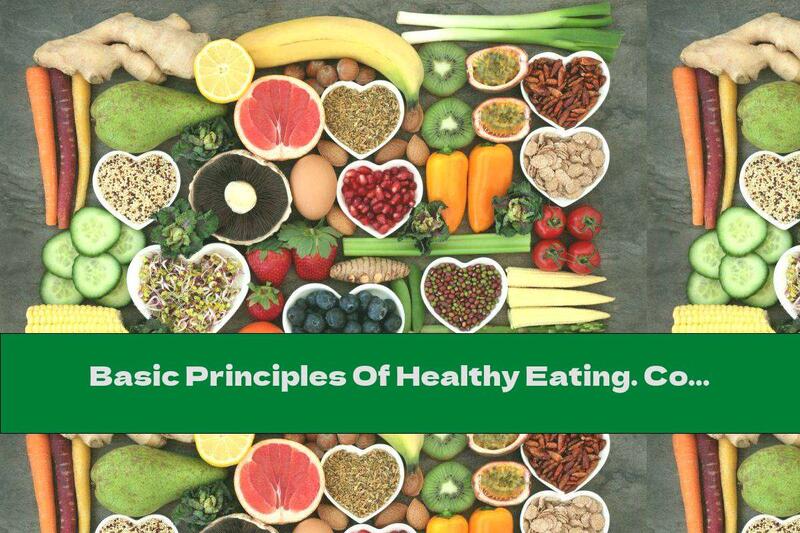
The distribution of food during the day and also during the week is important for its normal absorption and meeting the needs of the body.
Most nutritionists believe that food pyramids should give way to foods rich in essential nutrients and lower in energy value. In this respect, foods could be differentiated into the following three categories according to their biological value:
- Category A . These are the foods richest in essential nutrients. This group should include fruits and vegetables, which import the main micronutrients - vitamins and minerals. Here are the animal products that import complete protein. Of course, the latter should be recommended those that are lower in fat.
- Category B . This is the place of these products, which import essential nutrients, but at the same time are high in energy. In this category are the products of cereals, pulses and nuts.
- Category B . In this category are those products that contain almost no or no essential nutrients and at the same time import a lot of calories. This group includes fats, added sugar and alcoholic beverages.
This categorization of products gives grounds to propose a new food pyramid of national importance. It is based on vegetables and fruits, and the share of vegetables is slightly higher. Above them are milk and dairy products, and their share predominates over other products of animal origin. In the middle of the pyramid are placed the products of category B - cereals, legumes and nuts. Above them, at the top of the pyramid, the fat, added sugar and alcohol are arranged in sequence. In this form, it could be said that the arrangement of the products, according to their physiological significance, is more correct and optimally balanced.
Optimal distribution of food during the day . It is known that the diet of the majority of our population is unhealthy, and in most cases breakfast is symbolic or absent, lunch is on foot and insufficient, and dinner becomes abundant and high-energy. This requires compliance with the recommendation for at least three meals, in which breakfast should include 20 - 25% of the total amount for the day, lunch should be 40 - 45% and dinner the remaining 30 - 35%. However, the optimal distribution of food during the day should be in 4 intakes and they should be distributed as follows: breakfast - 20%, lunch - 40%, second breakfast - 10% and dinner - 30%.
Is daily or weekly food distribution healthier? According to most nutrition experts, specific recommendations for the optimal variety of products included in the daily menu have been given so far. There are schemes for daily intake of 5, 7, 11 and even more food groups. Logically, the intake of more products should be related to the import of more essential nutrients.
But should this be done daily and the body be loaded with many products, albeit in minimal quantities? It is currently considered unnecessary, as it is known that the body has sufficient mechanisms to optimally metabolize food intake within a few days. Therefore, it is appropriate instead of daily, the needs of individual foods to be marked as weekly and the assessment of their optimal intake to be made every 7 days.
This gives greater opportunities for variety in the diet on different days of the week and healthy optimization of food in the weekly menus. In this aspect, the food groups of category A must be present daily in the weekly menu, while the other foods can be included only on some of the days of the week. Given that bread is invariably present in the daily menu of the Bulgarian, the following weekly distribution of food can be offered as a compromise:
- 7 days vegetables and fruits;
- 7 days of cereals in moderation;
- 5-6 days milk and dairy products;
- 2-3 days meat and meat products;
- 1-2 days of fish;
- 1-2 days eggs;
- 1-2 days legumes and nuts;
- 1-2 days vegetarian menu. These days only fruits, vegetables, cereals, legumes and nuts are accepted.
The weekly balancing of food products allows the body not to burden its digestive potential on a daily basis and to optimally utilize the nutrients from the food.
Related Articles
- The Ultimate Guide to Hickory Smoked Bacon in Nutrition and Healthy Eating
- Nutritional Benefits of Fruit Skewers in Honey Syrup: A Delicious and Healthy Recipe
- Nutritional Benefits of Fruit Skewers in Honey Syrup: A Healthy and Delicious Snack
- The Nutritional Benefits of Salty Popcorn: A Healthy Snack Option
- The Nutritional Benefits of Popcorn: A Healthy Snack Option
Top Nutrition Articles Today
- . Which Foods Protect Against Cancer?
- . The Power of Mushrooms: Nutritional Benefits and Delicious R...
- . List of Foods that Contain Carrageenan: A Guide to Avoiding...
- . Carbohydrates In Wheat And Rice
- . How To Cook Roast Pork Ribs With Honey, Lemon And Ginger - R...
- . The Power of Beef Bones: Nutrition, Benefits, and Recipes
- . The Role of Monosodium in Nutrition: Benefits and Controvers...
- . Chicory: 15 Health Benefits, How To Drink, Contraindications...
- . Don't Eat These Foods If You Don't Want To Get Angry
- . Dietary Fats: From Enemy To Friend