Beer Acts As A Painkiller
 Author: Alexander Bruni
Time for reading: ~1
minutes
Last Updated:
August 08, 2022
Author: Alexander Bruni
Time for reading: ~1
minutes
Last Updated:
August 08, 2022
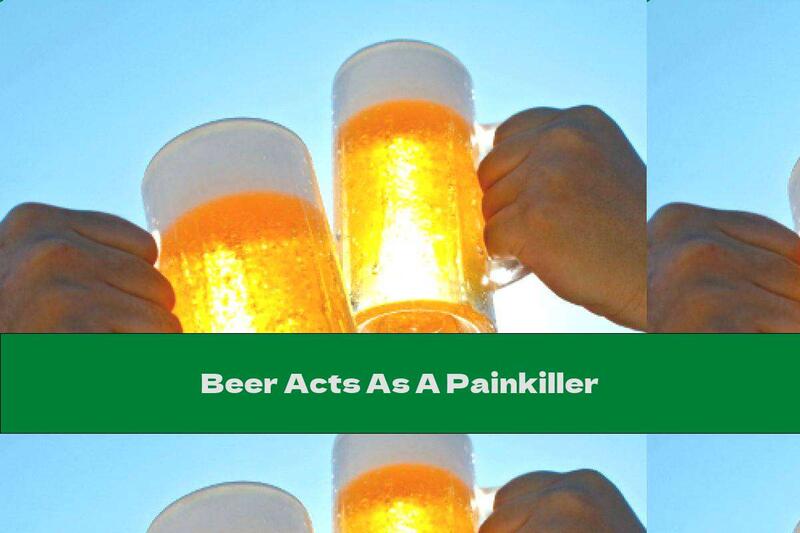
In this article, learn more about Beer Acts As A Painkiller. Two mugs of beer have a stronger analgesic effect.
Drinking two mugs of beer is much more analgesic than a paracetamol pill. That's according to a new study from the University of Greenwich, quoted by the Independent.
One liter of many people's favorite beer can reduce by a quarter the pain we feel, according to the analysis of 18 health studies. They prove that the pain decreases with an increase in alcohol content in the body by 0.08 percent.
"Our studies have shown that low-dose alcohol acts as an effective analgesic, showing clinically relevant reductions in pain intensity," the researchers said. And they recommend people who have chronic pain to increase beer consumption. However, they clarify that alcohol should not be a substitute for medication and should always be used as a painkiller. "Excessive beer can worsen the health of patients, so it is better for them to consult a doctor first, rather than self-medication with the drink, "commented Rosana O'Connor, head of the Alcohol and Drugs Directorate at the English Center for Public Health.
A number of studies have shown that many of the ingredients in beer can have a positive effect on the body if consumers do not overdo it. For example, light sparkling liquid contains the most hops. Other important substances include humulonic ingredients, lupulonic acids and prenylnaringenin. The first two groups have sedative properties that are much stronger than the same amount of ethanol taken in the form of other alcoholic beverages.
Penylnaringenine is one of the strongest phytoestrogens known in medicine. It has similar properties to estradiol, which is recommended for menopausal women.
Brewer's yeast contains yeast, which carries out the fermentation process. They break down maltose into glucose, which is further broken down into ethyl alcohol.
Another study shows that a compound found in one of the ingredients can significantly lower cholesterol, blood sugar and help reduce excess weight. According to the data, in the presence of the highest doses of xanthohumol, the levels of "bad" LDL cholesterol decrease by as much as 80%, those of insulin - by 42%, and those of a specific biomarker for inflammatory processes - by 78%.
Related Articles
- The Ultimate Guide to 100g Beef Protein: Nutrition Facts, Recipes & More
- Michelob Ultra Calories: A Low-Calorie Beer Option for Your Diet
- Michelob Ultra Calories: A Guide to Nutrition Facts, Diets, and Recipes
- The Role of Pituitary Gland in Nutrition: How Diet Impacts Hormone Regulation
- The Role of E114 in Nutrition: Health Impacts, Regulations, and Alternatives