Bread Does Not Make You Fat!
 Author: Alexander Bruni
Time for reading: ~1
minutes
Last Updated:
August 08, 2022
Author: Alexander Bruni
Time for reading: ~1
minutes
Last Updated:
August 08, 2022
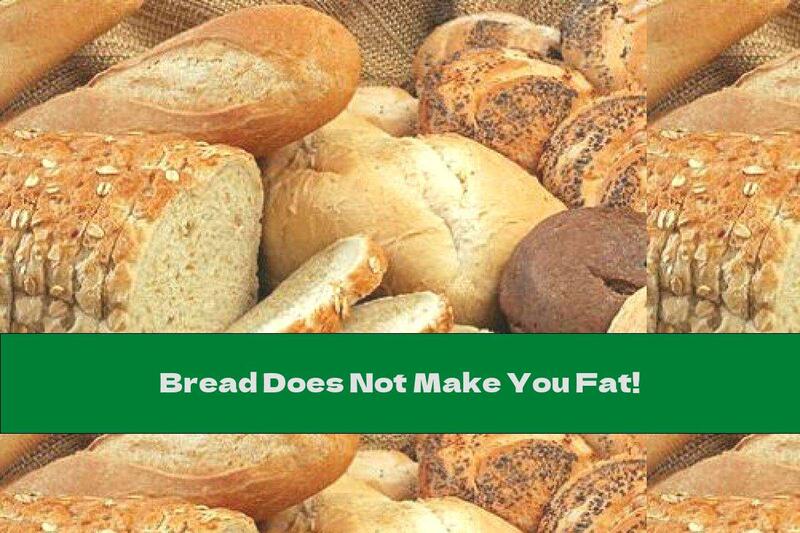
Bread contributes to a better nutritional balance, providing a significant portion of carbohydrates, fiber, vegetable fats, minerals and vitamins needed by the body.
An international team of experts claims that bread is not really as harmful to our health and weight as we all think. The relationship between carbohydrate consumption, glycemic index and body weight is not exactly what it is in society's understanding.
Experts are adamant that bread is a food that contributes to a better nutritional balance, providing a significant portion of carbohydrates, fiber, vegetable fats, minerals and vitamins needed by the body.
The amino acids contained in bread are especially necessary for the body to build its own proteins.
Bakery products also contain B vitamins, which are extremely important for the functioning of the brain and nervous system, as well as for the good condition of the skin and mucous membranes.
According to recent studies, people who consume larger amounts of carbohydrates are leaner.
Experts explain this by the fact that bread and pasta are foods that are slowly absorbed by the body, create a feeling of satiety and do not cause a sharp rise or fall in blood sugar levels.
The widespread misconception that bread is the enemy of our figure is the main reason why it should first be excluded from the diet. It is believed that white bread and pasta in general, especially sweets, are enemies of our figure.
However, nutritionists are adamant that reducing carbohydrates and proteins in the diet can have a short-term effect. In the long run, however, the ideal weight lies in a high-carbohydrate but low-fat diet.
Related Articles
- Nutritional Benefits of Millionaires Shortbread: A Delicious and Balanced Treat
- Nutritional Benefits of Panera Country Bread: A Healthy Choice for Your Diet
- Nutritional Benefits of Panera Country Bread: A Healthy Option for Your Diet
- Nutritional Value of Panera Country Bread: Benefits and Ways to Enjoy
- Exploring Panera Country Bread Ingredients for Nutrition and Flavor
Top Nutrition Articles Today
- . 7 Foods For Bigger And Firmer Breasts
- . The Role of e633 in Nutrition: Enhancing Flavor in Food Prod...
- . Peanut Butter - Composition, Benefits And Harms Of Its Consu...
- . The Power of Spinach: Health Benefits and Recipes
- . The Health Benefits of Nori: A Nutritious Seaweed for Thyroi...
- . List of Foods that Contain Carrageenan: A Guide to Avoiding...
- . The Role of Cellulose in Nutrition: Benefits, Sources, and T...
- . To Relieve Constipation - Eggplant
- . How To Freeze Hawthorn
- . Coriander Honey