Calcium Supplements - When And How Much?
 Author: Leticia Celentano
Time for reading: ~2
minutes
Last Updated:
August 08, 2022
Author: Leticia Celentano
Time for reading: ~2
minutes
Last Updated:
August 08, 2022
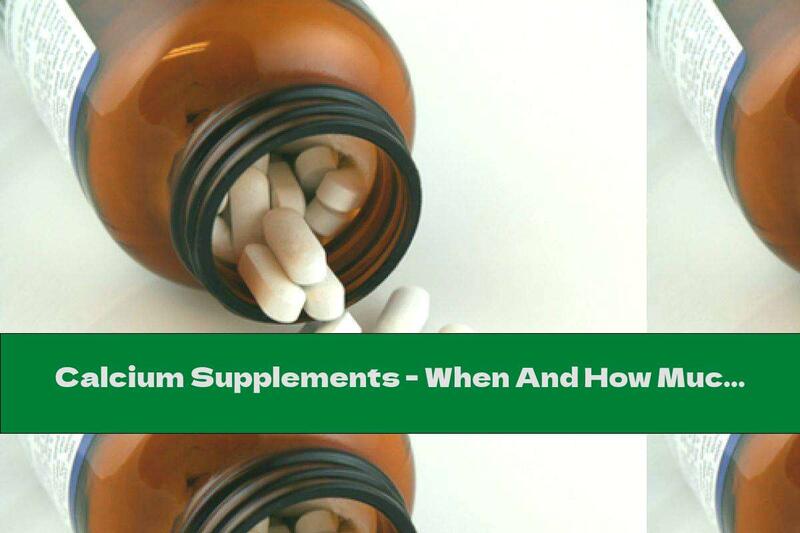
According to a new study, taking calcium supplements reduces the risk of short life expectancy compared to other minerals.
Taking calcium supplements reduces the risk of short life expectancy compared to multivitamins, iron, vitamin B6, folic acid, magnesium, copper and zinc. The findings are based on a study published in the British Medical Journal . It includes more than 40,000 adult women.
Calcium supplements are often prescribed, along with vitamin D , which helps the body absorb calcium, in women with osteoporosis . They are also used by healthy women who want to keep their bones strong, experts explain.
Another study from last year, conducted by New Zealand and British scientists, shows very different results. Calcium intake poses risks to the cardiovascular system , and in particular - the daily use of 1 g of calcium supplements increases the risk of heart attacks by 20%.
According to scientists, synthetic calcium cannot be absorbed by the body in the same way as it is obtained through food. When taking food supplements, the level of the element in the blood increases, which can lead to its deposition on the inner walls of blood vessels. The arteries lose their elasticity, and this is a prerequisite for various cardiac and vascular pathologies.
Dr Claire Bouring of the British Osteoporosis Association believes that 'taking calcium supplements can be justified in those who cannot get enough of the mineral through food, as well as in women with osteoporosis who are at increased risk of painful and disabling fractures. "
According to another study of 60,000 women, taking 700 mg of calcium a day is enough to prevent them from losing bone mass. However, increasing the use of the mineral above this level does not lead to additional benefits, according to the research team.
Taking more calcium than the recommended daily dose is no guarantee of reducing the risk of developing osteoporosis and bone fractures, according to a study published in the British Medical Journal .
The results show that taking 750 mg of calcium is the recommended daily dose for women around and over 50, which can reduce the risk of fractures and osteoporosis .
Increasing this amount is not a sure criterion for preventing the fragility of the bone structure, as the age factor also intervenes , the researchers say. However, lower amounts of calcium than the recommended amount are a risk factor for the development of osteoporosis and frequent bone fragility.
The amounts of calcium needed are strictly individual and depend on various factors, such as age, gender, climatic conditions, diet, exercise, the study said. In different countries, the recommended amounts of calcium vary in weight. In the United Kingdom, for example, this amount is 700 mg per day for women over 50, in the Scandinavian countries - is 800 mg, in the US - 1200 mg. In Bulgaria, the recommended daily intake for adults is 800 mg .
Consultation with a specialist is recommended to find the most appropriate way to get enough calcium among women, especially middle-aged, experts advise.
Related Articles
- The Ultimate Guide to Calcium Carbonate in Nutrition
- Propylene in Nutrition: Benefits, Recipes, and Supplements
- The Ultimate Guide to Vitamin E in Nutrition: Sources, Benefits, Supplements, and Recipes
- The Ultimate Guide to Vitamin E in Nutrition: Sources, Benefits, Supplements, and Recipes
- Nutritional Benefits of Cow Milk: Importance of Calcium, Vitamins, and Protein
Top Nutrition Articles Today
- . Grapefruit - For Colds And Flu
- . How To Freeze Quince
- . The Role of Sodium Malate in Nutrition: Benefits, Concerns,...
- . The Ultimate Guide to Potassium Nitrate in Nutrition
- . Myra E: Benefits for Nutrition, Diets, and Recipes
- . The Truth About Potato Chips: Health Effects and Alternative...
- . The Ultimate Guide to Hickory Smoked Bacon in Nutrition and...
- . 10 Foods You Can Eat On An Empty Stomach
- . Foods High In Folate And B12
- . The Essential Role of Copper (Cu) in Nutrition: Sources, Ben...