Coconut (coconut) - Useful And Harmful Properties
 Author: Joe Fowler
Time for reading: ~6
minutes
Last Updated:
August 08, 2022
Author: Joe Fowler
Time for reading: ~6
minutes
Last Updated:
August 08, 2022
CHAPTERS (Table Of Contents)
Coconut is a healthy and nutritious food, a rich source of useful medium-chain fats, minerals and vitamins. It produces a variety of products.
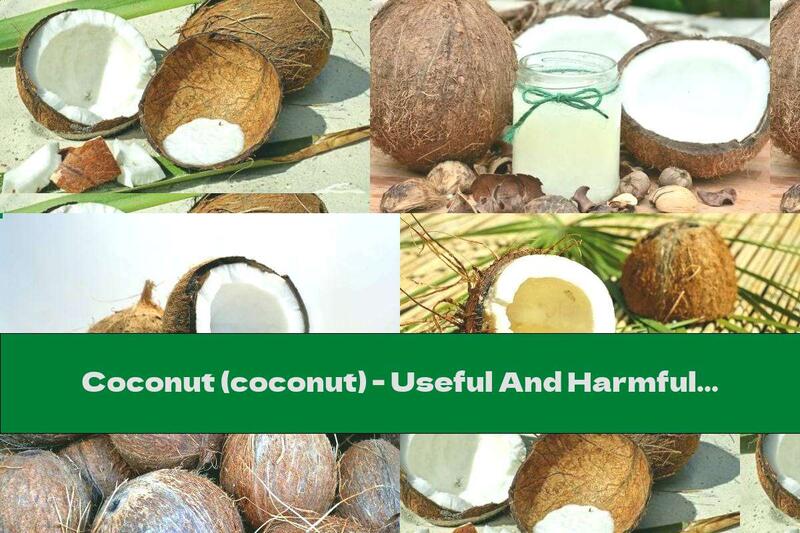
Coconut is a round fruit of the coconut palm (Cocos nucifera). It has a hard fibrous shell, a thin brown shell and a white inner part, which is consumed fresh or dried, in the form of bran or grated.
Coconuts have been grown in the tropics for more than 4,500 years, but have recently gained more popularity because of their taste, aroma, culinary use and potential health benefits.
Types of coconut products
Coconut is known to be a healthy and nutritious food. The coconut products that can be obtained are:
- fresh, raw coconut;
- coconut flour, coconut powder;
- coconut shavings;
- dried coconut;
- coconut water;
- coconut count;
- coconut milk;
- refined and virgin coconut oil.
The raw white inside of the coconut has a firm texture and a slightly sweet taste. It can be scraped and consumed, and dried can be used for cooking. In processed form you will usually find the fruit sliced or grated.
Coconut milk and cream are prepared by pressing the raw and grated inside of the coconut. It can be further processed and ground into flour. Coconut oil is also extracted from the inside of the fruit.
Nutritional composition of coconut
Coconut contains many nutrients, natural oils and antioxidants. Delivers mainly fats, source of: potassium, calcium, magnesium, phosphorus, vitamins E, C and B, folic acid, cellulose, natural sugars, proteins and carbohydrates. The minerals in the fruit are involved in many functions in the human body. It contains significant amounts of manganese - an essential trace element for bone health and metabolism of carbohydrates, proteins and cholesterol. It is also a rich source of copper and iron - two important minerals that help form red blood cells. SeleniumCoconut is an important mineral and antioxidant that protects cells in the body. Consumption of its white inner part improves digestion and vision, restores strength, increases immunity, prevents the development of cardiovascular disease and cancer.
Nutritional value per 100 grams of raw coconut inside:- 354 calories;
- 3 grams of protein;
- 15 grams of carbohydrates;
- 9 grams of fiber;
- 33 grams of fat;
- trace elements: manganese (75% of DP *); honey (22% of DP *); selenium (14% of DP *); magnesium (8% of DP *); phosphorus (11% of DP *); iron (13% of DP *); potassium (10% of DP *);
- 650 calories;
- 7.5 grams of protein;
- 25 grams of carbohydrates;
- 18 grams of fiber;
- 65 grams of fat;
- trace elements: manganese (137% of DP *); honey (40% of DP *); selenium (26% of DP *); magnesium (23% of DP *); phosphorus (21% of DP *); iron (18% of DP *); potassium (16% of DP *);
Many of the fats in coconut are in the form of medium chain triglycerides. The human body metabolizes them differently from other types of fats, absorbs them directly from the small intestine and quickly uses them for energy.
Research on the benefits of medium-chain fats in obese people has found that these fats can promote body fat loss when eaten instead of long-chain saturated fats of animal origin.
Useful properties of coconut
Coconut foods lower the level of "bad" cholesterol, have a beneficial effect on immunity, stimulate the reproduction of healthy intestinal microflora, strengthen bones and teeth.
The calcium in the soft part of the fetus makes it very useful for people who are prone to developing osteoporosis. And vitamin E improves reproductive function.
The oils contained in coconut help burn excess fat, thus maintaining a healthy body weight.
Coconut has anti-inflammatory and antimicrobial action. Finds external application - cleanses the skin, makes it soft and supple.
1. A healthier heartThe people of the Polynesian islands often consume coconut in their daily menu. Studies have found that these people have a lower incidence of heart disease compared to people who follow the "Western diet." However, Polynesians consume more fish and less processed food, so it is not clear whether these data are due to the consumption of coconut or other factors in their diet.
Another study of 1,837 women in the Philippines found that those who ate more coconut oil had not only higher levels of good (HDL) cholesterol, but also higher levels of bad (LDL) cholesterol and triglycerides. The conclusion is that coconut oil has a neutral effect on cholesterol levels.
Consumption of virgin coconut oil, which is extracted from the dried coconut kernel (copra), can reduce belly fat. This is especially helpful because excess belly fat increases the risk of heart disease and diabetes.
A study of 20 obese men found that their waist size decreased by an average of about 3 centimeters after consuming 30 milliliters a day of virgin coconut oil for 4 weeks.
2. Maintains blood sugar levelsCoconut is low in carbohydrates and high in fiber and fat, which helps control blood sugar. The high fiber content helps to slow digestion, improve insulin resistance and regulate blood sugar levels.
3. Contains powerful antioxidantsCoconut contains phenolic compounds - antioxidants that protect cells from oxidative damage. These are:
- gallic acid;
- caffeic acid;
- salicylic acid;
- p-coumaric acid.
Coconut has an antioxidant effect and the ability to cleanse the body of harmful free radicals.
Polyphenols in the fetus can prevent the oxidation of bad (LDL) cholesterol and reduce the likelihood of plaque formation in the arteries, which could increase the risk of heart disease.
4. Easily added to the dietCoconut in the form of coconut shavings, water, milk or other similar product gives a pleasant taste to dishes. Its texture and characteristic aroma combine very well with fish dishes, curry, rice dishes or even shrimp.
Some coconut products in stores contain added sugar, which makes them unsuitable for preparing certain dishes and for adding to diets for weight loss.
Coconut shavings can be added to pastries because they add a touch of natural sweetness and juiciness to desserts, pastries, candies, biscuits, dairy products, muffins and bread.
Sprinkling with raw coconut gives a pleasant texture and tropical taste to the oatmeal. Added to pudding or yogurt is just as good and tasty a source of calories for people who want to gain weight.
Coconut flour is used to make pastries as a substitute for wheat flour. It does not contain gluten and is a good option for people who monitor their daily caloric intake. As it is not a grain product, coconut flour is also useful for people who follow a paleo diet that excludes cereals such as regular wheat flour. It should be borne in mind that coconut flour does not swell and does not absorb many liquids like wheat and other types of flour.
Coconut oil is a delicious and heat-resistant fat that can be used for baking and sautéing.
Contraindications
Allergic reactions to coconut are relatively rare. There are few reports of allergic reactions to coconut consumption, including severe stomach upset and anaphylaxis. In these cases, some people have been found to be allergic to tree nuts such as walnuts and hazelnuts, as well as to coconut. Allergic reactions to similar proteins present in both foods have been identified - a concept known as cross-reactivity. There are also cases of individual allergy to coconut.
The risk of a coconut allergy in a person known to be allergic to peanuts or tree nuts is very low.
Products derived from coconuts, such as coconut diethanolamide (CDEA) or cocamide diethanolamine (cocamide DEA), can cause allergic contact dermatitis. These products are present in cosmetics, hair shampoos, moisturizers, soaps, detergents and washing powders. It may present with an itchy rash a day or two after contact with the allergen and take several days to resolve.
Coconut contains large amounts of fat and calories. Depending on caloric needs, eating coconut can promote weight gain if you do not take into account the excess calories in the diet.
Moderate consumption of coconut is recommended, and if people at risk of developing heart disease, it is necessary to consult a personal physician.
Related Articles
- The Role of Sodium Methyl Para-Hydroxybenzoate in Nutrition: Preservative Properties & Health Concerns
- The Role of Functional Properties in Muffins: Nutrition, Diets, and Recipes
- The Functional Properties of Muffins in Nutrition: A Comprehensive Guide
- Nutritional Benefits of Functional Properties in Muffins: A Comprehensive Guide
- Functional Properties of Muffins in Nutrition: A Complete Guide