Coconut Oil Is More Harmful Than Lard And Butter Combined
 Author: Victoria Aly
Time for reading: ~1
minutes
Last Updated:
January 27, 2026
Author: Victoria Aly
Time for reading: ~1
minutes
Last Updated:
January 27, 2026
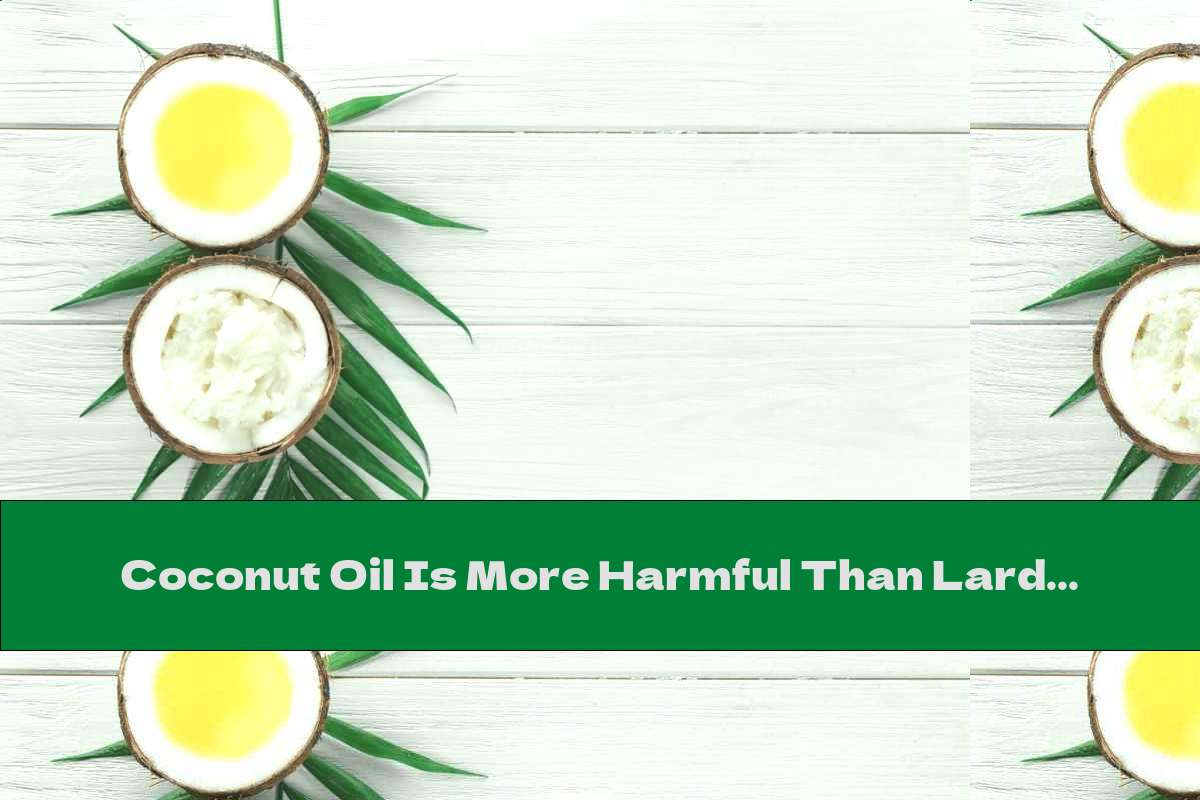
Experts say that coconut oil is more useful on the skin as a moisturizer than in the abdomen as a food.
Coconut oil is a vegetable fat that is very popular among advocates of healthy eating. However, the popularity of the product and the way it is advertised can hide some important features that each of us should be familiar with.
For example, in her 50-minute lecture entitled "Coconut Oil and Other Eating Mistakes," Karin Michels, director of the Institute for Prevention and Tumor Epidemiology at the University of Freiburg and a professor at Harvard School of Public Health, cited the famous product for "Pure poison" .
This is not the first time that coconut oil has come under fire. "Once you raise your cholesterol, you run the risk of heart disease ," cardiologist Dr. Robert Segal, who is also the founder of Manhattan Cardiology and co-founder of LabFinder.com , told ABC News . Dr Segal goes on to say that "what some people don't realize, because instead of doing research, there are trends, is that coconut oil actually has more fat than butter and lard."
Dr. Segal's statement is also supported by the American Heart Association, according to which 37% of nutritionists agree that the product is healthy (for reference only, coconut oil contains over 80% saturated fat, while lard contains 40% and butter - about 27%).
For those concerned about their cholesterol levels , the American Heart Association recommends "reducing saturated fat to no more than 5 to 6 percent of total daily calories. For someone who consumes 2,000 calories a day, that's about 11 to 13 grams of saturated fat. "
Still, coconut oil has its pros . According to experts, it is more useful on the skin, where it serves as a moisturizer, than in the abdomen, where it is likely to cause a heart problem. It is also important to note that scientists such as Dr. Segal and Prof. Michels talk only about the consumption of liquid coconut oil, which has naturally undergone processing, and not about coconut as a fruit that contains beneficial fatty acids.
Related Articles
- Nutrition Guide: Fruitskewers in Honey Syrup - Benefits, Recipes, and More
- The Ultimate Guide to Vitamin E in Nutrition: Benefits, Sources, and More
- The Ultimate Guide to Avocado Nutrition: Benefits, Recipes, and More
- The Ultimate Guide to Yogurt: Benefits, Recipes, and More
- Yeast in Nutrition: Benefits, Recipes, and More
Top Nutrition Articles Today
- . Breakfast Pizza
- . Health Benefits Of Vitamin C
- . Night Nutrition: Importance, Benefits, and Best Foods to Eat
- . The Ultimate Guide to Metataric Acid in Nutrition: Sources,...
- . Calories In A Piece Of Bread
- . How To Cook Spicy Green Tea With Turmeric, Lemon Juice And G...
- . Sushi For Beginners. How Easy It Is To Spin Sushi Rolls
- . When Is It Better To Eat Fruit?
- . The Essential Guide to Nutrients in Nutrition: Importance an...
- . How To Cook Mini Sandwiches With Cherry Filling - Recipe