Dietary Recommendations For Infectious Patients
 Author: Maryam Ayres
Time for reading: ~2
minutes
Last Updated:
August 08, 2022
Author: Maryam Ayres
Time for reading: ~2
minutes
Last Updated:
August 08, 2022
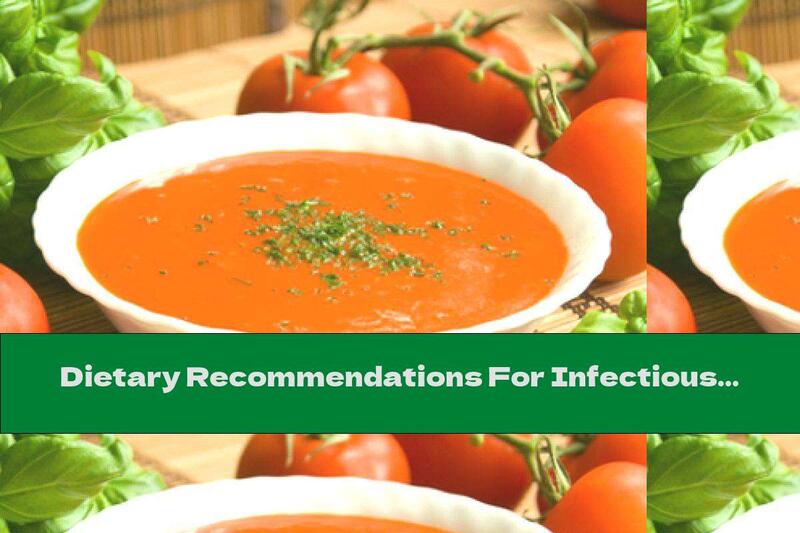
In this article, learn more about Dietary Recommendations For Infectious Patients. In infectious disease, the body's energy needs are increased..
The variety of infectious agents also determines the significant number of different infectious diseases. Depending on the front door and the specific location of pathogenic microorganisms, the infectious process affects different organs and systems.
Nutritional recommendations are determined by which organs are directly affected by the infectious process and what the general condition of the patient is. The purpose of the diet is to improve the condition and speed up recovery , but in parallel with the appropriate treatment.
It is characteristic of infectious diseases that the body's metabolism increases. This is one of the reasons for the need to increase energy intake. Patients often complain of decreased or absent appetite. In these cases, it is recommended to feed meat broths, which contain extracts that stimulate the secretion of digestive enzymes . In turn, enzymes are involved in converting ingested food into easily digestible compounds.
It is recommended to increase protein intake at the expense of fat. The reason is the increased catabolic processes. 2/3 of the protein import should be of animal origin (chicken, fish), and 1/3 of vegetable.
Fever and fever are related to the loss of water and electrolytes during sweating. In the presence of diarrhea, these losses become even greater. This is the reason why infectious patients should be monitored for adequate fluid intake, be it in the form of fruit juices, tea, soups or water. The daily intake in healthy people is determined by multiplying the weight of 30 ml. However, with increased water loss, it is necessary to increase fluid intake.
Eating more fruits and vegetables is important for getting enough minerals and vitamins. Vitamins with pronounced antioxidant properties - vitamin E, C and A - are of major importance . Rich in vitamin C are rose hips, kiwi, cabbage, tomatoes, citrus fruits. Significant amounts of vitamin E are found in wheat germ, nuts, parsley and others.
The trace element selenium also has antioxidant properties. Rich in this element are Brazil nuts, garlic, some seafood, mushrooms and others.
In patients with infectious gastroenteritis there is a disturbed balance of the normal intestinal flora. Taking antibiotics affects both pathogenic bacteria and "beneficial intestinal bacteria". This is the reason for the need to include a probiotic . Probiotics can be supplied from natural or artificial sources. Natural sources are yogurt, pickles, sauerkraut, kefir and others.
When affecting the gastrointestinal tract, it is recommended to consume sparing food - without high-fiber products (beans, cabbage, lentils, soy, wholemeal bread). From fruits and vegetables should be selected those that do not have thick and rough shells, causing irritation of the gastric and intestinal mucosa.
Infection with certain intestinal viruses (eg rotaviruses ) results in transient lactase deficiency (lack of an enzyme that breaks down milk sugar). This necessitates the appointment of a temporary low- or lactose-free diet, as otherwise the inability to absorb milk sugar leads to increased diarrhea.
Healthy eating is one of the main factors related to increasing the body's immune system and thus providing protection against a number of infectious agents. 3380
Related Articles
- The Ultimate Guide to Buffer 500 in Nutrition: Benefits, Sources, and Intake Recommendations
- Nutrition and Gastroparesis: Causes, Symptoms, and Dietary Recommendations
- Vitamin 466: Importance, Sources, Benefits, Deficiency, and Intake Recommendations
- The Role of Water in Nutrition: Importance, Benefits, and Recommendations
- The Role of Water in Nutrition: Importance, Benefits, and Recommendations
Top Nutrition Articles Today
- . Steroids in Eggs: Separating Fact from Fiction | Nutrition a...
- . How To Cook Caramel Cream Mousse (for Cakes And Pastries) -...
- . Breastfeeding A Baby With Low Blood Sugar
- . Flatizza: A Healthier Alternative to Traditional Pizza
- . Understanding Acidity Regulators in Nutrition: Types, Benefi...
- . E515: Potassium Sulphates and Potassium Bisulphates - Functi...
- . Are Simple Sugars The Culprits For Most Diseases
- . The Role of Disodium Diphosphate in Food: Uses, Health Conce...
- . Hydrochloric Acid in Nutrition: Importance, Effects, and Sup...
- . Is It Filled With Carbonated Water?