E123 (amaranth) - The Dangerous Color In Food
 Author: Mark Velov
Time for reading: ~2
minutes
Last Updated:
August 08, 2022
Author: Mark Velov
Time for reading: ~2
minutes
Last Updated:
August 08, 2022
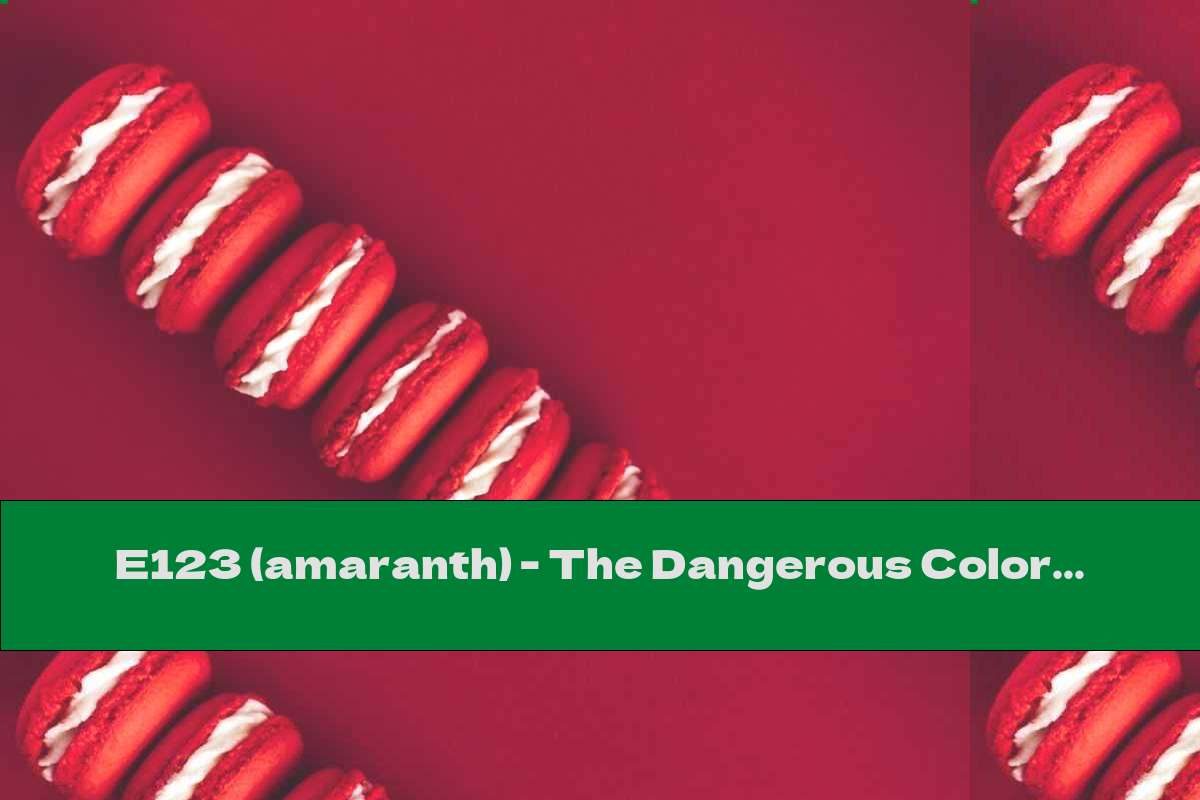
E123 is a food coloring known as amaranth and is banned in the United States but not in Europe.
As much as we want, it is difficult to find a food product in supermarkets that does not contain in the description of the ingredients at least one of the so-called. E-ta. Legislative measures today require the most detailed description of the composition of processed foods and manufacturers are required to indicate all artificial ingredients in the products they offer.
Therefore, E-s already have a constant presence on the label with the content of each food product.
And although there are proven safe ingredients among the labeled E and number, the effect of most of them is still not fully understood. At this stage, some of them are even considered dangerous to the health of consumers.
The substance, labeled E123 , is a dye known as amaranth . It is so marked due to its proximity to the flowers of the plant bearing the same name, and better known in our country as sagebrush . E123 gives a dark red to purple color to the products to which it is added and does not change their taste.
Originally imposed in the cosmetics and textile industries, today amaranth is increasingly used in the food industry . It has been found that most often it is included in the composition of confectionery (lollipops, cakes and other pastries), jellies, soups and more. It is even used to darken the color of fruits when canning them. In recent years, E 123 has also been used to improve the color of wines, liqueurs and other alcoholic beverages.
E123 is a water-soluble substance and its presence in the products we consume can be easily proven if the water turns red after washing.
Permission to use amaranth in the food industry is still a matter of local decisions in individual countries. E123 is freely used in the European Union, but is banned from use by the US Food and Drug Administration as a potential carcinogen . Its effect in the body is not yet fully understood, but it is assumed that it carries a number of negatives.
Clinical studies have shown that E123 may be associated with an increased risk of asthma and eczema or with exacerbation of these conditions. There is also evidence that foods containing amaranth provoke hyperactivity in children.
Until the real dangers of E123 entering the body are clarified, it is desirable to avoid products that contain it in their composition or to consume them as rarely as possible.
Related Articles
- Nutrition for Respiratory Health: Supporting Your Lungs with the Right Foods
- The Ultimate Guide to High Gluten Foods: Benefits, Sources, and Recipes
- The Ultimate Guide to High Gluten Foods: Effects, Benefits, and Recipes
- The Ultimate Guide to Lactic Acid in Nutrition: Benefits, Food Sources, and Recipes
- The Nutritious World of Wendy's Salads: A Healthy Fast Food Option
Top Nutrition Articles Today
- . Beef (veal) Tongue - Health Benefits For The Body And Use In...
- . The Ultimate Guide to Amylase in Nutrition: Benefits, Source...
- . The Nutritional Benefits of Scotch: Improving Cardiovascular...
- . How To Reduce Appetite
- . How To Cook Risotto With Tomatoes, Parmesan And Basil - Reci...
- . List of Foods that Contain Carrageenan: A Guide to Avoiding...
- . The Role of Raising Agents in Nutrition: Types, Effects, and...
- . The Role of Sodium in Soups: Impact on Health and Tips for H...
- . Carbs to Sugar Conversion Chart: Monitoring Carb and Sugar I...
- . Diet After Surgery Of The Small And Large Intestine