Green Tea Contains Catechins - What Do They Do?
 Author: Joe Fowler
Time for reading: ~1
minutes
Last Updated:
August 08, 2022
Author: Joe Fowler
Time for reading: ~1
minutes
Last Updated:
August 08, 2022
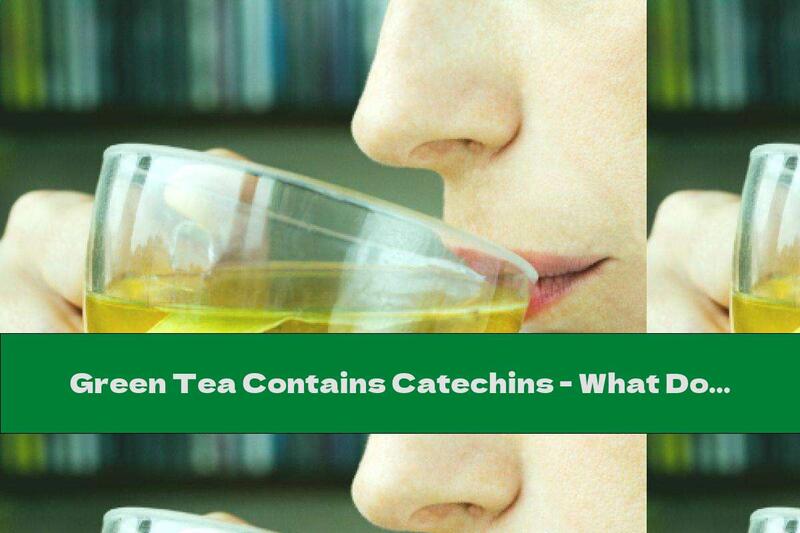
Intake of green tea provides antioxidants for the whole body, but they are most useful for the brain and cancer prevention.
Plants used by humans for food purposes are rich in phytonutrients - substances useful for metabolism of plant origin. The phytonutrient with the highest content in green tea is called epigallocatechin-3-gallate , epigallocatechin ester and gallic acid. The concentration of this specific catechin is about 73 milligrams per 1 gram of green tea.
Catechins are natural phenolic antioxidants . Antioxidants are compounds that suppress oxidative stress over other molecules. In chemical oxidation reactions, free radicals are often formed - atoms, molecules or ions that have an unpaired ( free ) electron in their outer shell.
Through it, free radicals are able to carry out chemical interactions with almost any substance with which they come into contact. In this way, radicals damage many cells and tissues, but antioxidants are able to neutralize them before they harm.
In addition to reducing oxidative damage to the whole body, ketakhin in green tea has a strengthening effect on the brain . A 2012 study published in Molecular Nutrition & Food Research found that epigallocatechin-3-gallate enhances cognitive function and memory . This occurs in the hippocampus , the area of the brain where memories are formed and which is most affected by the development of neurodegenerative diseases such as Alzheimer's and Parkinson's. There, the beneficial chemical promotes and supports neurogenesis - the creation of new neuronal cells.
Another study from 2011 reveals how the antioxidant power of epigallocatechin-3-gallate is sufficient to suppress the development of cancer cells in tissues of the stomach, lungs, colon and others. In addition, the molecule is even able to help kill cancer cells.
Related Articles
- The Nutritional Value of Potato Chips: How They Fit Into a Healthy Diet
- The Truth About E477 in Food: What You Need to Know
- The Nutritional Value of Potato Chips: What You Need to Know
- The Nutritional Value of Lays Potato Chips: What You Need to Know
- E 631: What You Need to Know About This Food Additive
Top Nutrition Articles Today
- . Healthy Food For Modern Man
- . Sea Buckthorn: Health Benefits And Harms
- . List of Foods that Contain Carrageenan: A Guide to Avoiding...
- . The Importance of Micronutrients in Chicken: A Complete Guid...
- . Steak Label
- . The Truth About Potato Chips: Health Effects and Alternative...
- . The Diet �������� 7: A Comprehensive Guide to Nutrition and...
- . The Role of BHT in Nutrition: Benefits, Safety, and Common F...
- . The Role of E500ii in Nutrition: Uses, Nutritional Impact, a...
- . Foods High In Folate And B12