Honey - The Nightmare Of Bacteria
 Author: Ivan Red Jr.
Time for reading: ~1
minutes
Last Updated:
August 08, 2022
Author: Ivan Red Jr.
Time for reading: ~1
minutes
Last Updated:
August 08, 2022
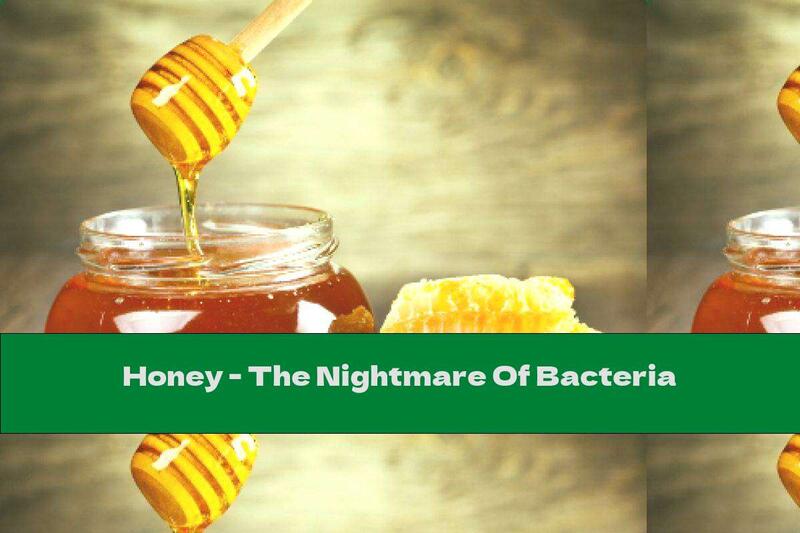
In this article, learn more about Honey - The Nightmare Of Bacteria. Honey "sucks" water from bacteria, thus making them useless..
Honey , in addition to being a delicious bee product, is also a powerful tool for fighting bacteria . The bee product has the property to strengthen immunity , to aid digestion, as well as to relieve the symptoms of colds .
Since ancient times, honey has been used as a preventive measure against wound infection . It has several basic properties that help fight infections.
Honey contains about 17% water, and most of it is sugar . The two main types of sugar in honey are glucose and fructose and attract water. The bee product is a very saturated solution, so it does not dissolve at room temperature, but becomes sugary over time. In chemical terms, this means that he needs water .
When the bacterium enters the body, honey counteracts by sucking water from the foreign body, which makes the bacterium practically useless. Honey does not contain enough water for bacteria to live in it. For this reason, it does not spoil.
However, sugar is not the only ingredient that turns honey into a powerful antibacterial agent. It also contains glucose oxidase, which makes it highly acidic - an environment in which it is almost impossible for bacteria to grow. When glucose oxidase is broken down, it is converted to hydrogen peroxide, which destroys the cell walls of bacteria .
The sweet bee product also contains the bee defensin-1 protein . It is part of the immune system of bees and its function is to protect them against bacteria , especially those that cause disease.
A 2010 study found that honey can help heal burns and skin infections, making it an antioxidant.
Related Articles
- The Power of Honeysuckle: Health Benefits and Recipes
- Fruitskewers in Honey Syrup: Nutritional Benefits and Recipes
- Nutritional Benefits of Fruit Skewers in Honey Syrup: A Delicious and Healthy Recipe
- Nutrition Guide: Fruitskewers in Honey Syrup - Benefits, Recipes, and More
- Nutritional Benefits of Fruit Skewers in Honey Syrup: A Healthy and Delicious Snack
Top Nutrition Articles Today
- . List of Foods that Contain Carrageenan: A Guide to Avoiding...
- . The Importance of Micronutrients in Chicken: A Complete Guid...
- . 10 Day No Sugar No Carb Diet
- . The Power of Chaga Mushroom in Nutrition: Benefits, Uses, an...
- . Calories In 3 Strawberries
- . The Truth About Potato Chips: Health Effects and Alternative...
- . Can You Take A Bath When You Have A Cold?
- . The Power of Pear Puree: Nutrition, Health Benefits, and Rec...
- . The Nutritional Value of Hickory Smoked Bacon - A Complete G...
- . Sea Buckthorn: Health Benefits And Harms