How Should We Eat With Diabetes?
 Author: Dean Rouseberg
Time for reading: ~3
minutes
Last Updated:
August 08, 2022
Author: Dean Rouseberg
Time for reading: ~3
minutes
Last Updated:
August 08, 2022
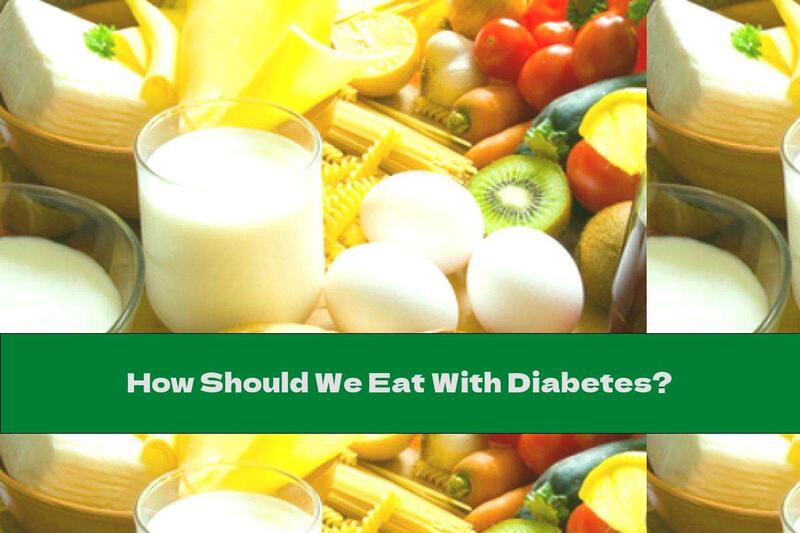
In this article, learn more about How Should We Eat With Diabetes?. And what should we consider?.
Although different experts have differing views on the details of diet in diabetes, there is a broad consensus on the substance of the issue - calories should be limited, simple sugars should be severely limited, carbohydrate intake should be closely monitored and be implemented mainly in the form of the so-called. complex carbohydrates.
Simple carbohydrates, also called simple sugars, are low molecular weight carbohydrates. The low molecular weight is partly responsible for their sweet taste. These are the well-known sucrose (white crystalline sugar), fructose (fruit sugar), and glucose (blood sugar). Simply put, a molecule of sucrose consists of one molecule of glucose and one molecule of fructose. The body can convert glucose into fructose and vice versa.
What happens when we take sucrose - white sugar. In the digestive tract, sucrose is broken down into its main building blocks - glucose and fructose. They pass from the intestines into the blood and if we measure our blood sugar (glucose), we will find the corresponding increase. However, we must also pay due attention to fructose. Although it is a simple sugar, it is not glucose ( blood sugar), but it can become her. Glucose and fructose are isomers of each other ... The important thing is that the body can convert fructose into glucose. This means that when we take in too much fructose, the excess of it (more precisely, part of it) is converted into glucose and thus also contributes to a rise in blood sugar. Many diabetics underestimate fructose. Although the details of its significance for the disease are incompletely clarified and the recommendations of experts differ in many respects, it should be known that it is a type of sugar that should not be overdone.
It can be summarized as follows. Anything sweet is a potential danger and should be avoided. This is especially true for confectionery. Honey, although not a confectionery, is also particularly dangerous for diabetics. It contains sucrose and equal amounts of glucose and fructose - the so-called. invert sugar. The latter, by the way, is obtained by the decomposition of sucrose in its interaction with the water contained in honey. Equal amounts of glucose and fructose (sometimes called glucose-fructose syrup) are a common sweetener in many beverages. It is not suitable for diabetics! Also, fructose is often used as a sweetener, often promoted as "safe" or "suitable" for diabetics. Although, as mentioned, the details of this are not fully understood, diabetics should avoid any simple sugar, be it fructose. Only sweeteners that are not absorbed can be considered truly safe and appropriate for diabetics.from the body and do not contain calories. They do not increase blood sugar, unlike fructose, which can be converted to glucose and therefore also contributes to the development and symptoms of diabetes.
The only medically acceptable source of simple sugars for diabetics is fresh fruit. They contain less glucose and sucrose and more fructose. Of course, the complete elimination of the intake of simple sugars is practically impossible. It is not even necessary. In the course of the obligatory supply of vitamins and minerals from fresh fruits, they also take certain amounts of simple sugars - mostly fructose (which is less harmful and undesirable) and glucose and sucrose. This has no harmful consequences, as long as it is moderate and reasonable. For example, no doctor would ever oppose taking a pound of apples a day or a pound of oranges a day. However, most doctors would be in favor of replacing carbohydrate-rich fruits such as bananas with lower-calorie citrus fruits, especially if they are taken regularly.
Expect complex carbohydrates in the sequel.
Related Articles
- Nutrition for Respiratory Health: Supporting Your Lungs with the Right Foods
- Boost Digestive Health with Buffer 500 - Benefits & Recipes
- Boost Your Health with Buffer 500: Benefits, Recipes, and More
- Nutrition and Libido: Enhance Your Sex Drive with the Right Foods
- Nutrition and Libido: Boost Your Sex Drive with Healthy Eating
Top Nutrition Articles Today
- . The Importance of Carotene in Nutrition: A Complete Guide
- . Cochineal Extract Food List: Nutritional Value, Health Benef...
- . The Truth About Potato Chips: Health Effects and Alternative...
- . The Ultimate Guide to Lean Meat in Nutrition: Benefits, Type...
- . The Role of Water in Nutrition: Importance and Benefits
- . E551: The Food Additive You Should Know About
- . Camel Meat
- . The Nutritional Benefits of Figs: A Fiber-Rich Fruit Packed...
- . 7 Foods For Bigger And Firmer Breasts
- . Foods For A Regular Stomach