How To Cook Let's Make A Cup Of Tea In Different Parts Of The World - Recipe
 Author: Ivan Red Jr.
Time for reading: ~1
minutes
Last Updated:
August 08, 2022
Author: Ivan Red Jr.
Time for reading: ~1
minutes
Last Updated:
August 08, 2022
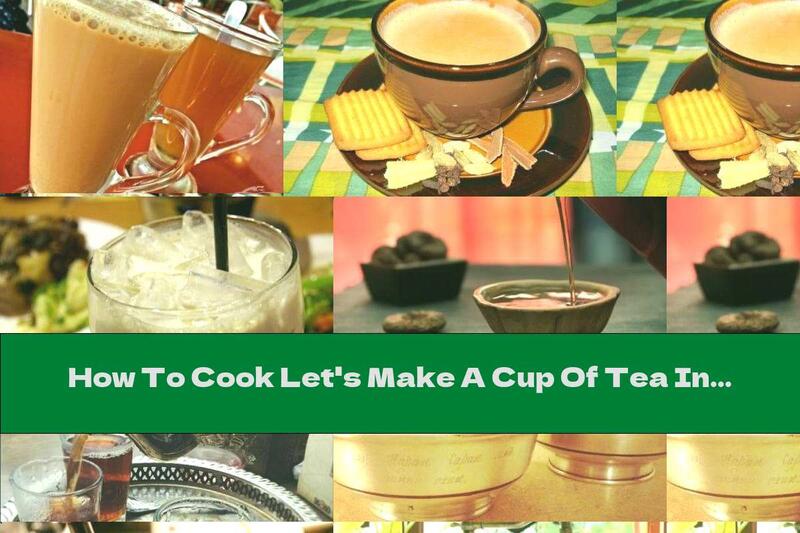
Learn how to cook "Let's make a cup of tea in different parts of the world - Part Two". Delicious recipe.
We continue with our fragrant tea journey to find out what a cup of tea looks like in different parts of the world . After being in the United States, Russia, England, Tibet, Turkey, Morocco, Taiwan and several other places, today we will jump to Pakistan, Thailand, China, but let's not reveal the route ... See for yourself!
Pakistan is characterized by "masala" tea , which is made with butter and spices.
In Thailand, the drink is made from traditional herbs, ice and milk.
The favorite tea of the Chinese and pu-erh . It is sold in the form of solid cubes or balls.
In Egypt, they prefer black unsweetened tea. Hibiscus drink is served at weddings.
We go to Mongolia, where we are greeted with a delicious drink, prepared in a flat metal container and served with milk and salt.
Mate is a tea that is drunk mainly in Argentina. It is rich in vitamins and antioxidants.
In South Africa, they rely on rooibos - it has a bright red color and its taste is soft and sweet.
In Mauritania, on the other hand, tea is drunk from 3 cups, in which there is a drink with a different sweetness. It starts from the unsweetened to the sweet.
In Malaysia, they drink iced tea instead of dessert. The drink consists of black tea, sugar and milk, it is sparkling.
Black tea with cardamom and saffron is revered in Kuwait.
Our walk ends with a glass of aromatic drink in Qatar, where the tea is boiled twice with milk and cane sugar.
Related Articles
- The Power of Honeysuckle: Health Benefits and Recipes
- Fruitskewers in Honey Syrup: Nutritional Benefits and Recipes
- Nutritional Benefits of Fruit Skewers in Honey Syrup: A Delicious and Healthy Recipe
- Nutrition Guide: Fruitskewers in Honey Syrup - Benefits, Recipes, and More
- The Role of Flour in Nutrition: Types, Benefits, and Recipes