How To Cook Salting Fish And Meat. Technology (fish) - Recipe
 Author: Joe Fowler
Time for reading: ~1
minutes
Last Updated:
August 08, 2022
Author: Joe Fowler
Time for reading: ~1
minutes
Last Updated:
August 08, 2022
CHAPTERS (Table Of Contents)
Learn how to cook "Salting of fish and meat. Technology (fish)". Delicious recipe.
One of the most common ways to process meat and fish is salting . This makes the products more resistant to bacteria and slows down enzymatic processes due to their partial dehydration. Durability depends on the percentage of salt in the finished product.
For salting, fish with small and small bones is preferred, and as for the meat - it is better not to make them too fatty, because this will prolong the cooking time.
Ways to salt meat and fish
Such treatment is divided into two types: dry and wet. The dry technology is expressed in the sprinkling of the product with a layer of salt. The latter absorbs moisture and penetrates inside. In the wet version, the meat or fish stay in a saline solution, which is released in the salting process.
Salting of fishFirst it is necessary to clean the fish from the scales and entrails.
The salting can be with a 10% salt content in the product and over 20%.
The wet technology is used for the processing of barbel, perch, redfish, caracuda , little madman and other species weighing up to 500 grams. The dry method is suitable for fish over a kilogram.
Wet saltingWet salting begins with the arrangement of dense layers of fish in a vessel. Each layer is sprinkled well with salt and spices, closed with a special lid, and a weight is placed on it (this can be well washed and rinsed with boiling water stone). The fish stays in the cold for 3 days, then soaked in saline solution (we will explain below) and dried.
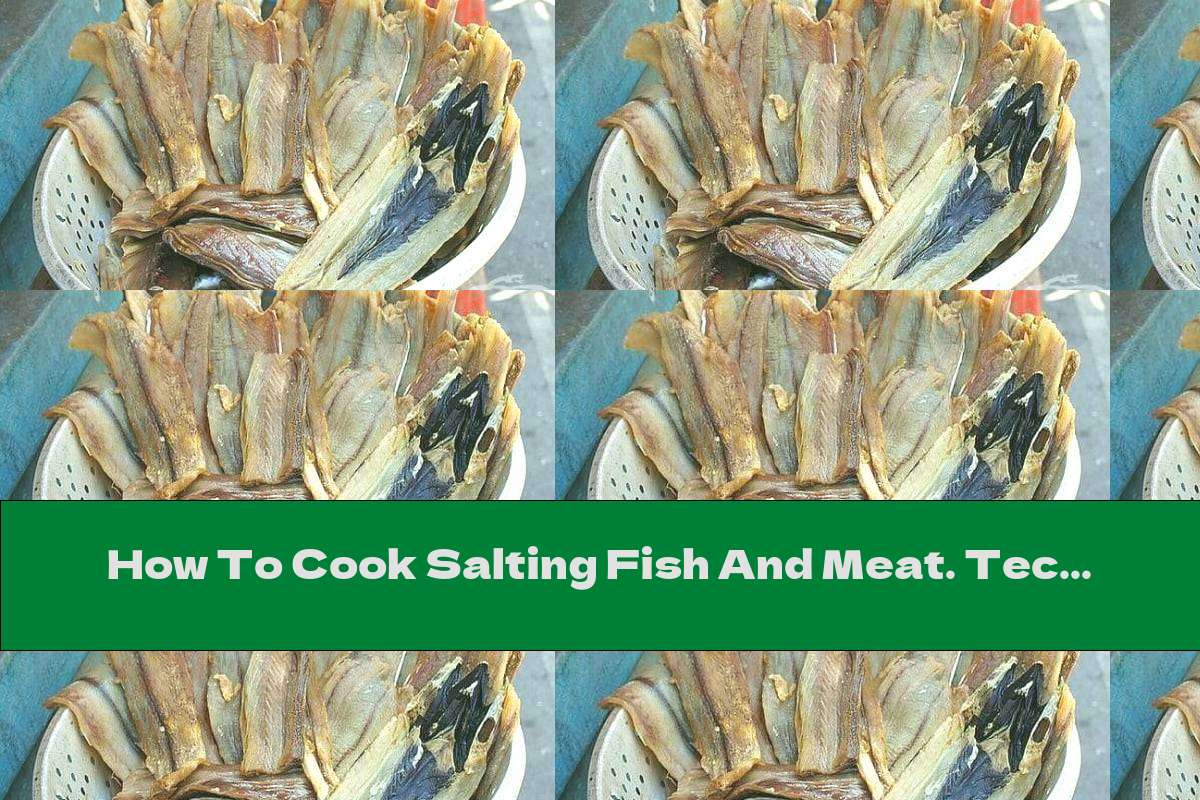
Fish such as cod, perch, salmon , eel, bream and other species are subjected to additional drying , in which the amount of fat is such that when dried the product acquires an amber transparent color.
The saline solution is made from 100 grams of salt dissolved in a liter of water. The fish should stay in it between 3 and 10 hours, depending on its size. Then it is removed from the liquid, wiped, tied with tow and left to dry.
In order for this to happen as soon as possible, as well as to preserve its useful properties, the fish must be dried under the influence of wind.
During the process, the moisture contained in the lower layers gradually rises to the surface, and the salt - the opposite: penetrates deep.
Related Articles
- The Power of Honeysuckle: Health Benefits and Recipes
- Fruitskewers in Honey Syrup: Nutritional Benefits and Recipes
- Nutritional Benefits of Fruit Skewers in Honey Syrup: A Delicious and Healthy Recipe
- Nutrition Guide: Fruitskewers in Honey Syrup - Benefits, Recipes, and More
- The Role of Flour in Nutrition: Types, Benefits, and Recipes