How To Eat For Good Mood And Emotional Health?
 Author: Victoria Aly
Time for reading: ~4
minutes
Last Updated:
August 08, 2022
Author: Victoria Aly
Time for reading: ~4
minutes
Last Updated:
August 08, 2022
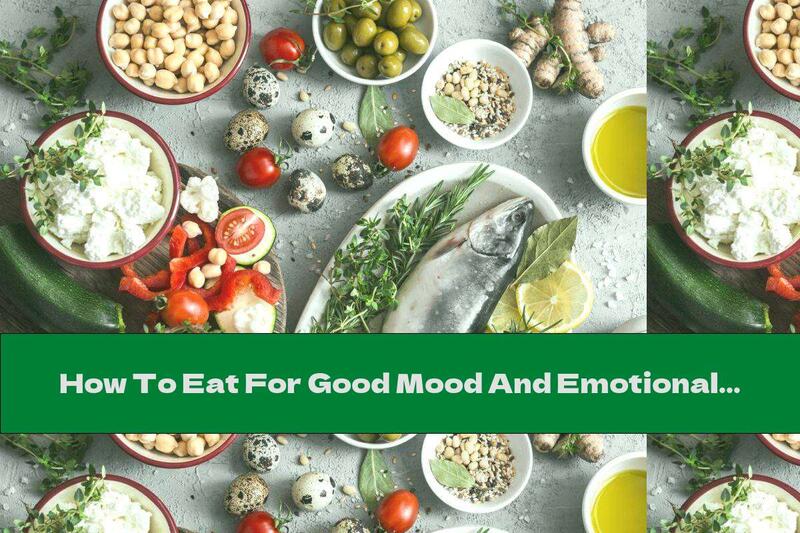
What are the foods and regimens with which we can maintain our good emotional and mental state.
Nutrition also affects our mental health, not just our physical health. And while we hear from children what is good to eat for healthy bones and teeth, for example, to this day, topics related to mental health are taboo.
But just as we can provide aphrodisiacs at dinner to suggest to the partner and ourselves a good transition to foreplay and ecstasy, so logically through food we can make sure our brain gets what it needs to synthesize all those compounds that make it possible. we feel better.
Our diet, despite the wide range of choices we can make today, alas, remains poor. Providing and preparing healthy food requires creating habits that initially make you nervous due to lack of time. But the truth is that processed foods and all those that are high in sugar , white flour and rich in salt can only exacerbate our health problems, anxiety and depression .
Many experts recommend the Mediterranean diet as the most suitable for maintaining good mental health. For us, it is not alien - both fish and olives are present in our national cuisine, citrus fruits are available year round in the store chain.
The claim that processed and sugar-rich foods predispose to depression and anxiety came from a team of British researchers from the Institute of Psychiatry at King's College London in the UK, who decided to study how food and its ingredients affect mental health. In their research, they observed the activity of the hippocampus. This is an area in the brain where neurogenesis takes place, that is, the creation of new neurons. Scientists have linked neurogenesis in the hippocampus to mood and cognitive function.
Stress is known to limit the neurogenesis of the hippocampus, while antidepressants help.
Factors that can have a negative effect on this process in adults are: age, oxidative stress or the accumulation of toxins that our body has to deal with, a high-fat diet, high-sugar products, alcohol and opioids.
Foods that are good for the hippocampus and its function are : products rich in polyunsaturated fatty acids (omega-3, oily fish, nuts), turmeric and polyphenols, which are found in fruits, vegetables and herbs.
The best diet for our mental and emotional health is one that produces the calories needed for the body to function without overeating or being malnourished.
Naturally, in order for all the useful elements to reach our brain, our blood circulation must work well - physical activity is a necessary condition for the body to absorb the useful compounds obtained through food.
Of course, to develop the brain healthy food and movement work in a trio with the acquisition of new knowledge.
Why, according to an article in the Proceedings of the Nutrition Society, does the Mediterranean diet work in favor of depression? Yes, it is rich in omega-3 fatty acids , as well as vitamin D , as well as methylfolate and S-adenosylmethionine, which, according to researchers, reduce the risk of it. In addition, this regime is based mainly on the consumption of fruits and vegetables, whole grains, legumes, nuts and seeds, olive oil, eggs, a small amount of red meat and red wine, moderate in dairy products , and, of course, fish and seafood. delicacies . That is, it contains all the necessary elements.
For good mental health, however, the amount of calories we need to absorb per day is 30-40% less than the standard recommended . For example, if the standard for our height and age is recommended intake of 2000 kcal per day, then the same person, if he does not exercise actively, is healthy and has completed the period of growth in him, feels mentally better with the acquisition of 1200 - 1400 kcal per day. This is the result of another study earlier.
A similar result was obtained in a third study, which found that after a 25% reduction in energy intake for the day for half a year, the symptoms of depression in the volunteers involved decreased.
It should be emphasized, however, that calorie restriction must seek a "golden mean" . Because going beyond the recommended limits and reducing more than necessary can trigger an eating disorder. Over-reduction in nutrition can return depression with the power of a boomerang, so it is desirable to build a diet to be done by a competent specialist according to individual characteristics and goals, to be observed as part of personal lifestyle and not to be a temporary whim. detrimental effect on health and psyche.
Periodic fasting can also be useful for mental health , the limits and characteristics of which must also be determined by a dietician. Otherwise, a 2013 study of men over the age of 50 showed that participants had significantly reduced anger, tension, mood disorders and confusion.
However, the same does not apply to active athletes - they have the opposite effect.
Fasting is not an option for people with a tendency to eating disorders, with disorders of carbohydrate metabolism or, more simply, with problems with blood sugar, as the risk of hypoglycemia is high.
In general, the daily menu rich in these foods contributes to good control of weight, lipid profile and cholesterol levels, normalization of blood pressure. This is due to the restriction of simple sugars and the abundance of saturated fats and vice versa, the presence of polyphenols , other antioxidants and useful polyunsaturated fats takes good care not only of general health, tone, but also the brain and its good functionality.
Related Articles
- The Role of Tyrosine Hydroxylase in Nutrition: Impact on Mood & Cognition
- The Power of 5-HTP: Benefits for Mood, Sleep, and Nutrition
- The Power of 5-HTP: Benefits for Weight Loss, Mood, and Sleep
- The Power of 5-HTP: Benefits for Mood, Weight, Sleep, and Fibromyalgia
- The Power of 5-HTP: Benefits for Mood, Sleep, and Appetite
Top Nutrition Articles Today
- . Steak Label
- . One Meal a Day Menu: Benefits, Meal Planning, and Sample Men...
- . Black Chickpeas Nutrition
- . 4 phases of digestion
- . Large Chicken Breast Calories
- . Ligament Vitamins: Signs Of Deficiency And Daily Value
- . Nutrition Guide for Thyroidectomy Patients: Tips for a Healt...
- . Sepsis
- . Nutrition In Hydrocephalus
- . Carbs to Sugar Conversion Chart: Monitoring Carb and Sugar I...