Leek - Protects The Stomach And Blood Vessels
 Author: Mark Velov
Time for reading: ~1
minutes
Last Updated:
August 08, 2022
Author: Mark Velov
Time for reading: ~1
minutes
Last Updated:
August 08, 2022
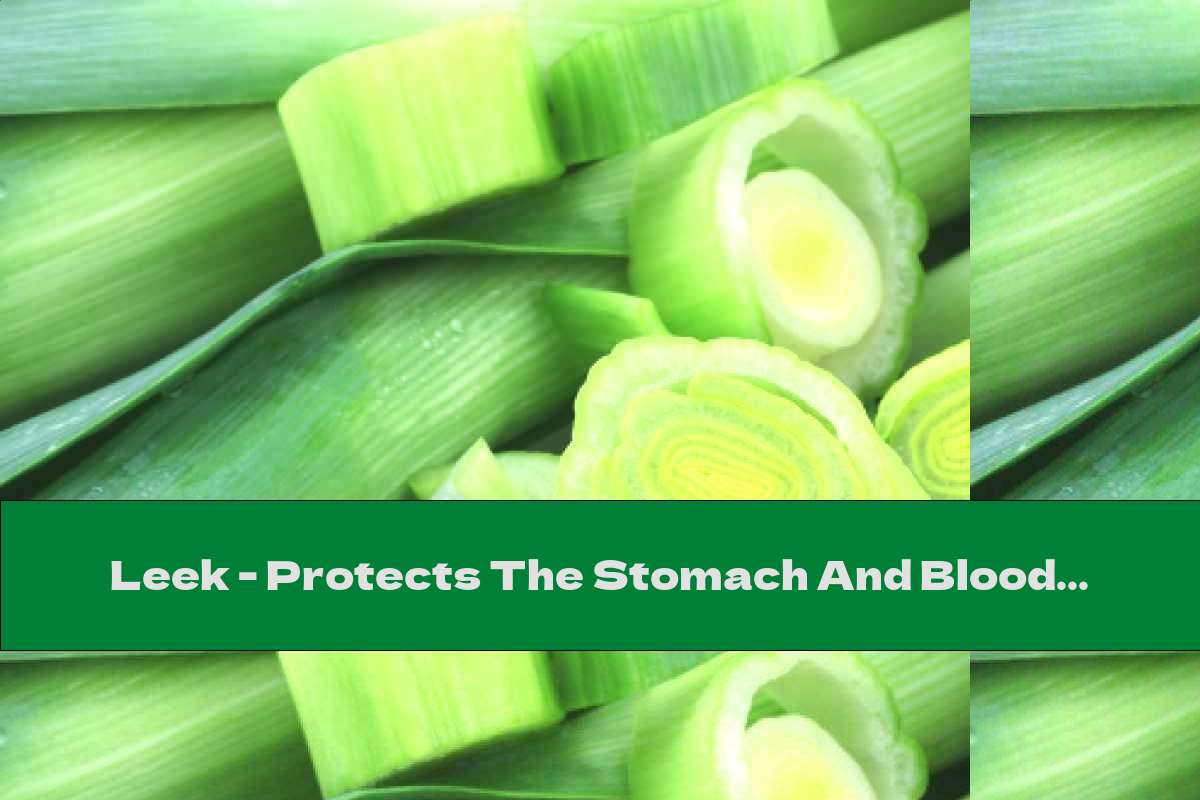
In this article, learn more about Leek - Protects The Stomach And Blood Vessels. Leek is rich in compounds that increase the body's defenses.
Leek, a vegetable in the onion family, is a cousin of lettuce and garlic. Compared to them, it has a softer and sweeter taste, but these are not its only advantages.
Most onion plants contain high concentrations of the flavonoid quercetin , but in leeks, it is poorly represented. This is greatly offset by the abundance of another flavonoid - kaempferol .
Kaempferol is taken up as a glycoside and absorbed in the small intestine. From there it is metabolized in different parts of the body and by the intestinal microflora , which has a very beneficial effect. It has pronounced anti-cancer properties in body tissues : it suppresses unregulated cell growth, restricts angiogenesis, participates in the induction of apoptosis of damaged cells and suppresses their ability to metastasize.
The compound is also well known for its antibacterial potency - some of its glucosides have a proven and well-studied ability to suppress Helicobacter pylori colonies - a gastric bacterium often leading to gastritis , ulcers and stomach cancer .
A huge variety of polyphenols is also available in leeks . Their total content in 100 grams of fresh leeks is about 33 milligrams. Polyphenols have pronounced antioxidant properties , focusing mainly on protecting blood vessels and blood cells from oxidative stress.
The most abundant polyphenol found in this vegetable is gallic acid. It is well known for its ability to actively inhibit the formation of amyloid fibers .
Amyloids are clumps of stale proteins that bend over each other and twist to form fibers. They have the ability to form large accumulations and plaques in various tissues and organs, which actively interfere with many physiological processes and are considered the main causes of neurodegenerative diseases such as lateral sclerosis and Parkinson's and Alzheimer's disease.
The greatest benefits of leeks are eliminated when taken fresh. It can be stored for a long time in the refrigerator (up to two or three months), but its heat treatment quickly reduces its usefulness, breaking down the goblet part of flavonoids and vitamins.
Related Articles
- The Impact of Coca-Cola on Nutrition: Caloric Content, Blood Sugar Levels, and More
- Therapeutic Nutrition For Diabetes: Managing Blood Sugar Through Diet
- The DASH Diet: A Comprehensive Guide to Lowering Blood Pressure
- The Type 4 Diet: A Comprehensive Guide to Blood Type-Based Nutrition
- Therapeutic Nutrition for Diabetes: Managing Blood Sugar Through Diet
Top Nutrition Articles Today
- . The Importance of Carotene in Nutrition: A Complete Guide
- . Cochineal Extract Food List: Nutritional Value, Health Benef...
- . The Ultimate Guide to Lean Meat in Nutrition: Benefits, Type...
- . The Truth About Potato Chips: Health Effects and Alternative...
- . The Role of Water in Nutrition: Importance and Benefits
- . Camel Meat
- . The Nutritional Benefits of Figs: A Fiber-Rich Fruit Packed...
- . 7 Foods For Bigger And Firmer Breasts
- . List of Foods that Contain Carrageenan: A Guide to Avoiding...
- . E551: The Food Additive You Should Know About