Nutrigenetics And Nutrigenomics - New Directions In Nutrition
 Author: Alexander Bruni
Time for reading: ~3
minutes
Last Updated:
August 08, 2022
Author: Alexander Bruni
Time for reading: ~3
minutes
Last Updated:
August 08, 2022
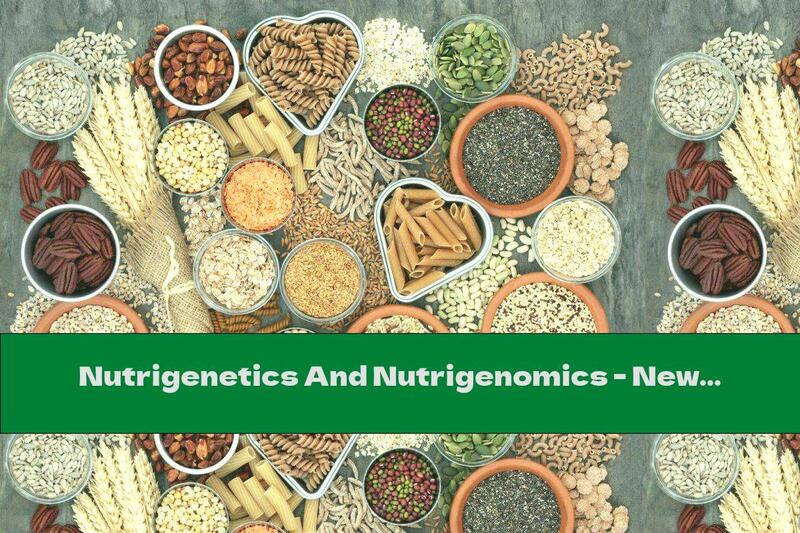
Nutrigenetics and nutrigenomics provide new opportunities in the prevention and treatment of the most important diseases today
Nutrition, as a modern interdisciplinary science, marks a significant development and rise, which led to the emergence of new directions. This opens new opportunities and perspectives in the prevention and treatment of modern diseases, which are largely due to nutrition. Undoubtedly, the newest directions in the science of nutrition are nutrigenetics and nutrigenomics .
Nutrigenetics studies the genetically exposed differences in the human genome in terms of individual human reactions to certain foods, ie. each person's unique metabolism to food intake. It clarifies the relationship between a particular genotype (genetic variant), diet and the onset and development of a disease.
Nutrigenomics is a science that studies the functional relationships between food and the human genome, proteome (proteins contained in the body) and metabolome (metabolites produced in the body in accordance with the established genetic information), ie. the ability of the diet to change the genetic information and from there to influence the onset of disease.
Nutrigenomics studies the "nutritional traits" of cells, tissues, and organs and tries to decode how nutrition affects their homeostasis. The combination between a certain genotype, diet and lifestyle is related to the prevention or development of most modern chronic diseases. With a good diet and relatively good genes, the chance of being healthy is very high, while with an unhealthy diet and bad genes, the risk of disease is very high (over 50%).
The main task of nutrigenomics and nutrigenetics is to label those nutrients and foods that are most compatible with a particular genotype, and hence with a person's health.
More important research in the field of nutrigenetics. She is studying the possibilities of regulating certain enzymes through diet. For example, the enzyme stearyl CoA desaturase is a major enzyme involved in the lipogenase process. The gene encoding this enzyme exists in 4 isoforms in mice. In violation of one of the isoforms, they cause a reduction of adipose tissue, increase resistance to obesity and register an accelerated metabolism.
It has been proven that high levels of omega - 6 fatty acids and low consumption of omega - 3 fatty acids are at the root of a number of diseases such as cardiovascular disease, autoimmune diseases, inflammatory processes, etc. Omega-3 fatty acids suppress inflammatory processes in the vessel wall by inhibiting the cyclooxygenase gene.
Data for research in the field of nutrigenomics . One of the most successful researchers in the field of nutrigenomics is David Barker, the founder of the early origin of chronic diseases or the so-called. "Fetal hypothesis". According to him, there is indisputable evidence that obesity, cardiovascular disease, chronic lung disease, diabetes occur prenatally, but there is also evidence that some diseases such as osteoporosis, some mental disorders such as schizophrenia, are determined during fetal development. These data are based on extensive epidemiological studies in Europe, Asia, Africa and North America. And here are some of the more significant results.
- Children of mothers who are underweight or overweight during pregnancy are at increased risk for cardiovascular disease and type 2 diabetes in adulthood.
- The risk of developing these diseases increases several times if in adulthood the individual leads an unhealthy lifestyle.
- Low birth weight, low body mass index up to 2 years of age, as well as rapid weight gain after this age and high body mass index at 11 years are independent factors and each of them is associated with the occurrence of cardiovascular disease in adulthood in both men and women.
- Children born with low birth weight and subsequent rapid weight gain in the first year of life do not increase, but reduce the risk of heart disease in adulthood.
- Insufficient and unbalanced nutrition of the pregnant woman affects the genome through IGF-insulin-like growth factor, even in the fetus.
- In adulthood, nutrition mainly affects health by changing the gene expression of the genome, then by changing the newly synthesized proteins and, accordingly, by the emergence of new metabolites responsible for the emergence of a particular disease.
Related Articles
- The Ultimate Guide to Hickory Smoked Bacon in Nutrition and Healthy Eating
- Fruitskewers in Honey Syrup: Nutritional Benefits and Recipes
- The Ultimate Guide to Buffer 500 in Nutrition: Benefits and Usage
- Nutritional Benefits of Fruit Skewers in Honey Syrup: A Delicious and Healthy Recipe
- Nutrition Guide: Fruitskewers in Honey Syrup - Benefits, Recipes, and More
Top Nutrition Articles Today
- . Grapefruit - For Colds And Flu
- . How To Freeze Quince
- . The Role of Sodium Malate in Nutrition: Benefits, Concerns,...
- . Myra E: Benefits for Nutrition, Diets, and Recipes
- . The Ultimate Guide to Potassium Nitrate in Nutrition
- . The Essential Role of Copper (Cu) in Nutrition: Sources, Ben...
- . Foods High In Folate And B12
- . 10 Foods You Can Eat On An Empty Stomach
- . Potassium Nitrate in Nutrition: Uses, Health Concerns, and A...
- . The Role of Samarium in Nutrition: Benefits and Food Sources