Overeating On Holidays - What Is Important To Know?
 Author: Karen Lennox
Time for reading: ~4
minutes
Last Updated:
August 08, 2022
Author: Karen Lennox
Time for reading: ~4
minutes
Last Updated:
August 08, 2022
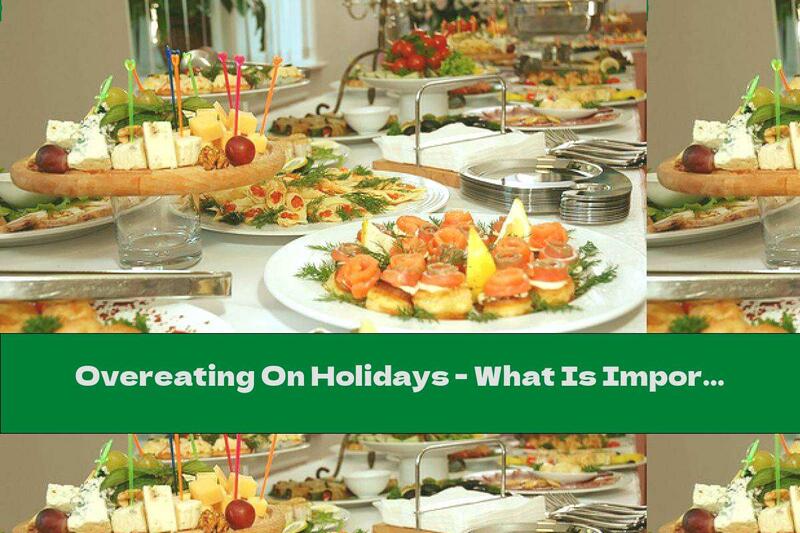
Consuming more than the required amount of food is a common problem in modern society. Today, few of us try to eat properly and regularly during the day, and in the evening is a convenient and affordable way to make up for lost time.
Consuming more than the required amount of food is a common problem in modern society. Today, few of us try to eat properly and regularly during the day, and dinner is a convenient and affordable way to make up for lost time. Then hunger speaks for itself and in the presence of an abundance of food it turns out to be very easy to overeat. The most interesting thing, however, is that in most cases a person does not overeat because he is hungry. Food is a consolation for stress, variety for boredom, a vent for anger. There are times when a person cannot stop and, although full, continues to eat, with or without an occasion.
However, there is hardly a bigger reason than the upcoming holidays. For some of us, solid treats are not a significant problem - a little weight, an unbuttoned button, nothing more. For others, the painfully lost few pounds reappear. Overeating is not so harmless for those of us who have an underlying disease. Eating can provoke a number of sufferings, including those requiring urgent medical attention.
The process of digestion is extremely complex. All the organs involved in it cooperate with each other in a nervous or hormonal way. This ensures adequate digestion and resorption of food - with a single purpose - it is absorbed as a building and energy source of the body. Another issue is that this mechanism in the conditions of the modern way of life sometimes works against us, causing obesity and related diseases. The centers of satiety and hunger in the hypothalamus are an exceptional factor in controlling nutrition. In humans, however, the social factor is usually the leading one. We eat even without being hungry, we continue to eat even after we are full - another factor that works against our health.
The most common complaints at a hearty dinner or lunch are bloating, fullness, heaviness, limited breathing, nausea, and even vomiting. Increased gas formation during overeating is quite normal, given the volume of the amount consumed in a short period. The fermentation processes that occur cause flatulence. Additionally, carbonated beverages and alcohol, especially wine, also have this effect. The weightmay persist for a long time. With a large intake of food, especially one rich in fat, gastric emptying is delayed. If it is normally emptied in 1 to 3 hours, depending on the food, it can take 8-12 hours to overflow. It also slows down the process of digestion of food in the intestinal tract. There are also increased requirements for the cocktail of enzymes and bile in the duodenum.
Purely reflexively, the very stretching of the stomach causes nausea , and sometimes vomiting . In this line of thought, these complaints are more common in individuals who are usually on strict diets and whose stomach sizes are smaller. It is interesting that people who are seriously limited during the rest of the time are more prone to overeating during the holidays. Frequent complaints after a hearty meal are heartburn , also burning to pain behind the sternum ( heartburn ). They are caused by the reflux of gastric juice into the esophagus, which is apparently aided by increased pressure in the stomach. However, also high-fat foods, chocolate cakes, alcohol, reduce the tone of the sphincter at the border between the esophagus and stomach.
Fat-rich foods, but also those high in protein, endocrinely lead to the emptying of the gallbladder, the contents of which are so necessary for digestion. In the presence of underlying gallstone disease, especially with smaller sizes of stones, some of them can "go" on the bile ducts and cause the so-called. biliary crisis . Another serious condition that occurs with gallstone disease is acute pancreatitis . Because the bile ducts and pancreatic ducts connect, trapping a stone in the common area can cause pancreatic juice and bile to return to the pancreas under increased pressure and cause severe inflammation. Acute pancreatitis can also occur with excessive alcohol consumption.
In socially significant diseases such as ischemic heart disease, diabetes and others, an important point in therapy is the control of blood sugar and serum lipids through appropriate diet. On family occasions or major holidays, this diet is often disrupted. And the increase in triglycerides, "bad cholesterol", the rise in blood sugar, are the direct consequences of this. Blood clotting also increases. Consumption of salty foods can provoke a hypertensive crisis . Excessive consumption of meat and especially offal can cause an increase in uric acid levels. With underlying gout, this manifests itself in a crisis . Alcohol can also cause this.
There is no way we can't eat more during the holidays. The dishes themselves are part of the holiday, part of the traditions. But how to avoid this unnecessary burden on our body? In fact, only we could impose this. Some of the tricks are not to starve all day waiting for the big dinner, to drink enough fluids but not carbonated, to eat slowly and to focus on conversations. Small portions are definitely the better option. Low-calorie products are an appropriate choice in terms of the danger of gaining extra pounds, rather than as a means of controlling appetite. The holiday depends on the mood, and it is not determined only by dinner.