Red Beets - Nutritional Composition, Useful Properties And Harms
 Author: Joe Fowler
Time for reading: ~7
minutes
Last Updated:
August 08, 2022
Author: Joe Fowler
Time for reading: ~7
minutes
Last Updated:
August 08, 2022
CHAPTERS (Table Of Contents)
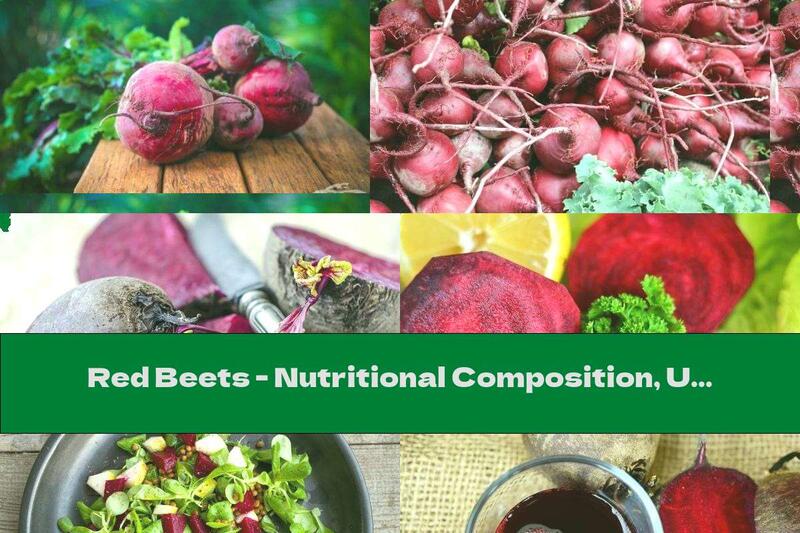
Beetroot is a root vegetable with many health benefits. Its red color is due to betaine, which reduces the level of the toxic amino acid (homocysteine), which causes diseases of the cardiovascular system.
Beetroot is a root vegetable belonging to the Styrian family, whose history dates back to ancient times. Vegetables are a source of sucrose and are therefore a good alternative to tropical sugar cane. It is used as a medicinal plant and as a food coloring.
Nutritional composition of beets
100 grams of beets contain:
- 44 calories;
- 1.7 grams of protein;
- 0.3 grams of fat;
- 2 grams of fiber;
- Vitamin C - 6% of the daily requirement *
- Folic acid - 20% *
- Vitamin B6 - 3% *
- Magnesium - 6% *
- Potassium - 9% *
- Phosphorus - 4% *
- Manganese - 16% *
- Iron - 4% *
Beetroot contains plant compounds - inorganic nitrates and pigments that are good for health.
Health benefits of beets
Common beetroot is a unique medicinal product. Its red color is due to betaine, which reduces the level of the toxic amino acid (homocysteine), which causes diseases of the cardiovascular system. Its useful properties are preserved in both raw and cooked form, for a long time. It has been used since ancient times to treat infectious, skin diseases; also in blood diseases (including iron deficiency anemia). In terms of iron content, it ranks second after garlic, and in terms of iodine content - only algae are ahead of it. Beetroot saturates the body with nutrients and has strong antioxidant properties. It helps women during menstruation, and in men stimulates muscle and sexual activity, helps children with allergies.
Beetroot juice is extremely useful. It treats diseases of the thyroid gland, prevents the formation of blood clots, restores the intestinal microflora and increases the body's defenses. Although very useful, it is not taken often because it is not very pleasant to the taste. For this reason, it is mixed with other juices to improve the taste. Red vegetable juice is good to keep for 2 hours in the refrigerator before use, because it contains volatile compounds that cause discomfort, nausea, weakness.
In folk medicine it is used: in hypertension, angina, anemia, mastopathy, menopause and menstrual disorders.
Here are some of the most important beneficial properties of beets:
1. Rich source of nutrientsBeets have the highest sugar content of all vegetables, but have few calories and cholesterol. Vegetables are rich in vitamins, minerals and organic compounds such as carotenoids, lutein or zeaxanthin, glycine, betaine, fiber and vitamin C. In addition, they contain important minerals such as magnesium, iron, copper and phosphorus, whose role is to regulate important processes. in the human body.
2. Maintains blood pressureVegetables contain natural nitrates, which are converted to nitric oxide in the human body, which helps relax and dilate blood vessels, improves blood flow and lowers blood pressure. Beetroot juice is extremely useful in this regard due to its ability to lower blood pressure within a few hours.
Nitrate levels in the blood remain elevated for about 6 hours after consumption. Therefore, red vegetables have only a temporary effect on blood pressure and need regular consumption to lower blood pressure in the long run.
3. Improves physical activityIt is often used as food for athletes due to the content of nitrates, which have the properties to increase athletic performance. Nitrates appear to affect physical efficiency by improving the efficiency of mitochondria, which are responsible for producing energy in cells.
It is important to note that nitrate levels in the blood reach a maximum in 2-3 hours. Therefore, to maximize a person's potential, it is best to consume beets 2-3 hours before a workout or competition.
4. It can help fight inflammationChronic inflammation is associated with a number of diseases, such as obesity, heart disease, liver disease and cancer. Beets contain pigments with anti-inflammatory properties called betalains. A study in people with osteoarthritis found that betalaine capsules made with vegetable extract reduced the pain and discomfort associated with the condition.
5. Improves digestion
It contains many B vitamins and antioxidants, it also contains the extremely rare vitamin U, which has anti-allergic action and helps to normalize the stomach and digestive system.
Fiber is an important ingredient in a healthy diet. They are associated with many health benefits, including improved digestion. A cup of beets containing 3.4 grams of fiber, which makes vegetables a good source.
The fiber is not digested in the stomach, but is directed to the large intestine, where it is food for beneficial bacteria. It stimulates the digestive system and prevents conditions such as constipation, inflammation of the intestines and diverticulitis. In addition, fiber is associated with a reduced risk of chronic diseases such as colon cancer, heart disease and type 2 diabetes.
Beets are useful, both cooked and raw. Cooked vegetables have a laxative and diuretic effect. In chronic constipation, liver disease and indigestion it is good to eat boiled root.
6. Improves brain healthDecreased blood flow and oxygen supply to the brain can contribute to a decline in mental activity and cognitive function with age. Studies show that beet nitrates can improve mental and cognitive function by promoting the dilation of blood vessels and thus increasing blood flow to the brain and slowing the development of dementia. The high concentration of nitrates in vegetable juice supports this process.
7. Helps to lose weightDue to its low calorie content and high water content, beets are among the vegetables that help to lose weight. In addition, it contains moderate amounts of protein and fiber, which promote weight loss by reducing appetite and promoting a feeling of fullness, reducing overall calorie intake.
8. Keeps the heart healthyHigh levels of triglycerides in the body create serious heart problems. Consumption of beets lowers triglycerides and cholesterol by increasing the amount of HDL (good) cholesterol. It also helps reduce the level of the heart-toxic amino acid homocysteine due to the betaine content in vegetables. The development of conditions such as atherosclerosis, heart attack and stroke can be prevented by eating vegetables.
Vitamin P, which is also contained in the root, has a beneficial effect on the circulatory system, increasing the elasticity of blood vessels. This, at first glance, an ordinary vegetable, turns out to be a treasure trove of useful minerals such as zinc, silicon.
9. Reduces birth defectsBeets are a rich source of folic acid (vitamin B9), which helps in the formation of the baby's spine. This makes vegetables useful in the diet of pregnant women. Folic acid deficiency can lead to a number of complications such as neural tube defects, which means defects in the brain, spinal cord or spinal cord of babies.
10. Helps prevent cancerBeets contain the pigment betacyanin, which prevents the growth of cancer cells. Protects against cancer of the colon, lungs and skin. Nitrates are used as preservatives in meat and their consumption can lead to the formation of nitrosamine compounds in the body, leading to cancer. The juice of the product helps to reduce or retain cellular mutations caused by these compounds.
Vitamin C in red vegetables is a powerful antioxidant that protects the body from free radicals and stimulates the activity of white blood cells. Vegetables also contain beta carotene, which helps prevent lung cancer.
Regular use removes salts of heavy metals from the body.
11. Purifies the blood and liverBeets contain betalaine pigments that support the detoxification process in the body by purifying the blood and liver. It also contains calcium, betaine, B vitamins, iron and antioxidants, which are very useful for the liver. It also helps to dilute the bile, thus allowing it to move smoothly through the liver and not allowing any pressure to be exerted on it. The fiber in the root ensures that the toxins are removed from the liver. Red vegetables also contain zinc and copper, which are important for protecting liver cells.
12. Improves visionBeta carotene, which is contained in beets, helps prevent cataracts - a type of blindness that mainly affects the elderly. It also prevents macular degeneration in the elderly. Thus, the consumption of vegetables promotes eye health.
Use in cooking
Beets can be eaten raw, roasted, boiled, steamed or marinated. It can be purchased pre-cooked or canned. Here are some ideas on how to add and prepare beets in your diet:
- beet salad;
- beet juice;
- beet dip with yogurt;
- beet hummus;
- cook the beet leaves in the same way as spinach.
Contraindications
Beets are safe for consumption by most people when taken in moderation. However, it can cause harm to some people. Beeturia is a condition in which the urine turns red or pink after eating beets or foods colored with vegetable extract or pigments from it. The color is caused by the excretion of betalan pigments such as betanin. Vegetables are a rich source of oxalates and excessive consumption can cause kidney stones. It can rarely cause allergic reactions in some people - rash, hives, itching, chills and fever. In people suffering from gastrointestinal problems, the consumption of root vegetables can worsen the situation.
Despite the beneficial properties, vegetables should not be eaten raw in disorders of the gastrointestinal tract, because dietary fiber can cause upset stomach. Use with caution by people with low blood pressure, because the substances they contain lower it further. Beetroot juice should not be consumed in urolithiasis, as it contains a large amount of oxalic acid, which forms poorly soluble compounds in the body. In diabetes, it should also be taken with caution due to its high sucrose content.
Related Articles
- Fruitskewers in Honey Syrup: Nutritional Benefits and Recipes
- Nutritional Benefits of Fruit Skewers in Honey Syrup: A Delicious and Healthy Recipe
- Nutritional Benefits of Fruit Skewers in Honey Syrup: A Healthy and Delicious Snack
- The Role of Sodium Methyl Para-Hydroxybenzoate in Nutrition: Preservative Properties & Health Concerns
- The Nutritional Benefits of Salty Popcorn: A Healthy Snack Option