Red Wine And Fruit - Against Erectile Dysfunction
 Author: Dean Rouseberg
Time for reading: ~1
minutes
Last Updated:
August 08, 2022
Author: Dean Rouseberg
Time for reading: ~1
minutes
Last Updated:
August 08, 2022
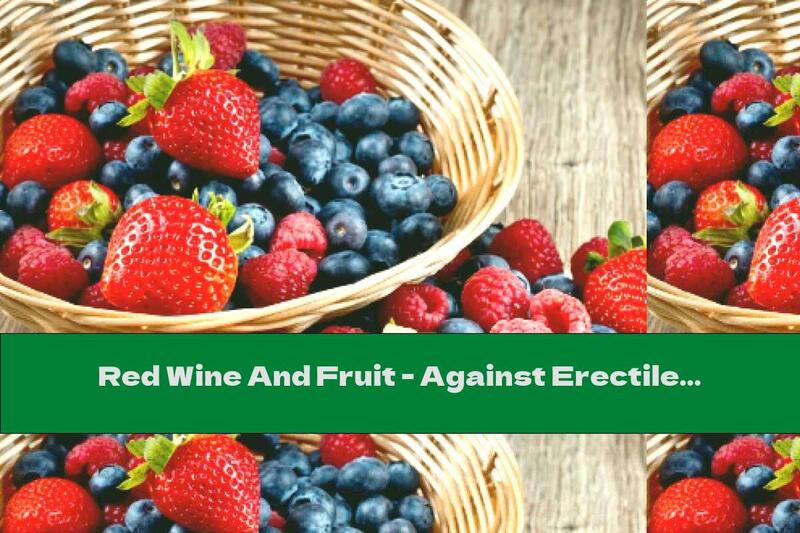
Regular consumption of certain flavonoids can reduce the risk of developing erectile dysfunction by 10%.
Red wine and fruit can be the new Viagra . This is stated in data from a study which mentions that certain compounds significantly reduce the risk of impotence .
According to experts, consuming a handful of fruit three times a week or a few glasses of red wine a week can be just as effective a method of treating erectile dysfunction as Viagra.
The new study also found that eating berries increased sexual function as much as walking five hours a week. The beneficial effect is due to flavonoids and anthocyanins.
They can be found in cherries, blackberries, radishes, blackcurrants and blueberries. Citrus fruits contain flavonones and flavones, which have a similar effect.
A new study by researchers at the University of East Anglia and Harvard University found that the flavonoids in these fruits helped reduce impotence by 14%.
It is also clear that the combination of walking and eating a diet rich in flavonoids has an even more beneficial effect - erectile dysfunction improves by 21 percent.
Treating this condition has other health benefits, as it is often a sign of impaired blood circulation and impaired heart health.
According to researchers, the greatest benefits from eating foods rich in flavonoids are among men under 70 years of age.
Specialists studied six main types of commonly consumed flavonoids and found that three specific types - anthocyanins, flavonones and flavones - are particularly useful. Among men who regularly consume these flavonoids , the risk of erectile dysfunction is reduced by 10%.
The study data are published in the American Journal of Clinical Nutrition .
Related Articles
- Fruitskewers in Honey Syrup: Nutritional Benefits and Recipes
- Nutritional Benefits of Fruit Skewers in Honey Syrup: A Delicious and Healthy Recipe
- Nutrition Guide: Fruitskewers in Honey Syrup - Benefits, Recipes, and More
- Nutritional Benefits of Fruit Skewers in Honey Syrup: A Healthy and Delicious Snack
- The Nutritional Benefits of Figs: A Fiber-Rich Fruit for Your Diet
Top Nutrition Articles Today
- . One Meal a Day Menu: Benefits, Meal Planning, and Sample Men...
- . Nutrition In Cardiomyopathy
- . Sardines - Good For Bones
- . The Importance of Magnesium Chloride in Nutrition: Benefits...
- . 4 phases of digestion
- . Understanding Emulsifier E471: Functions, Health Concerns, a...
- . List of Foods that Contain Carrageenan: A Guide to Avoiding...
- . The Power of 100% Cocoa Dark Chocolate: Benefits and Uses
- . Steak Label
- . Ligament Vitamins: Signs Of Deficiency And Daily Value