White Or Wholemeal Pasta - Pros And Cons
 Author: Ivan Red Jr.
Time for reading: ~1
minutes
Last Updated:
August 08, 2022
Author: Ivan Red Jr.
Time for reading: ~1
minutes
Last Updated:
August 08, 2022
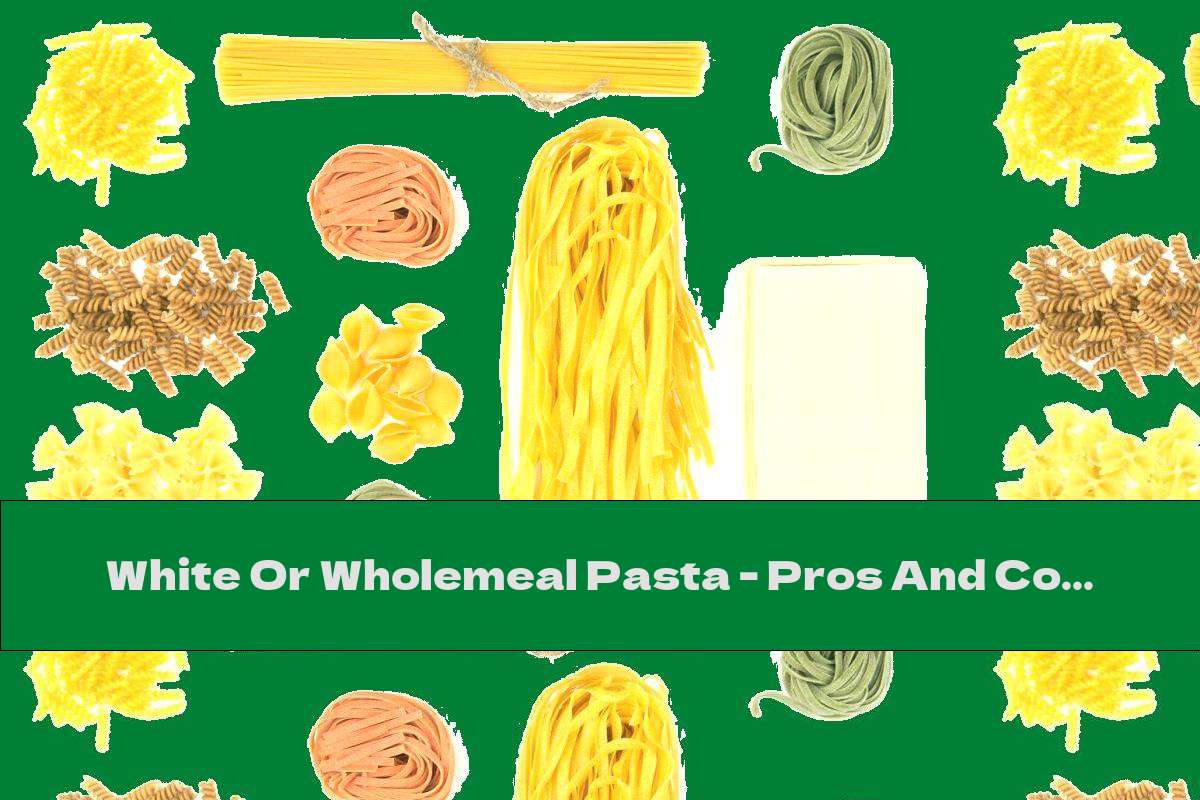
The common denominator between white and whole grain pasta is one thing - a lot of carbohydrates.
All pasta from the group of spaghetti and pasta, referred to as pasta , are rich in carbohydrates, which is their main drawback. However, they also contain a number of healthy substances. What they are and in what quantities will be contained depends on the type of pasta - whether it is made from white or wholemeal flour .
Based on the type of flour, different conclusions can be made about the nutritional value of all types of spaghetti and pasta. Thus, it turns out that although harmful in terms of high carbohydrate and gluten content , some types of pasta can be much less harmful than others and even have health benefits.
By peeling the cereals, a large part of the useful substances in their shells are lost. This is the main reason for the drastic differences in the nutritional value of white and wholemeal pasta.
A reference to the content of the two types of pasta shows comparable values only in terms of the amount of 2 nutrients in 100 g of product. It was found that 100 g of white flour paste contains 45 g of carbohydrates and 8 g of protein . 40 g of carbohydrates and 7.5 g of protein are found in the same amount of wholemeal paste.
On the basis of other vital nutrients, a serious advantage of wholemeal pasta is reported:
| Nutrients (in 100 g of product) | Wholemeal pasta | White flour paste |
| Fat | 0,8 | 1,5 |
| Fiber | 6 | 2,5 |
| Manganese | 97% | 25% |
| Honey | 12% | 7% |
| Magnesium | 11% | 5% |
* The percentage is based on the recommended daily intake
However, many of the pasta products are additionally enriched with B-complex vitamins , which makes them a richer source than whole grains:
| Nutrients (in 100 g of product) | Wholemeal pasta | White flour paste |
| Thiamine (vitamin B1) | 10% | 25% |
| Riboflavin (B2) | 4% | 12% |
| Folic acid (B9) | 2% | 25% |
* The percentage here is also based on the recommended daily intake
Although there are high doses of many of the nutrients in it, even whole grain pasta can not be described as a healthy food due to its high caloric content and gluten content .
Both types of pasta are not recommended for people with diabetes , metabolic syndrome , obesity and gluten intolerance . However, even in healthy people, regular consumption of pasta, whether white or whole grain, is not recommended and is allowed only in regular athletes who consume a large amount of energy daily.
Related Articles
- The Role of E400 in Nutrition: Benefits, Recipes, and Health Considerations
- The Ultimate Guide to Bulking in Nutrition: Benefits, Types, and Considerations
- The Role of E250 in Nutrition: Pros, Cons, and Health Implications
- The Power of White Foods: Benefits, Recipes, and More
- The Role of Yeast in Nutrition: Benefits, Uses, and Considerations
Top Nutrition Articles Today
- . List of Foods that Contain Carrageenan: A Guide to Avoiding...
- . 10 Day No Sugar No Carb Diet
- . The Truth About Potato Chips: Health Effects and Alternative...
- . The Power of Chaga Mushroom in Nutrition: Benefits, Uses, an...
- . Calories In 3 Strawberries
- . Can You Take A Bath When You Have A Cold?
- . The Power of Pear Puree: Nutrition, Health Benefits, and Rec...
- . The Nutritional Value of Hickory Smoked Bacon - A Complete G...
- . Sea Buckthorn: Health Benefits And Harms
- . Garlic Intolerance: Causes, Symptoms, and Management Strateg...