10 Foods That Contain More Calcium Than Cottage Cheese
 Author: Leticia Celentano
Time for reading: ~4
minutes
Last Updated:
August 08, 2022
Author: Leticia Celentano
Time for reading: ~4
minutes
Last Updated:
August 08, 2022
CHAPTERS (Table Of Contents)
In this article, learn more about 10 Foods That Contain More Calcium Than Cottage Cheese. 10 foods that contain more calcium than cottage cheese - part 1.
Calcium is a mineral whose amount is more than that of the other elements found in the human body. It is needed for:
- maintaining bone health (sufficient amount of the element helps reduce the risk of fractures, osteoporosis and diabetes);
- constriction and relaxation of blood vessels;
- muscle contraction;
- the transmission of nerve impulses;
- hormone secretion.
It is estimated that the required daily amount of calcium for adults is 1000 mg, and for people over 60 - 1200 mg. But the reception of the element and its assimilation are not the same thing. Calcium metabolism is carried out with the participation of other nutrients - vitamin D and protein. Without them, you may suffer from calcium deficiency, even if the level of the element is formally normal.
How is calcium absorbed?
Calcium is absorbed in the intestines: it enters the cells, passes through them and from there goes into the blood. In this way it helps calcitriol - an active form of vitamin D. It increases the penetration of calcium into intestinal cells, accelerates its passage and excretion.
To convert vitamin D to calcitriol, insulin-like growth factor 1 is needed, and protein is needed for its production. Research shows that a threefold increase in the amount of protein in the menu (up to 2.1 grams per 1 kg of body weight) increases the absorption of calcium in the intestine by 8%.
Therefore, along with calcium, it is also necessary to take a sufficient amount of protein and stay in the sun longer, or to consume products rich in vitamin D.
When we talk about foods that are sources of calcium, we can not fail to mention cottage cheese , because it is known as the largest one. However, this is not true. We offer you several products that surpass it in this indicator.
10 foods that contain more calcium than cottage cheese
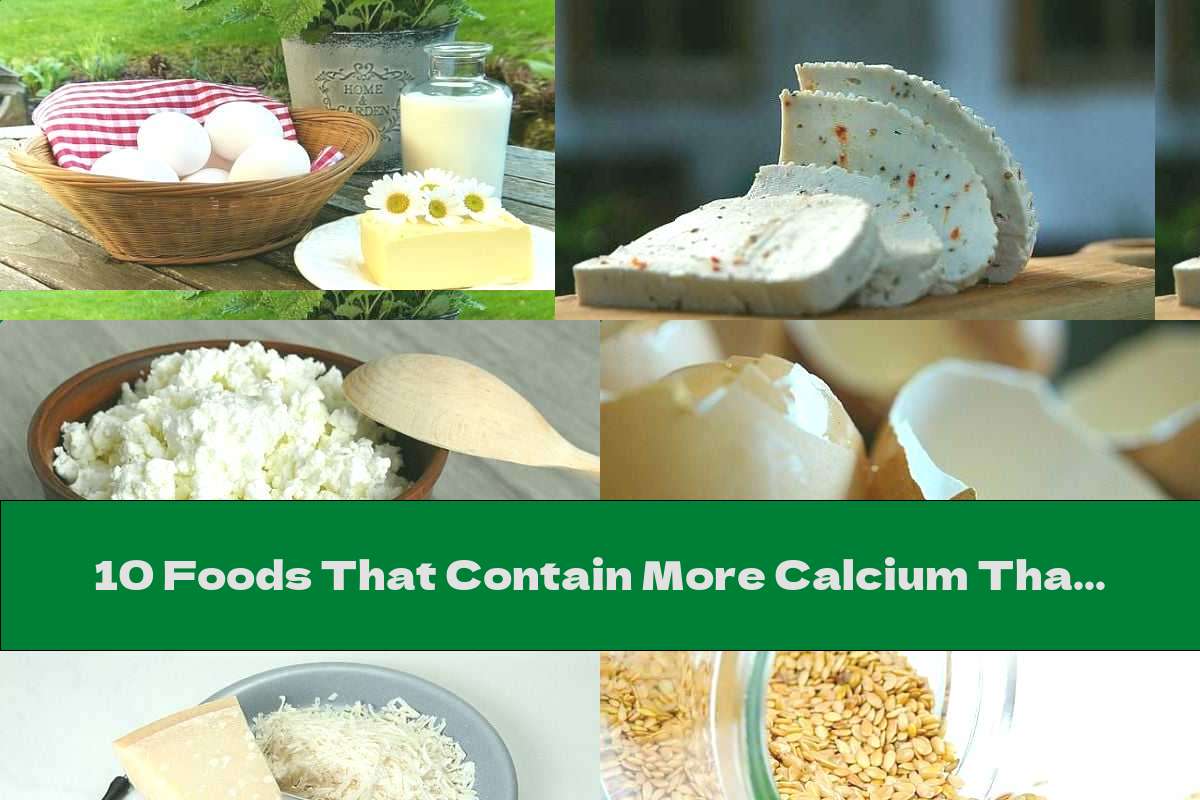
EggshellThere are 2 grams of calcium in an eggshell. It weighs about 5 grams and when crushed fits in a teaspoon.
Half a teaspoon of the product provides the required daily amount of the element that is taken with food. For comparison, we will say that to ensure such a dose of cottage cheese, you will need to eat 1.2 kilograms of it. In addition, calcium from the eggshell is perfectly absorbed by the body.
To prepare the valuable powder, first wash the shell well, then put it in boiling water for 5 minutes to kill possible bacteria. When you take it out of the hot liquid, dry it and crush it until you get a fine powder (you can use a coffee grinder for this purpose). Take 1/2 teaspoon a day, adding to ready meals, for example.
You may also be interested to read The Health Benefits of Eggshell.
Parmesan and other cheesesAmong dairy products, Parmesan is the leader in terms of calcium content. The amount of the element in 100 grams of product is 1,184 mg - more than the required daily dose. In addition, the product contains a lot of protein (38 grams per 100 grams of cheese) and 0.95 mcg of vitamin D per 100 grams.
In other types of cheese you can also find quite a few of the element and the substances important for its absorption.
In other words, eating 100 grams of such a dairy product a day, you will get the necessary dose of calcium and 1/10 of that of vitamin D.
Keep in mind, however, that cheeses are high in calories, rich in saturated fat. If your menu includes 100 grams of cheese, it is recommended not to eat other dairy products. There is also good news for fat lovers - the more calcium you take in, the less fat is absorbed.
Sesame seeds
Sesame is the absolute leader among plant sources of calcium. 100 grams of seeds contain 975 mg of the element and 17.7 grams of protein.
But there are pitfalls: first, no one eats sesame with a spoon, it is added to pastries and other dishes, which means that consuming 100 or even 50 grams a day is somehow impossible.
Of course, you can make homemade halva or sesame blocks from the seeds and thus take in the valuable amount of calcium, but the sugar content in such products is high, and this is no longer useful.
The second pitfall is that like most plant sources of calcium, sesame seeds contain phytic acid. It is an antinutrient that reduces the absorption of the element and other minerals. The acid represents 1-5% of the weight of cereals, legumes, seeds and nuts.
Fortunately, you can deal with the negative effects of phytates by processing the products before consumption. Soak sesame seeds in water for 4 hours and then lightly roast it.
Sardines in butter
Canned sardines are eaten directly with the bones, so they have a lot of calcium - 382 mg per 100 grams of fish. In addition, the product contains 24.6 grams of protein and 6.8 mcg of vitamin D (68% of the daily norm). And although the calcium in sardines is much less than that in sesame seeds, thanks to the amount of vitamin D, the element will be absorbed better.
Regarding the nutritional value of sardines, we will also say that 100 grams of them contain 208 kcal and 11.5 grams of fat, half of which are unsaturated. Therefore, you can safely eat 100-150 grams per day without giving up other foods and without risking harm to your figure.
Almonds
In 100 grams of almonds there are 216 milligrams of calcium 21.9 grams of protein. There is a lot of phytic acid in these nuts, but you could reduce its amount by soaking the almonds in water for 12 hours before use.
Of course, do not overdo their consumption - with a handful of almonds eaten in 5 minutes, you will consume about 250 kcal, and in 100 grams of nuts the calories are 581.
In the next part of the material you will get acquainted with 5 more foods that are rich in calcium .
- 10 foods that contain more calcium than cottage cheese - part 2
Related Articles
- Nutrition Guide: Fruitskewers in Honey Syrup - Benefits, Recipes, and More
- The Ultimate Guide to Calcium Carbonate in Nutrition
- Nutrition for Respiratory Health: Supporting Your Lungs with the Right Foods
- The Ultimate Guide to Vitamin E in Nutrition: Benefits, Sources, and More
- The Ultimate Guide to Avocado Nutrition: Benefits, Recipes, and More
Top Nutrition Articles Today
- . Breakfast Pizza
- . Night Nutrition: Importance, Benefits, and Best Foods to Eat
- . The Ultimate Guide to Metataric Acid in Nutrition: Sources,...
- . Calories In A Piece Of Bread
- . Health Benefits Of Vitamin C
- . Sushi For Beginners. How Easy It Is To Spin Sushi Rolls
- . How To Cook Spicy Green Tea With Turmeric, Lemon Juice And G...
- . The Essential Guide to Nutrients in Nutrition: Importance an...
- . When Is It Better To Eat Fruit?
- . How To Cook Mini Sandwiches With Cherry Filling - Recipe