4 Hidden Sources Of Salt
 Author: Nia Rouseberg
Time for reading: ~1
minutes
Last Updated:
August 08, 2022
Author: Nia Rouseberg
Time for reading: ~1
minutes
Last Updated:
August 08, 2022
CHAPTERS (Table Of Contents)
In this article, learn more about 4 Hidden Sources Of Salt. Consumption of which foods can significantly increase sodium intake..
Although the recommended daily dose of sodium is 2400 mg, many consume significantly larger amounts. In fact, any product in our daily lives, such as cheese, pickles or soy sauce, can contain very large amounts of salt . Therefore, if we are advised to limit the intake of this spice, we should also refrain from consuming these foods ...
1. Soy sauce
It is a favorite of many and often becomes an addition not only to Chinese food but also to other dishes. No matter how much we love it, we must not forget that it is rich in salt . The amount of 100 mg of soy sauce contains 6900 mg of sodium , which is almost three times the recommended daily dose.
2. Cheese
Yes, the cheese is also high in sodium. The amount of 1800 mg of sodium can be found in a portion of 100 g of cheese . Therefore, no matter how beloved it is, it should not be overdone.
3. Breakfast cereals with raisins
Many people think that eating a bowl of raisins with breakfast in the morning is a way to start the day healthy, but this is not entirely true. It is important to check the sodium content , as 100 g of such a breakfast cereal contains about 250 mg of the element in question. This amount is not insignificant, especially for those suffering from hypertension .
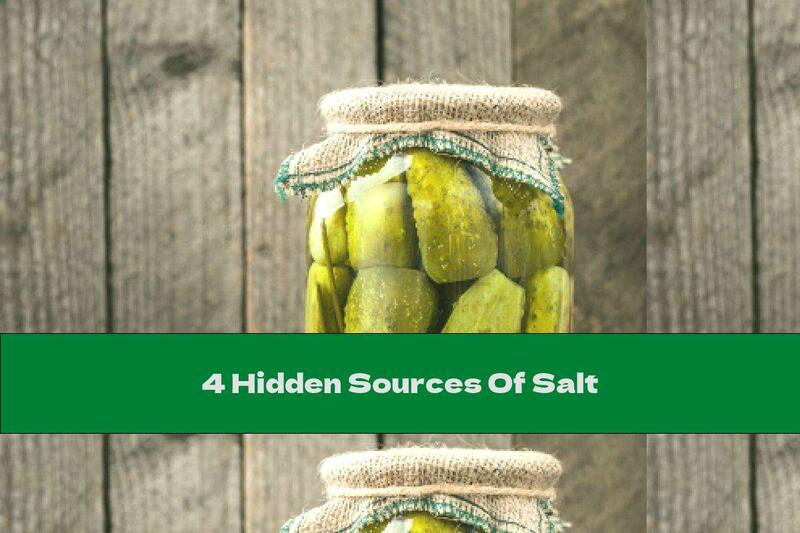
4. Sour cucumbers
They are often added to sandwiches and various other dishes as they give a characteristic taste to food. However, their consumption should not be overdone, as a portion of 100 g of pickles contains about 1200 mg of sodium - half the recommended daily dose.
Related Articles
- The Ultimate Guide to Vitamin E: Benefits, Sources, and Recipes
- The Ultimate Guide to Vitamin E in Nutrition: Benefits, Sources, and More
- The Nutritional Benefits of Salty Popcorn: A Healthy Snack Option
- The Ultimate Guide to High Gluten Foods: Benefits, Sources, and Recipes
- The Ultimate Guide to Lactic Acid in Nutrition: Benefits, Food Sources, and Recipes