A Diet That Mimics Starvation
 Author: Leticia Celentano
Time for reading: ~3
minutes
Last Updated:
August 08, 2022
Author: Leticia Celentano
Time for reading: ~3
minutes
Last Updated:
August 08, 2022
CHAPTERS (Table Of Contents)
In this article, learn more about A Diet That Mimics Starvation. A diet that mimics starvation.
You've probably heard of diet-restricting diets known as "fasting" or "starvation." Some experts claim that they have many health benefits for the body - they help to lose weight and lower triglyceride levels. But if you find it difficult to endure a long period without food, with this diet that mimics starvation, you can get the same benefits and advantages without skipping a single meal.
What is a starvation diet?
A diet that mimics starvation involves a severe calorie restriction in five days of the month. This diet follows the same principle as fasting, temporarily depriving the body of food to take advantage of various health benefits such as increased fat burning and reduced inflammation.
Some types of fasting limit the consumption of food for whole days, others only for a few hours each day, and still others allow only certain types of foods or groups of foods.
The fasting diet follows a similar principle, but allows you to eat a small amount of food every day, while receiving all the benefits of complete fasting.
How does the diet work?
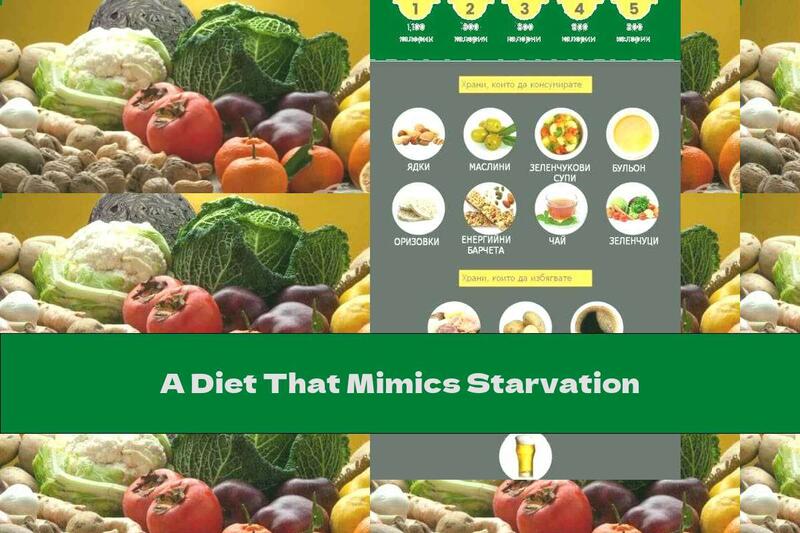
Each cycle of the diet lasts 5 days and can be done once every three months. The diet relies on severe caloric restrictions that mimic the effects of starvation. On the first day of the diet, 1,100 calories are consumed. Then for the remaining days, the calories are reduced to 800 per day.
What you eat is just as important as the amount of calories. The diet is high in fat with 80% of calories coming from olives, nuts, vegetable oils, and the remaining 10% should be obtained from protein.
Health benefits of diet
- Promotes fat loss
- Lowers cholesterol
- Prevents and treats inflammatory processes in the body
- Prevents the development of diabetes
- Regulates blood pressure
- Improves cognitive health
Disadvantages of the diet and contraindications:
Diet can be difficult to follow. Not only do you need to halve your calorie intake, but you also need to reduce the amount and change what you eat. This can often be a great challenge to your will.
In addition, exercise is prohibited during the diet, as reduced calorie intake will deprive you of the energy needed to perform them. Regular exercise is an important part of a healthy lifestyle, and repeating the diet in the long run can lead to immobility, which can have side effects.
Reducing calories to 800-1000 is often accompanied by side effects such as fatigue, headaches and weakness.
Following this diet in the long run can increase the likelihood of nutrient deficiencies, as it contains mostly fat and very little protein and carbohydrates and thus reduce the intake of nutrient-rich foods.
In addition, although the diet has good results in the fight against diabetes, it can lead to low blood sugar levels and cause hypoglycemia, which is very harmful for people suffering from insidious disease. For this reason, we advise you to follow the diet under medical supervision.
If you have an eating disorder, diet can promote certain types of unhealthy behaviors and cause unwanted symptoms.
The diet is not recommended for people with allergies to nuts, as they are a staple of food.
Although there are common side effects such as fatigue and drowsiness, always listen to your body and stop the diet if you feel unwell or consult your doctor.
How to follow a diet
The diet consists of 5 days, which are repeated once for 3 months to achieve better results. For the first day it is important to reduce calories to 1100, and for the next - 800 calories a day.
There is no exact menu to follow, but there are some rules to follow: Your
diet should be high in fat, which you can get from oils, olives and nuts. Your main meals may be soups with minimal amounts of animal products. Emphasize vegetables and fruits during the diet, limit coffee. Here's what your diet should look like:
- How to properly switch from starvation to a normal diet
Related Articles
- The Nutritional Value of Avocado Calories: Benefits, Diet Tips, and Recipes
- The Ultimate Guide to Diet ��� 7 for Improved Nutrition
- The Nutritional Value of Potato Chips: How They Fit Into a Healthy Diet
- Nutritional Benefits of Chowmein: A Healthy Addition to Your Diet
- The Ultimate Guide to a Healthy Diet: Benefits, Components, and Tips
Top Nutrition Articles Today
- . What To Cook With Sweet Potato
- . Understanding Energy Balance in Nutrition: Tips for Achievin...
- . Understanding Cholesterol in Nutrition: Effects of Diet and...
- . Understanding Cholesterol in Nutrition: Tips for Managing Yo...
- . Steak Label
- . Understanding Energy Balance in Nutrition: A Comprehensive G...
- . The Ultimate Guide to Vitamin E in Nutrition: Sources, Benef...
- . Understanding Cholesterol in Nutrition: Impact, Types, and R...
- . The Ultimate Guide to Vitamin E in Nutrition: Benefits, Sour...
- . Understanding Cholesterol in Nutrition: Types, Effects, and...