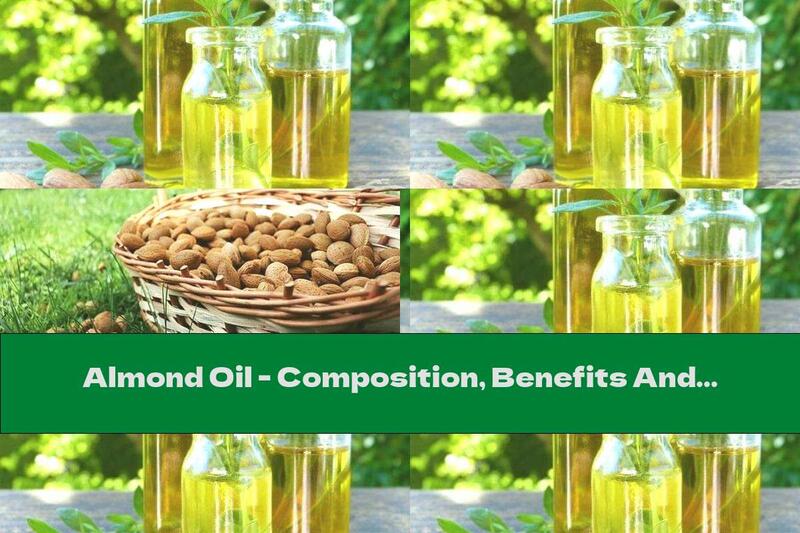
Almond Oil - Composition, Benefits And Application
 Author: Marko Balašević
Time for reading: ~3
minutes
Last Updated:
August 08, 2022
Author: Marko Balašević
Time for reading: ~3
minutes
Last Updated:
August 08, 2022
CHAPTERS (Table Of Contents)
In addition to culinary applications, almond oil is used for cosmetic, medical and medicinal purposes.
Almonds are the fruit of the Prunus dulcis tree, and although we call them nuts, they are seeds that we find in the center of the almond fruit. Their high fat content makes them an ideal source of oil, which provides countless health benefits.
Almond oil is sweet and bitter, but for full and long-term use only the first is used. It is rich in valuable nutrients, including vitamins D, B1, B6, A, and K. Almond oil is also an excellent source of vitamin E, as well as minerals such as magnesium, calcium, zinc and iron. extremely useful as it contains 86% unsaturated fatty acids and only 14% saturated ones.
Composition and nutritional value of almond oil
Nutritional value for 1 tablespoon (14 grams) of almond oil:- 119 calories;
- 13.5 grams of fat;
- 1.1 grams of saturated fat;
- 9.4 grams of monounsaturated fat;
- 2.3 grams of polyunsaturated fat;
- vitamin E - 26% of the recommended daily dose;
- 35.9 milligrams of phytosterols.
Health benefits of almond oil
- Prevents cardiovascular disease - Almond oil is rich in monounsaturated fats, which help lower "bad" LDL cholesterol and keep "good" HDL cholesterol levels high. It has been shown that this is necessary to strengthen the health of the heart and blood vessels. As a source of powerful antioxidant properties and vitamin E, this oil is ideal for consumption by people suffering from cardiovascular disease or diabetes.
- Protects cells from harmful substances called free radicals - 1 tablespoon (14 grams) of it provides 26% of the recommended daily intake of vitamin E (a set of eight fat-soluble compounds that have antioxidant properties).
- Stimulates immunity - almond oil strengthens the immune system, protects the body from infections and activates defense mechanisms.
- Improves digestion and helps reduce excess weight.
- Lowers blood sugar - adding almond oil to your diet helps control blood sugar. Due to the rich composition of monounsaturated and polyunsaturated fats, the oil helps lower blood sugar in people with diabetes.
- Strengthens memory and the nervous system - the folic acid and omega-3 acids in almond oil promote brain activity and concentration. It improves all cognitive functions (perception, memory, reproduction, etc.).
- Relieves muscle pain - Almond oil has an analgesic effect, which has been proven to relieve and soothe pain, as well as relax muscles.
How to use almond oil in cooking
In cooking, almond oil is used as a healthy alternative to other vegetable oils. Just add 1 teaspoon of it to your diet to take advantage of its beneficial properties.
Almond oil has a light and delicate taste, which makes it a great addition to many dishes. It is not recommended to use unrefined oil in the cooking process, as high temperatures can destroy its nutritional value. Rather, this type of butter is good to use as a finish to dishes with meat, fish, vegetables, soups, sauces and salads. It is recommended to use it immediately before consumption, in order to preserve the valuable nutritional qualities.
Refined or unrefined almond oil to choose
After harvesting, the almonds are peeled and dried. Refined almond oil is extracted from nuts by high temperature and chemical treatment. This has a negative effect on the oil, as many of the nutrients found in the raw almond oil are destroyed during treatment. Refined oil is much cheaper than the unrefined type, which is obtained by pressing raw almonds without the use of high heat or chemical treatment. This process helps almond oil retain much of its valuable nutrient content, making the product a better choice for culinary purposes.
Almond oil for beauty
In addition to culinary applications, almond oil is used for cosmetic, medical and medicinal purposes. It nourishes and hydrates the skin in depth, slows down the aging process, soothes skin irritations and enhances cell regeneration. Its use stimulates hair growth by strengthening it, giving density, volume and shine to the hair. Almond oil is also a faithful helper in the fight against stretch marks. It is applied directly on the skin. Proven to relieve and soothe pain, as well as relax muscles.
Various applications of unrefined almond oil:
- As a delicious salad dressing: Combine unrefined almond oil with apple cider vinegar and chopped herbs.
- As an addition to pasta: To add more healthy fats to your spaghetti, season them with a little almond oil.
Related Articles
- The Power of Honeysuckle: Health Benefits and Recipes
- Fruitskewers in Honey Syrup: Nutritional Benefits and Recipes
- The Ultimate Guide to Buffer 500 in Nutrition: Benefits and Usage
- Nutritional Benefits of Fruit Skewers in Honey Syrup: A Delicious and Healthy Recipe
- Nutrition Guide: Fruitskewers in Honey Syrup - Benefits, Recipes, and More
Top Nutrition Articles Today
- . The Role of Hormones in Nutrition: Understanding How Hormone...
- . Nutritional Benefits of Lasagna: Why It's a Healthy Choice
- . Understanding E 479: Role in Nutrition, Health Implications,...
- . Nutrition In Leukoplakia
- . Starbucks Iced Coffee With Heavy Cream Calories
- . Nutrition Benefits of Neck Trimmings: Recipes and Tips
- . Omega 3 Foods
- . The Dr. Sarah Hallberg Diet: A Comprehensive Guide to Revers...
- . The Ultimate Guide to Gatorade in Nutrition: Benefits, Usage...
- . The Role of K12 in Nutrition: Benefits, Sources, and Recomme...