Alternative Nutrition. Reduced Nutrition
 Author: Victoria Aly
Time for reading: ~3
minutes
Last Updated:
August 08, 2022
Author: Victoria Aly
Time for reading: ~3
minutes
Last Updated:
August 08, 2022
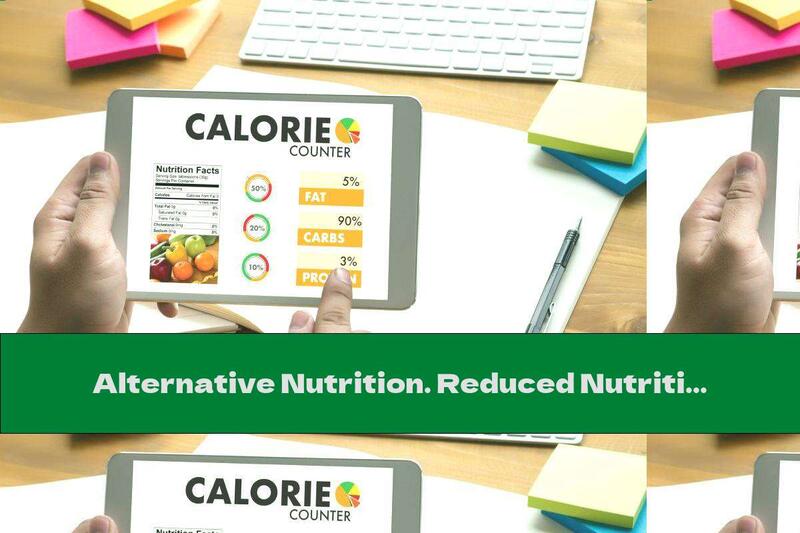
In this article, learn more about Alternative Nutrition. Reduced Nutrition. Alternative meals have become extremely popular and many people practice them.
The concept of "alternative nutrition" includes the application of diets of different duration, differing significantly from the basic requirements for healthy eating.
The most common forms of this non-standard diet are currently:
- Reduced nutrition;
- Intermittent eating;
- Vegetalism;
- Vegetarianism;
- Unbalanced diets;
- Separate meals.
Reduced nutrition includes various forms of limited intake of nutrients and energy with different motivations. The most common reason for its use is weight loss. If this regimen is administered under medical supervision for a short period of time, it usually does not pose a risk to human health.
The diet in these cases is reduced to a restriction of energy nutrients (fats and carbohydrates), combined with increased physical activity. If the diet is applied for a very long time, it is possible to have nutritional deficiencies, which can lead to a number of disorders in the body.
The application of regimens with complete fasting for more than 7 days is a serious violation of the nutritional needs of the body. Cellular metabolism is disturbed, it is possible to start disease processes.
It is important to note that in addition to a significant reduction mainly in subcutaneous fat and muscle mass, there is a decrease in weight and internal organs - liver, kidneys, spleen, heart. During starvation, significant changes occur in the biochemical processes in the body.
As a result of the reduced diet, a deficiency of protein, vitamin B12, folic acid, iron and zinc occurs , which leads to the development of anemia. In addition, the functions of the immune system, enzymes and endocrine functions are severely impaired.
Therapeutic fasting in out-of-clinical conditions, even not in its pure form, but the so-called "Soft starvation" with fruits, vegetables and teas that help the body purify itself carries great risks. It aims to reduce weight quickly, to melt excess fat quickly, but we must ask ourselves at what price?
When such fasting is carried out for more days, the fat begins to melt. They invade the blood in the form of triglycerides and fatty acids. At the same time, blood vessels become very vulnerable to vascular accidents.
Aggressive adipose tissue that invades blood vessels can cause blockage, leading to a heart attack or stroke. Any vessel that becomes clogged leads to damage to the relevant organ and its functions, and hence to the whole organism.
The liver is most damaged as all of these fat metabolites pass through it. And the liver is the laboratory that cleanses the body of toxins and excess metabolites. Other vulnerable organs are the pancreas and kidneys, with impaired digestive and excretory functions, respectively.
In some people, the processes of weight reduction and loss do not begin with the breakdown of fat, and the reduction is at the expense of muscle tissue, which is a protein mass. There are cases when the cells of the internal organs begin to break down - the liver, kidneys, spleen, which begin to break down to give energy to the body. The more drastically a person starves, the greater the health risks.
The application of the so-called unloading days could be considered as a good variant of the reduced diet. On these days, only fruits or berries and vegetables or milk added to them can be taken.
Fruits and vegetables are distributed in small portions throughout the day, and between their intake drink milk and herbal teas sweetened with a little honey. It is considered that in the mixed diet the application of such a regime once a week is especially useful, as the body is saturated with alkaline radicals and facilitates the elimination of toxic substances and metabolites.
Related Articles
- The Ultimate Guide to Hickory Smoked Bacon in Nutrition and Healthy Eating
- Fruitskewers in Honey Syrup: Nutritional Benefits and Recipes
- The Ultimate Guide to Buffer 500 in Nutrition: Benefits and Usage
- Nutritional Benefits of Fruit Skewers in Honey Syrup: A Delicious and Healthy Recipe
- Nutrition Guide: Fruitskewers in Honey Syrup - Benefits, Recipes, and More