Arthritis - How To Eat It?
 Author: Nia Rouseberg
Time for reading: ~3
minutes
Last Updated:
August 08, 2022
Author: Nia Rouseberg
Time for reading: ~3
minutes
Last Updated:
August 08, 2022
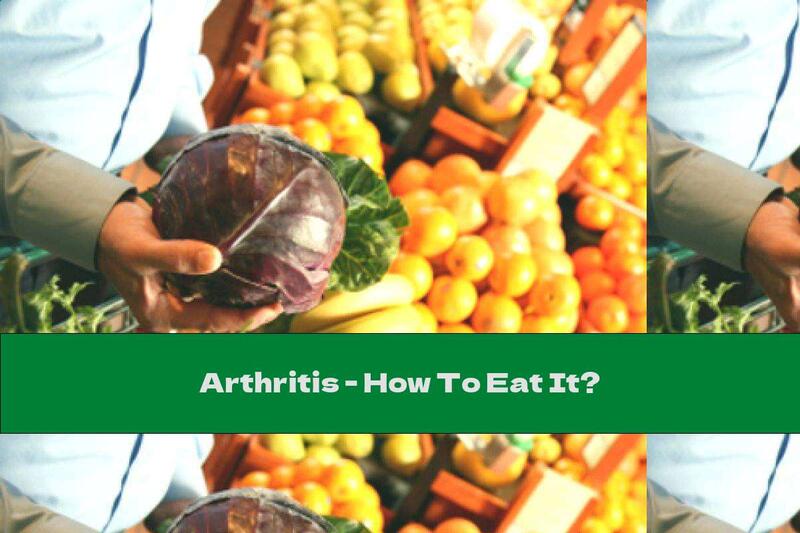
In this article, learn more about Arthritis - How To Eat It?. Autumn offers a rich menu, which can be used to suppress joint pain.
Arthritis is a chronic disease that affects one in five people. Arthritis includes hundreds of diseases that affect the joints, such as osteoarthritis and rheumatoid arthritis.
Arthritis is a disease that occurs as a result of inflammation . In this sense, the appropriate diet (diet) against or in arthritis mainly includes products whose ingredients have a proven anti-inflammatory effect.
However, before expecting an effect from the diet, experts point out that in the presence of overweight , it must first be reduced - first because the extra pounds put a strain on the joints, then because adipose tissue releases substances that deepen inflammatory processes in the body. The most painless weight loss can be achieved by excluding from the diet products that "fill" us with "empty calories" such as sugar and pasta, semi-finished products, packaged chips "food pacifiers".
There is a third condition - in the diet should be excluded foods that aggravate the severity of inflammatory processes . These are mainly products containing a large amount of saturated fats and refined carbohydrates.
What are the right foods for / with arthritis?
1. In particular, the body must be supplied with food sources of anti-inflammatory agents. Of this class are those containing omega-3 fatty acids. They suppress the release of cytokines and enzymes in the body, which generally "corrode" cartilage. A number of studies have shown that omega-3s help reduce the symptoms of rheumatoid arthritis, such as swelling, warming of the skin and joint pain, and reducing stiffness and fatigue.
The fish - rich menu is also suitable for osteoarthritis, although there is no such definite data on its effect.
Where to find them? Useful omega-3s are found in oily fish such as salmon, herring, mackerel, sardines, anchovies, as well as in oysters, flaxseed oil. Walnuts are also useful.
2. For joint pain, the oil and other oils traditionally used for cooking should be replaced with Extra Virgin Olive Oil , which contains valuable polyphenols, also with anti-inflammatory properties. The benefits of olive oil, as well as fish oil , against arthritis are one hundred percent proven.
3. In the presence of inflammatory processes in the body the immune systemneeds support to be able to perform its functions in this overload mode for it. Inflammation releases the same unpleasant molecules to which we owe the aging of the body in the long run - free radicals. Free radicals are formed as a result of the natural functioning of the body and as a result of the collision with toxins. Synovial fluid is just as sensitive to free radicals as skin and eyes.
Figuratively speaking, the antipode of free radicals are antioxidants . Those that are effective against arthritis and can help relieve joint pain are vitamin C, selenium, carotene.
Vitamin C is also needed for the strength of collagen, a key structural element of cartilage. In general, people with a vitamin-poor diet are much more likely to suffer from arthritis. On the other hand, taking high doses of vitamin C worsens osteoarthritis in the long run. This means that in osteoarthritis it is more appropriate to get vitamin C with food than with dietary supplements.
Where to find them? Natural sources rich in vitamin C are: all kinds of peppers, oranges, grapefruit, lemon, pineapple, kiwi, strawberries, papaya, mango, broccoli, cauliflower, curly, red, Brussels sprouts, potatoes (cooked with the peel), alabaster and etc. Selenium
deficiencyexacerbates complaints of osteoarthritis and rheumatoid arthritis. In general, people whose diet does not provide selenium are twice as likely to suffer from gonarthrosis - osteoarthritis of the knee.
Where to find them? Selenium can be provided with Brazil nuts, tuna, cod, crabs, oysters, shrimp, beef, turkey, whole grains and wheat germ.