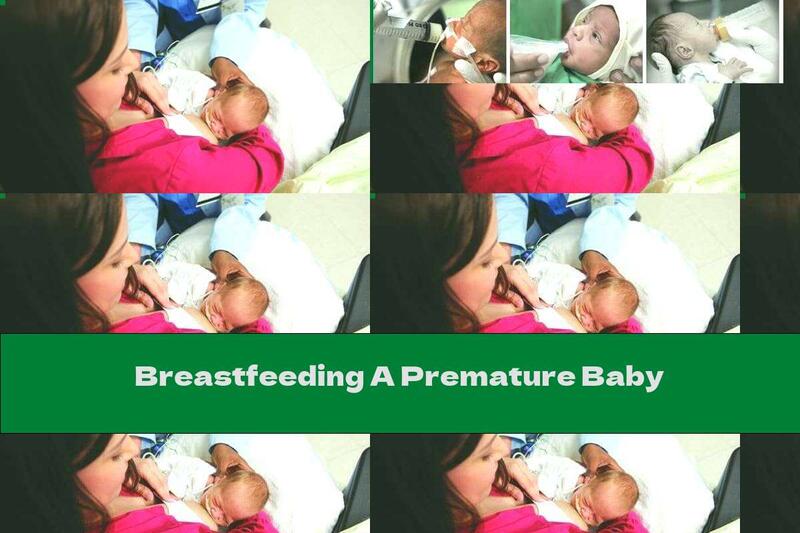
Breastfeeding A Premature Baby
 Author: Karen Lennox
Time for reading: ~8
minutes
Last Updated:
August 08, 2022
Author: Karen Lennox
Time for reading: ~8
minutes
Last Updated:
August 08, 2022
CHAPTERS (Table Of Contents)
Worldwide, more than 15 million babies are born prematurely each year. However, thanks to medical technology, the survival rate for extremely premature babies has increased.
Worldwide, more than 15 million babies are born prematurely each year. However, thanks to medical technology, the survival rate for extremely premature babies has increased.
The classification of prematurity is determined by gestational age. Pregnancy is normally considered to last 40 weeks of gestation. Babies born before the 37th week are considered premature, between the 28th and 32nd week - very premature and in the 28th week or earlier - extremely premature.
When you face a premature birth, you will find yourself in a situation where the baby will be taken to the intensive care unit and will probably be placed on a device that will help him breathe.
Mothers are often discharged from the hospital before the babies are ready to go home with them. This can be quite traumatic, especially if the hospital is not near your home. At this point, you will probably ask yourself many questions about raising a child, and one of them will be whether you can breastfeed him. And the answer is, "Yes, you can!"
Breastfeeding is great for all newborns, but is even more important if your baby was born earlier than expected. This is because your body will automatically produce milk that is specifically designed to feed the premature baby, with extra calories, vitamins and protein. Moreover, the living cells in milk that protect babies from infections are even more important for premature babies, as they face a higher risk of disease due to their still immature immune system.
At present, adapted milks and nutritional supplements have been developed specifically for premature babies, but they cannot provide the necessary antibodies and other protective factors that are in breast milk.
Studies have even shown that breastfeeding premature babies can improve their neurological development. Breast milk is much easier to digest than a premature baby than an adapted formula. It also protects the gastrointestinal tract.
The hospital can start with intravenous infusions, which will deliver the necessary nutrients through a thin tube directly into the baby's bloodstream. This is necessary if the child has an immature digestive system and cannot suck, swallow and breathe normally. This diet can last for hours, days, weeks or longer after birth, depending on how premature the baby is and whether there is a problem with his digestive system.
Even if a premature baby is able to process breast milk, it will not be mature enough to control sucking, swallowing and breathing until it is 32-34 weeks old. Until then, feeding will need to be done through a nasogastric tube (a tube that is inserted through the nose and reaches the stomach), but it is best to use expressed breast milk.
You will need to work with the hospital staff to monitor and care for your child, as he or she cannot be discharged until he or she begins to gain weight, breastfeed or bottle-feed.
Premature birth will not interfere with milk production, but the additional stress, fear, discomfort and fatigue that accompany it can contribute to a slower milk release. But with patience and support you will breastfeed successfully. Breastfeeding will boost your baby's growth and build a close bond between you and your baby.
Skin-to-skin contact is very important at this time. Keep your baby close to you at any convenient time. Let it be only on diapers and covered with a blanket so that his body has direct contact with your breasts. This contact helps both you and the child to feel close to each other. It can also be practiced by your partner.
For the premature baby, skin-to-skin contact:
- reduces stress;
- helps breastfeeding;
- helps to adapt to the environment;
- helps to regulate heart rate and respiration.
- helps prevent postpartum depression;
- increases confidence;
- affects the production of the hormone that helps milk production.
- helps to connect the baby - babies can hear the voices of both parents in the womb and can be soothed by the voice of both mother and father;
- helps him feel more confident as a parent.
Health experts usually advise women to breastfeed if they can. Breast milk has many health benefits for the premature baby and is recommended by neonatologists. Even if you don't like this idea, it's worth a try, because the benefits for the child are huge. Every drop of milk will be extremely important for them.
What challenges can you face?
Because premature babies are often separated from their mothers for long periods of time, it is important to start stimulating your breasts immediately after birth. The most efficient and convenient way to do this is to use a high-end double electric breast pump.
Immediately after birth, the breast produces colostrum - it is so rich in antibodies that it is often called the "first vaccine" of the baby. Colostrum is only present in the first few days after birth, so it is especially important to express your breasts often during this time. Because premature babies are smaller than worn-out babies, they drink less milk per meal. But when it comes to breast milk - and especially colostrum - every drop counts!
Studies show that newborns who are breastfed spend less time in the hospital than formula-fed babies, which is another benefit of breastfeeding.
After a premature birth, you may not feel well and your breast milk may stop. In these cases, it is good to hug the newborn more often and encourage him to breastfeed.
From about 28 weeks, babies successfully suck their thumbs, finding this soothing. They can also apply this on the nipple, thus helping to develop their sucking reflex and stimulating lactation. Most babies have not fully developed this reflex (up to 32-36 weeks of gestation), and this is crucial for nutrition.
Once the baby is ready to move to the breast, it will take time and patience to teach him how to latch. Premature babies have weak muscles in the neck, so you will need to place your hand behind your neck to hold their head well.
One general rule in caring for premature babies is to limit crying as much as possible, because crying loses valuable energy. Of course, this is quite difficult when raising a newborn, as you still do not know exactly when he is hungry or when he feels other discomfort.
What can you do to solve these problems?
You will need to start adjusting to your baby's signs. You need to know when the child wants to eat. This is not easy because premature babies tend to be quieter, even when it's time to feed, than their full-term peers. Vigilance may be the only sign that the child is hungry, instead of the loud crying that is heard in most infants.
Aim to feed the newborn at least once every three hours (about eight feedings in 24 hours). But do not strictly adhere to this schedule, if the baby looks hungry only two hours after feeding, try to breastfeed him again. Premature babies sleep more time, so sometimes they may need to be woken up to breastfeed. The life of these children is more like eating and sleeping, when the baby does not eat, you need to think about how to make him eat.
When your baby is able to start breastfeeding, be prepared to breastfeed often. Premature babies cannot take large amounts of breast milk and you will need to pump milk after you have finished feeding to maintain lactation, as well as have milk if you need additional feedings. And not all mothers cope with breastfeeding easily. Some prefer to express milk and offer it with the help of accessories (cup, bottle, spoon, syringe).
To express milk for your baby, it is best to start soon after birth (ideally 6 hours after birth). You will need to express your breasts about eight to ten times a day, including once a night.
During the first few days, you can express only a few drops of milk and this will be discouraging, but remember that even these drops are valuable for the child's health. The newborn's stomach is very small, so you will need very small amounts of milk. Gradually, the amount of milk will increase, so be patient and do not think that you are not able to produce enough milk for your baby.
Warming and massaging the breasts gently before squeezing can increase the amount of colostrum. You may think that expressed milk is in very small amounts, but it is actually quite enough for the baby at this stage. Colostrum is a concentrated, protein-rich food and quickly fills his small stomach.
If it is possible for the newborn to be close to you during expressing, this would stimulate the production of hormones that promote milk production.
When will a premature baby be ready to be breastfed?
For most premature babies, this process is slow and gradual. It all depends on how long before the child is born and what are his individual needs in general.
Close contact between you will really increase the chances of successful breastfeeding. This means holding your baby so that he is calm and warm (skin-to-skin contact).
Initial attempts at breastfeeding are in most cases unsuccessful and difficult. Try not to be discouraged. It will take time for the baby to develop his ability to breastfeed. What you can do in the beginning is to offer the breast empty (after you have expressed the milk) to stimulate the sucking reflex and make it easier for the baby to get used to breastfeeding.
When it's ready to start sucking, don't expect much either. Premature babies get tired quickly, so they are unlikely to stay on the breast for long. At first, the newborn will probably only lick the breast or take only a few drops of breast milk. But once you reach that point, you are on the final straight. With a little more time and patience, breastfeeding will finally begin.
Related Articles
- Nutrition Guide: Breastfeeding for Infants and Mothers
- The Benefits of Night Breastfeeding for Nutrition: A Complete Guide
- The Importance of Night Breastfeeding for Nutrition: Benefits for Your Baby
- Night Breastfeeding for Nutrition: Benefits, Nutritional Composition, and Recipes
- The Ultimate Guide to Breastfeeding in Nutrition: Benefits, Diets, Concerns, and Recipes
Top Nutrition Articles Today
- . Foods Containing Carrageenan: A Comprehensive Guide for Your...
- . The Fibroid Diet: Nutrition Strategies for Managing Fibroids
- . The Ultimate Guide to Flour in Nutrition: Types, Benefits, a...
- . List of Foods that Contain Carrageenan: A Guide to Avoiding...
- . The Truth About Potato Chips: Health Effects and Alternative...
- . How To Cook Pork Liver And Mushrooms In Cream Sauce With Che...
- . E551: The Food Additive You Should Know About
- . The Ultimate Guide to Creating a Well-Structured Diet Plan f...
- . Bitterness In The Mouth: Causes And What To Do
- . Nutrition By Blood Type: Table Of Allowed And Prohibited Foo...