Breastfeeding And Coffee - Does Caffeine Affect The Baby
 Author: Dean Rouseberg
Time for reading: ~4
minutes
Last Updated:
August 08, 2022
Author: Dean Rouseberg
Time for reading: ~4
minutes
Last Updated:
August 08, 2022
CHAPTERS (Table Of Contents)
Is it safe to drink coffee while breastfeeding? Does caffeine pass into breast milk?
Breastfeeding can be exhausting, especially in the early days, when the baby has no sleep habits and wakes up repeatedly every night.
In such cases, a morning cup of coffee can be of great benefit to sleep-deprived mothers. However, many are worried about the effects of caffeine on the baby.
How Safe is Caffeine While Breastfeeding?
Caffeine is a compound found in some plants. It acts as a stimulant of the central nervous system. It can improve alertness and energy levels. Taken in moderation, it is safe for breastfeeding women, but many mothers still wonder if its use has a negative effect during breastfeeding.
Like everything else, drinking coffee while breastfeeding in moderate doses is safe and acceptable. However, overuse can have negative consequences for both mothers and babies.
Does caffeine pass into breast milk?
Many women are told to limit / stop caffeine during pregnancy because of the risk of it passing through the placenta and affecting the developing fetus.
However, caffeine is much less likely to affect infants. The body metabolizes most of it before it reaches breast milk and has a chance to affect the baby.
Approximately 1% of the total amount of caffeine you consume passes into breast milk. And its level usually peaks about 60 minutes after consumption.
To find out if caffeine affects your baby, monitor his reactions when you breastfeed him an hour after consuming a caffeinated beverage.
A study of 15 breastfeeding women found that those who drank beverages containing between 36 and 335 mg of caffeine had between 0.06 and 1.5% caffeine in their breast milk.
And while that amount may seem small, babies can't process it as fast as adults. Caffeine is absorbed from the intestines into the blood. The liver then processes and breaks it down into compounds that affect various organs and functions of the body.
In healthy adults, caffeine remains in the body for 3-7 hours. And babies can hold it for 65-130 hours because their liver and kidneys are not fully developed.
Some mothers notice that their babies become nervous, cry, have colic and sleep problems when they take too much caffeine. But the amount is too different for each mother and depends on many things (for example, how fast the mother's body processes caffeine). The only way to know if your caffeine is affecting your baby is to monitor his reactions.
How many cups of coffee a day can I drink?
Although babies cannot process caffeine as quickly as adults, breastfeeding mothers can still consume moderate amounts of caffeinated products.
It is safe to take up to 300 mg of caffeine a day - 2-3 cups (470-710 ml) of coffee or 3-4 cups (710-946 ml) of tea. Based on research, it is believed that consuming caffeinated beverages within this range does not cause harm to breastfed babies.
Babies of mothers who consume more than 300 mg of caffeine a day are also thought to have trouble sleeping (but research is limited).
When breastfeeding mothers consume significantly more than 300 mg of caffeine a day - for example, more than 10 cups of coffee - babies may have sleep disturbances and become nervous.
In addition, excessive coffee intake during breastfeeding can have a negative effect on mothers themselves, such as increased anxiety, nervousness, palpitations, dizziness and insomnia.
If you notice that your baby is having difficulty falling asleep or is nervous, try reducing and stopping coffee for 2-3 weeks to see if there will be any difference. Start by gradually reducing the dose of caffeine, as abrupt cessation can lead to headaches or other symptoms.
Risks and benefits of drinking coffee while breastfeeding
While the potential risks of caffeine intake during pregnancy sound scary, the risks of drinking coffee while breastfeeding are negligible.
Some experts are concerned that caffeine may affect babies' sleep, but a 2012 study of 885 babies in Brazil did not prove such claims. The study found no statistically significant effect on sleep quality in 3-month-old infants breastfed shortly after caffeinated beverage consumption.
A Korean study also found no serious risks from drinking coffee and other caffeinated beverages during breastfeeding , especially in moderation.
Some people believe that the acids in coffee can lower the iron content in breast milk, although there is no scientific evidence to support this. Breast milk is naturally low in iron, but babies need it to develop normally, so mothers who drink coffee should discuss iron intake with their doctor.
What about decaffeinated coffee?
Decaffeinated coffee contains a small amount of caffeine. It is just as safe and even safer than caffeinated coffee. But even when taking decaffeinated coffee, you will need to discuss iron intake with your doctor.
Sources of caffeine
Caffeine is found in coffee, tea, soft drinks, energy drinks, some over-the-counter and over-the-counter medications, and foods containing coffee or chocolate. Herbal products that contain guarana, cola, yerba mate or green tea.
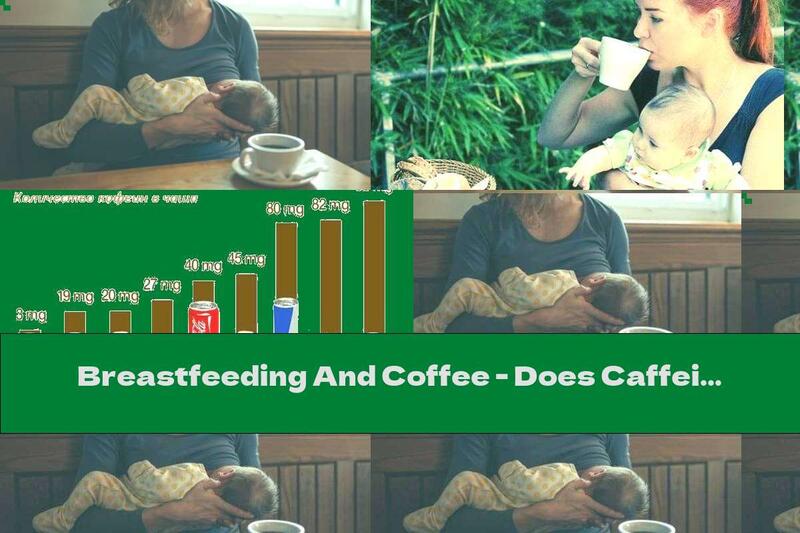
| Type of drink | Quantity in ml | The amount of caffeine in mg |
| Energy drinks | 240 ml | 50–160 mg |
| A cafe | 240 ml | 60–200 mg |
| Tea | 240 ml | 20–110 mg |
| Cold tea | 240 ml | 9–50 mg |
| Soda | 355 ml | 30–60 mg |
| Hot chocolate | 240 ml | 3–32 mg |
| Decaffeinated coffee | 240 ml | 2–4 mg |
Note that this table shows the approximate amount of caffeine in these drinks. Some of them - especially coffee and tea - may have a higher or lower content, depending on how they are prepared.
If you consume several caffeinated beverages or products a day, you are probably consuming more caffeine than the recommendations for breastfeeding women.
Will caffeine reduce the amount of breast milk?
There is a widespread myth that caffeine will reduce the amount of breast milk. Since many women consume beverages and products containing caffeine during breastfeeding, it would be easy to document all the adverse effects of it on breast milk. However, these have not been observed, despite a number of studies.
Related Articles
- The Ultimate Guide to Panera Coffee Nutrition: Benefits, Content, and Tips
- The Impact of Coffee on Nutrition: Benefits, Risks, and Tips
- Nutrition and Gas: How Your Diet Affects Digestive Health
- The Impact of Coffee on Nutrition: Benefits, Antioxidants, and Recipes
- Nutrition Guide: Breastfeeding for Infants and Mothers
Top Nutrition Articles Today
- . The Dr. Sarah Hallberg Diet: A Comprehensive Guide to Revers...
- . The 50/25/25 Macronutrient Split: A Comprehensive Guide to B...
- . Vitamin D Fortified Foods
- . Starbucks Iced Coffee With Heavy Cream Calories
- . The Role of Nutrition in Maintaining Good Health
- . Understanding E 479: Role in Nutrition, Health Implications,...
- . The Role of E214 in Nutrition: Functions, Foods, Health Conc...
- . Nutritional Value Of White Rice
- . Nutrition Benefits of Neck Trimmings: Recipes and Tips
- . Nutrition In Leukoplakia