Broccoli Protects Against Breast Cancer
 Author: Alexander Bruni
Time for reading: ~1
minutes
Last Updated:
August 08, 2022
Author: Alexander Bruni
Time for reading: ~1
minutes
Last Updated:
August 08, 2022
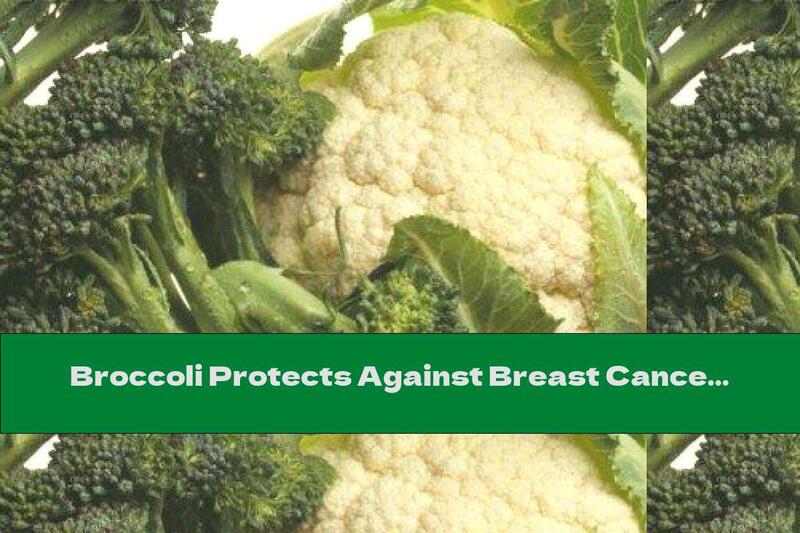
Recent studies show that broccoli contains a substance that kills cancer cells and limits the development of breast cancer ...
Recent studies by American scientists show that broccoli contains substances that kill cancer cells and can prevent the development of breast cancer.
Experts from the University of Michigan are adamant that this effect is due to the substance sulforaphane. It has the ability to destroy cancer cells without allowing them to divide uncontrollably and damage healthy cells and tissues.
The effect of sulforaphane has been tested on patients with breast cancer. The results show a reduction in the number of cancer stem cells, a reduction in the growth of the tumor in the breast, and in some cases even regression of the tumor.
According to the scientific team, broccoli extract or sulfaraphane could be used in the future for the prevention and treatment of malignancies.
The results of the study were published in the journal Clinical Cancer Research.
In addition, broccoli contains other substances with antitumor activity. It contains twice as much vitamin C as orange, whose protective effect against free radicals is known. When the amount of free radicals is reduced, their negative impact on cells and their degeneration into cancer is limited.
Broccoli also contains potassium, necessary for water-electrolyte balance and selenium - a mineral with proven antitumor action.
Broccoli is also rich in calcium. What is specific about their consumption is that the mineral is more digestible from broccoli than from yogurt.
Vegetables are high in fiber, which facilitates gastrointestinal peristalsis.
Broccoli is an ideal food for people who follow a diet. One cup of cooked broccoli carries only 50 calories, but creates a feeling of satiety. Unlike cabbage, broccoli does not swell the stomach.
Compared to fresh, packaged frozen broccoli has a lower nutrient content. Broccoli flowers are richer in beta-carotene than their stems. Producers usually remove most of the broccoli stalks before packaging, so frozen broccoli contains about 35% less beta-carotene, twice as much sodium, twice as little calcium and very little iron, riboflavin and vitamin C than fresh broccoli.
Related Articles
- The Importance of Breast Milk Color in Nutrition: Understanding Nutritional Insights
- Nutritional Benefits of Baked Chicken Breast: A Healthy Choice for Your Diet
- The Importance of Breast Milk Color in Nutrition: Insights and Benefits
- The Power of Broccoli: Nutritional Benefits, Recipes, and More
- Nutrition Guide: Breastfeeding for Infants and Mothers
Top Nutrition Articles Today
- . The Role of Disodium Diphosphate in Nutrition: Functions and...
- . Nutrition and Aneurysm: Reducing Risk Factors and Supporting...
- . Potato Season: 12 Cool Potato Recipes
- . What To Cook With Sweet Potato
- . How To Freeze Quince
- . Nutritional Benefits of Boiled Cod: A Healthy and Delicious...
- . Nutrition Guide: Fruitskewers in Honey Syrup - Benefits, Rec...
- . The Complete Guide to E339ii in Nutrition: Benefits, Regulat...
- . The Role of Preservatives in Nutrition: Types, Benefits, Con...
- . The Ultimate Guide to Potassium Nitrate in Nutrition