Butter Or Margarine - Which Is The Healthier Product?
 Author: Alexander Bruni
Time for reading: ~2
minutes
Last Updated:
August 08, 2022
Author: Alexander Bruni
Time for reading: ~2
minutes
Last Updated:
August 08, 2022
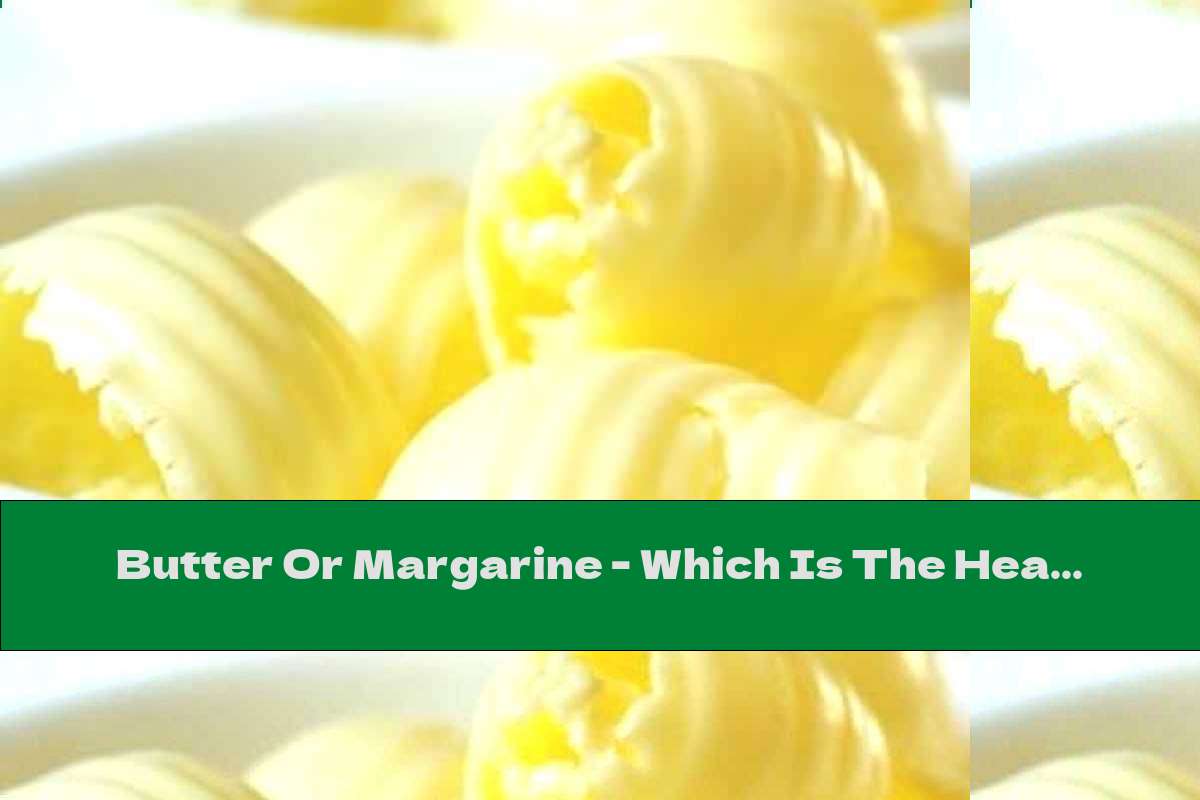
There are opinions that support both margarine and butter. The question is where the truth lies and is there an unambiguous answer to the question: Which is the healthier product?
We often eat a sandwich for breakfast, sometimes for lunch or just between meals. Not infrequently, however, we ask ourselves the question of what exactly to spread on the slice and which is the better fat in view of our health.
There are many reviews that support both margarine and butter. The question is where the truth lies and is there an unambiguous answer to the question: Which is the healthier product? We will offer you various facts "for" or "against" the qualities of one or the other product ...
Margarine
In general, margarine is a product that consists of pure, vegetable fats, does not contain cholesterol. That is why it is considered healthier and is usually preferred by people who follow diets. Margarine contains vitamins, which, however, are artificially added. Usually these are vitamin A, D,
The creation of margarine was in order to find a healthy substitute for butter. But what is the product that is available on the market today and many of us consume daily?
Vegetable fats at room temperature have the property to liquefy and for this reason the method of hydrogenation is widely used - a term in chemistry, which means the process of heating to a high temperature of vegetable oils in the presence of catalysts and water. Trans fats are produced from this process.
Liquid margarines have less trans fat than solid ones. Trans fats increase "bad" cholesterol (LDL) and lower "good" (HDL). According to a number of studies on the subject, their high consumption increases the risk of cardiovascular disease, various types of cancer. It is becoming increasingly clear that hydrogenated fats are one of the main threats to our health.
Margarine is preferred by many people due to the fact that it is a cheaper product. But what is the reason for its low price? In the chemical treatment of vegetable fats, the volume of the final product usually increases. In the United States, many restaurants and fast food restaurants prohibit the preparation of food with hydrogenated vegetable fats.
Butter
The most common and consumed form of butter is obtained from cow's milk. But it is also produced by other mammals such as sheep, goats, buffaloes. Cow's oil is easily digestible when consumed raw.
However, it is a natural source of vitamin A. However, when subjected to heat treatment, the oil becomes difficult for the body to absorb as it loses its water content. Butter is made up of animal fats, which means it has a high cholesterol content.
Its consumption is not recommended for people suffering from cardiovascular disease, liver disease, gallstone disease. Cow's oil contains a large amount of saturated fats, but they are less than in vegetable oils. In addition, it contains valuable dairy ingredients, mineral salts, casein, lactose and more.
Related Articles
- Nutritional Benefits of Pizza: Key Nutrients, Healthier Options, and Recipes
- The Nutritional Value of Potato Chips: A Guide to Making Healthier Choices
- The Ultimate Guide to Buttermilk Powder: Benefits, Uses, and Recipes
- The Power of Buttermilk Powder: Nutrition, Benefits, and Recipes
- The Impact of Burger King on Nutrition: Menu, Healthier Options, Effects, Tips
Top Nutrition Articles Today
- . Diet After Surgery Of The Small And Large Intestine
- . Jam For Breakfast To Lose Weight? Why Not?
- . The Role of Acidity in Nutrition: Understanding pH Levels an...
- . The Importance of Food Labels in Nutrition: A Comprehensive...
- . Crohn Pain And Ulcerative Colitis
- . Nutrition in 2025: Trends, Technologies, and Future Outlook
- . How To Reduce Appetite
- . Lentils - Saturate And Provide Folic Acid
- . High Flavonoid Cocoa Powder
- . The Role of Sodium in Soups: Impact on Health and Tips for H...