Classic Methods Of Food Preservation
 Author: Maryam Ayres
Time for reading: ~3
minutes
Last Updated:
August 08, 2022
Author: Maryam Ayres
Time for reading: ~3
minutes
Last Updated:
August 08, 2022
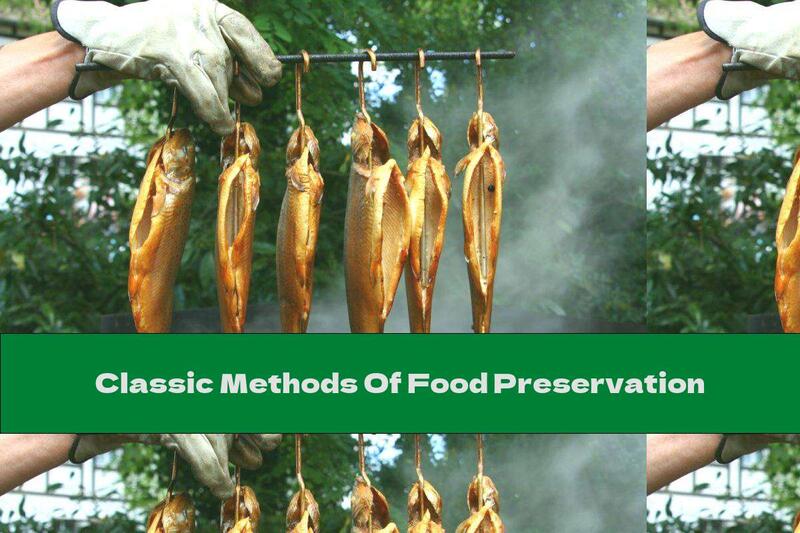
Methods such as smoking, salting and freezing have been used for millennia to store food
Any food that is produced but cannot be consumed must be stored immediately in some way, otherwise it will soon begin to spoil as it becomes home to a large number of microorganisms . Even processed foods - foods that are chemically processed - can spoil.
Spoiled food is unfit for consumption and can cause serious poisoning. They are due to microorganisms and toxins that begin to develop in junk food. The spoilage of food begins with a change in appearance and smell. This is a signal that something is wrong.
The modern food industry provides us with plenty of opportunities for safe production, storage and transportation of food. However, there is still the danger of spoiling the food during the whole cycle from the farm to the shelves in the store.
Methods of food storage. Food canning has been known to mankind for thousands of years. Initially, only natural ingredients such as salt, sugar, smoking, drying and freezing were used to preserve food.
Canning with salt . Salt preserves food by withdrawing water from plant or animal cells by osmosis. In this way the food is dehydrated and becomes an inhospitable environment for microorganisms. Dehydration also greatly slows down the activity of enzymes involved in spoiling food. Salt is a particularly effective preservative for meat and fish. But due to fears of excessive salt consumption and hypertension, this method is increasingly used compared to the recent past. There are still meats that are canned by salting, such as some types of prosciutto or pastrami.
Canning with sugar . Sugar has an osmotic effect like salt. Food canned with sugar largely retains its shape, color and texture, as it is absorbed by the cells and replaces the water in them. The disadvantage of this method is that the mushrooms find ideal conditions for development in a sweet and acidic environment, such as jams, for example.
Canning by drying . Drying is an old method of preserving food, which, like the above methods, works on the basis of drying the food. There is evidence that the Egyptians dried fish and other meat in the hot desert sun. Plant foods such as beans, peas and various fruits are also stored successfully by drying. Disadvantage of drying is that it changes the color, smell, texture and taste of food and reduces the vitamin content.
The more modern version of drying is the so-called "freeze-drying" , which preserves the color, texture and taste of food. In this type of canning, the food is first frozen as soon as it is acquired, so that the water in it turns into fine crystals. These water crystals are then evaporated in vacuo and the products are packed. "Frozen-dried" products have a shelf life of several years, provided that the integrity of the packaging is not compromised.
Preservation by smoking . Smoking meat is also an old technique for storing meat and fish. If the food is not well dried, it is hung near a fire or chimney so that the smoke from the fire penetrates inside and dries it. Today, smoking is also used as a technique for storing and processing of pork, beef meat and fish. Unfortunately, smoking is not a safe enough method of preserving food.
For example, Listeria monocytogenes is a type of bacterium that can survive in smoked fish. This type of infection causes short-term gastrointestinal discomfort in healthy people, but can cause miscarriage in pregnant women and serious infections in young children and the elderly.
Freezing . When the ambient temperature is lowered, bacterial metabolism is greatly slowed down. Thus, bacteria cannot multiply and produce toxins. Before the advent of modern refrigerators and freezers, people stored food in basements, caves, running streams, cold rooms in which they put ice. The predecessor of the modern refrigerator was developed in the early 18th century and was a cabinet in which they put ice.
Related Articles
- Nutrition for Respiratory Health: Supporting Your Lungs with the Right Foods
- The Ultimate Guide to High Gluten Foods: Benefits, Sources, and Recipes
- The Ultimate Guide to High Gluten Foods: Effects, Benefits, and Recipes
- The Ultimate Guide to Lactic Acid in Nutrition: Benefits, Food Sources, and Recipes
- The Nutritious World of Wendy's Salads: A Healthy Fast Food Option
Top Nutrition Articles Today
- . Steak Label
- . How To Fry Porcini Mushrooms
- . The Importance of Supplements in a Healthy Diet - A Comprehe...
- . Beer Also Protects Against Osteoporosis
- . Understanding Gassy Foods: Impact on Digestion and Low-Gas D...
- . The Ultimate Guide to Calcium Inosinate in Nutrition: Benefi...
- . How To Cook Lunch For School: Meatballs, Babaganush, Sarma,...
- . Net Zero
- . How To Cook Tacos With Fish Halibut And Vegetables - Recipe
- . How To Deal With Cancer Overweight