Cranberries - A Powerful Antioxidant
 Author: Marko Balašević
Time for reading: ~2
minutes
Last Updated:
August 08, 2022
Author: Marko Balašević
Time for reading: ~2
minutes
Last Updated:
August 08, 2022
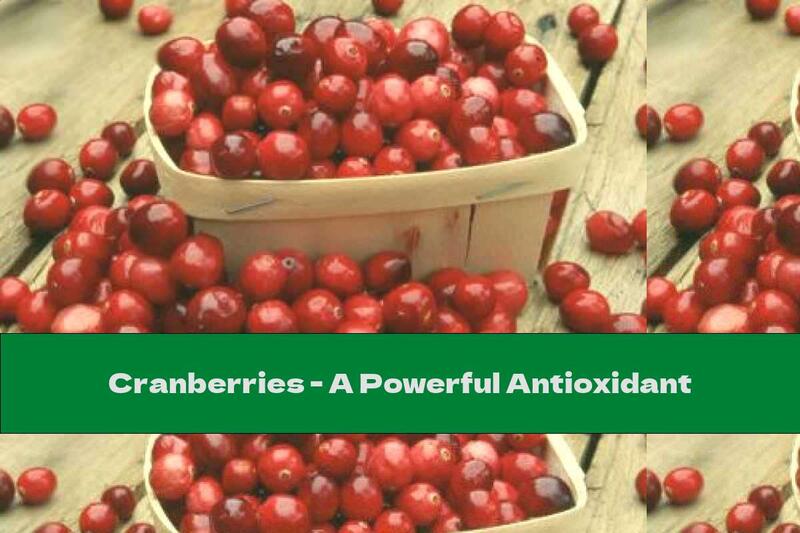
They block urinary tract infections, prevent the formation of dental plaque, regulate cholesterol and heart disease and give hope in the fight against cancer.
Cranberries are among the foods with a proven beneficial effect on health, according to the results of a study by Amy Howell from Rutgers University, quoted by the Associated Press.
Blueberry fruits are rich in vitamins, trace elements, minerals, tannins and flavonoids, essential fatty acids - linoleic acid (OMEGA-6), alpha linoleic acid (OMEGA-3), carotenoids and phytosterols.
They contain about 6% arbutin, traces of hydroquinone, about 8% catechin tannins, flavonoids quercetin, hyperoside, isoquercetin, ursolic, chlorogenic and caffeic acid, vitamin C.
Due to the presence of tannins of the catechin type, cranberry leaves are better tolerated than those of bearberry. They are a powerful antioxidant - the activity of vitamin A effectively neutralizes the action of free radicals. It also has antiseptic properties. Today, more than 20 million people in Europe use blueberries as an antioxidant.
The most effective, found in wild fruits - tocotrienol, a rare form of vitamin E, has been found in cranberries. This antioxidant is 40-60 times more effective than tocopherol, the most common form of vitamin E. Of all the natural oils, that of cranberry contains the largest amount of the antioxidant in question. Remarkable are the large amounts of iron, as well as the low glycemic index.
With its oxygen scavenging capacity of 9,584 units per 100 g, cranberry is among the most consumed foods in the United States.
American health institutes have funded research on the effect of cranberries on heart disease, fungal infections and other diseases.
So far, research has shown that drinking cranberry juice can block urinary tract infection by preventing bacteria from sticking to cell walls. Tannins have anti-adhesive properties against bacteria (prevent them from sticking to and sticking to the bladder wall and urethra) , thus protecting against urinary tract infections.
An ingredient found by Howell in cranberries and named proanthocyanidin prevents the formation of plaque on teeth.
In some people, regular consumption of cranberry juice has been found to kill the bacterium H. pylori, which can cause stomach cancer and ulcers .
Scientists are studying the role of blueberry polyphenols in the prevention of several types of cancer. Various anthocyanins, proanthocyanidins, tannins and the phytochemicals peonyidine and quercetin reduce the risk of cancer. Studies show that these substances inhibit the metabolism of cancer cells in vitro. They have an insufficiently studied effect on human health, probably in human cells in vivo the absorption of these substances is less and they are eliminated quickly from the blood, but the experiments in the laboratory are quite encouraging.
Cranberries can prevent the rapid growth of tumors. In addition, extracts of chemicals in cranberries have prevented the multiplication of breast cancer-affected cells in laboratory experiments.
Consumption of cranberry fruit has been shown to play a remarkable positive role in Alzheimer's disease and other neuro-degenerative changes associated with aging.
Studies show that daily consumption of cranberry juice increases the level of good cholesterol and reduces the level of bad cholesterol, which in turn is associated with beneficial effects on the heart and blood pressure.
Related Articles
- The Power of E306: Antioxidant Benefits in Nutrition
- Nutritional Benefits of Champignons: Vitamins, Minerals, and Antioxidants
- The Impact of Coffee on Nutrition: Benefits, Antioxidants, and Recipes
- Nutritional Benefits of Cherrywood: A Guide to Antioxidants, Fiber, and More
- The Role of Sodium Metabisulfite in Nutrition: Preservative, Antioxidant, and Health Implications