E181 - Tannic Acid, Tannins
 Author: Marko Balašević
Time for reading: ~2
minutes
Last Updated:
August 08, 2022
Author: Marko Balašević
Time for reading: ~2
minutes
Last Updated:
August 08, 2022
CHAPTERS (Table Of Contents)
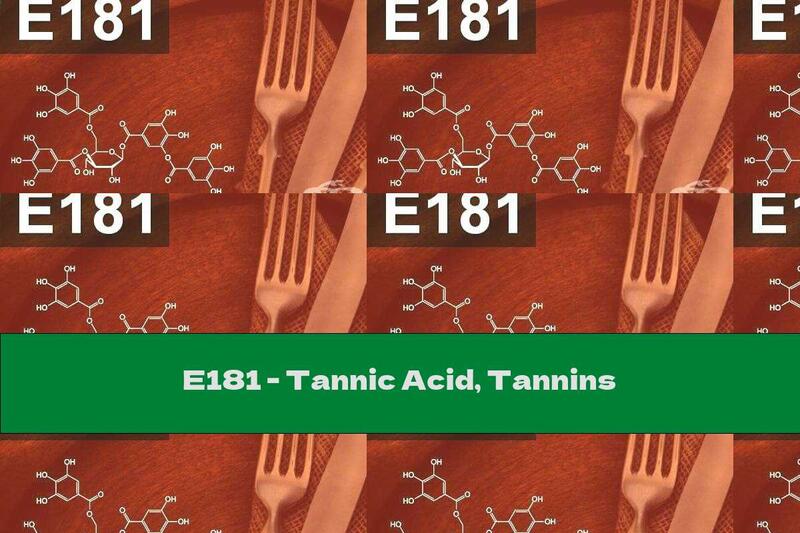
Tannin (food supplement E181) is used as a food coloring. Light yellow to light brown amorphous powder with astringent taste, no odor or slightly faint and characteristic. Tea contains a lot of tannins, and in green there are larger amounts.
Characteristics of tannic acid, tannins (E181)
Tannin (food supplement E181 ) is used as a food coloring. It is an amorphous light yellow to light brown powder that dissolves in alcohol, water and glycerin. It has an astringent taste, no odor or is slightly weak and characteristic. The dry mouth after consuming red wine, tea or unripe fruit is due to the tannin content. Colloidal solutions formed in water have strong acidic properties. Tannins belong to the phenolic groups and have a strong tanning effect. The reason for the tanning effect of the supplement is the ability of tannins to form a strong bond with polysaccharides, proteins and various biopolymers.
Tannins are divided into two types:- condensed - are derivatives of flavonoids;
- hydrolyzable - esters of polyols and gallic acid or their derivatives.
The supplement is produced from plant elements (acacia bark, spruce root, chestnut, fir or acacia), as they are especially rich in tannins. These substances have an important protective role against predators and help plant growth. Tannic acid is also found in various amounts in the bark, leaves, trunks of larch, oak, tea, eucalyptus, cocoa, pomegranate, paradise apple and many other trees. The tart taste of the fruits and leaves of these trees is due to it.
Tea contains a lot of tannins, and in green there are larger amounts. Regular consumption of this drink helps to strengthen blood vessels and helps to retain and absorb vitamin C in the body.
What is tannin used for?
In the food industry, tannins (tannic acid) are used as a colorant as an additive E181. They are also used to give an astringent taste in the production of various beverages. They are used in the textile industry for dyeing fibers and in the production of leather goods. They are also used in the production of ink. Amorphous powder obtained chemically has no odor. It is used in medicine for the preparation of drugs (hemostatic, anti-hemorrhoid, anti-diarrheal).
The functions that the food additive performs when used in cooking:- as a colorant - adds or restores the color of food;
- as a clarifying agent in alcoholic beverages;
- as an emulsifier - an agent that forms or retains a mixture of substances that usually cannot be mixed (for example: oil and water), improves the structure and texture of food, giving it a more appetizing appearance;
- as a stabilizer - a substance that preserves and maintains the consistency of food homogeneous;
- as a thickener - a substance that increases the viscosity of food.
Human impact and harm
Sensitive people should be careful with the use of the colorant E 181. The substance can cause severe irritation of the kidneys, intestines and gastrointestinal tract, liver pain, slow metabolism of vitamins. When tannins are ingested in excessive amounts, the tannins in them inhibit the absorption of minerals such as iron. This can lead to deficiencies associated with a lack of iron and other minerals in the body.
Related Articles
Top Nutrition Articles Today
- . The Importance of Carotene in Nutrition: A Complete Guide
- . The Ultimate Guide to Lean Meat in Nutrition: Benefits, Type...
- . Camel Meat
- . The Role of Water in Nutrition: Importance and Benefits
- . The Role of e633 in Nutrition: Enhancing Flavor in Food Prod...
- . 7 Foods For Bigger And Firmer Breasts
- . The Truth About Potato Chips: Health Effects and Alternative...
- . Highest Calorie Foods In The World
- . Peanut Butter - Composition, Benefits And Harms Of Its Consu...
- . The Ultimate Guide to Cod Liver: Benefits, Nutrition, and Re...