E217 - Sodium Propyl P-hydroxybenzoate (Sodium Propyl P-hydroxybenzoate)
 Author: Victoria Aly
Time for reading: ~1
minutes
Last Updated:
August 08, 2022
Author: Victoria Aly
Time for reading: ~1
minutes
Last Updated:
August 08, 2022
CHAPTERS (Table Of Contents)
E 217 is a food additive that is widely used in the food industry as a preservative. It does not differ in chemical composition from E 216. It is obtained in a synthetic way.
Characteristics of sodium propyl p-hydroxy benzoate (E217)
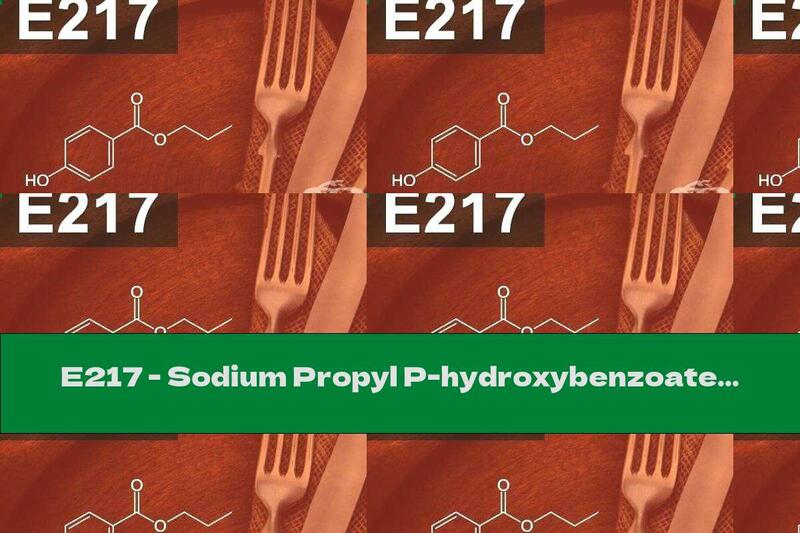
E 217 is a food additive that is widely used in the food industry as a preservative. It does not differ in chemical composition from E 216 (propyl p-hydroxy benzoate). The additive E 217 is the sodium salt of propylparaben. The chemical name under which it can be found is sodium propyl p-hydroxy benzoate . The chemical formula of the substance is C10H11O3Na. It is a crystalline white powder that dissolves well in water.
Use of the food additive (E217)
The additive has a strong antimicrobial activity, stops the growth of bacteria, mold, yeast and various fungi. For this reason, it is used in water-based cosmetics for external use (shampoos, lotions, creams, etc.). In the food industry, E 217 is used together with the additive E 216 as a preservative in confectionery and meat products. The daily intake of sodium propyl p-hydroxy benzoate should not exceed 10 mg / kg body weight.
Impact on humans
Sodium propyl p-hydroxy benzoate affects the tone of the vessels and may increase the pressure. When ingested, it can cause a number of diseases such as: asthma, urticaria, possible tingling in the mouth, severe stomach irritation or contact allergic dermatitis. It is contraindicated for asthmatics suffering from hypotension. May cause headache, intestinal upset, hyperactivity in children and others. The substance is carcinogenic, able to cause the release of histamine and the occurrence of various allergies, as well as adversely affect the cardiovascular system. Due to the possible negative impact on human health, the additive E 217 is strictly prohibited for use in the food industry in many countries. There is a ban on the import of products containing E217 into the EU. According to European scientists,
Related Articles
- The Role of Sodium Methyl Para-Hydroxybenzoate in Nutrition: Preservative Properties & Health Concerns
- Propylene in Nutrition: Benefits, Recipes, and Supplements
- The Role of Sodium Methylparaben in Nutrition: Uses, Controversy, and Safety
- The Ultimate Guide to Disodium Diphosphate in Nutrition
- The Nutritional Value of Potato Chips: Calories, Fat, and Sodium Content
Top Nutrition Articles Today
- . Foods High In Folate And B12
- . Chicory: 15 Health Benefits, How To Drink, Contraindications...
- . Dishes From Neighboring Countries That We Love: Potato Panca...
- . What To Cook With Sweet Potato
- . The Ultimate Guide to Vitamin E in Nutrition: Sources, Benef...
- . The Essential Role of Copper (Cu) in Nutrition: Sources, Ben...
- . Nutritional Benefits of Pizza: Key Nutrients, Healthier Opti...
- . The Delicious and Nutritious World of Minibrownies: A Guide...
- . The Complete Guide to E339ii in Nutrition: Benefits, Regulat...
- . The Role of Samarium in Nutrition: Benefits and Food Sources