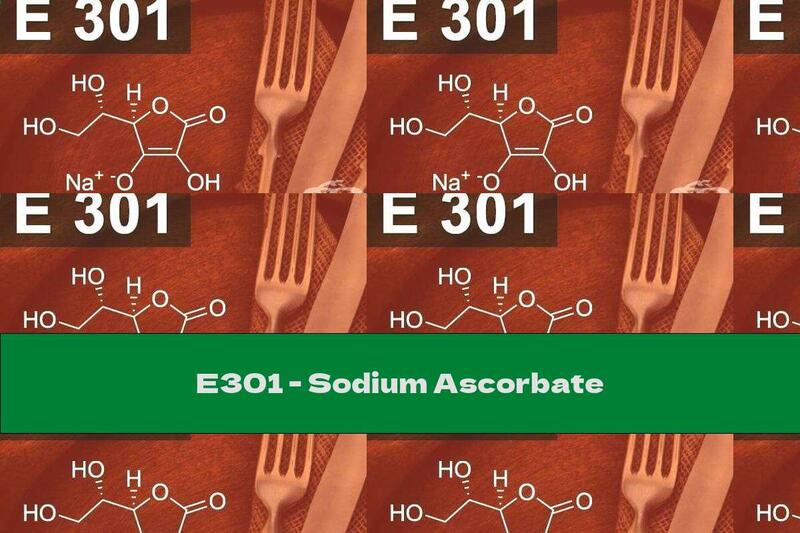
E301 - Sodium Ascorbate
 Author: Dean Rouseberg
Time for reading: ~1
minutes
Last Updated:
August 08, 2022
Author: Dean Rouseberg
Time for reading: ~1
minutes
Last Updated:
August 08, 2022
CHAPTERS (Table Of Contents)
Characteristics: Antioxidants are designed to protect products from discoloration, to prevent oxidation and bitter taste. They can be of natural origin
Characteristic
Antioxidants are designed to protect products from discoloration, to prevent oxidation and bitter taste. They can be of natural origin or obtained by synthesized chemical compounds.
Sodium ascorbate is one of the types of vitamin C. E 301 is a white water-soluble powder, used as an improver in bread production and as an acidity regulator. It is a powerful antioxidant that prevents the spoilage and oxidation of fats, as well as the change of nitrates in the production of canned food and sausages.
When transporting and storing sodium ascorbate, it is strictly forbidden to mix it with other substances.
Use
Sodium ascorbate is used to provide a more stable and natural color to meat products and sausages. E 301 is the sodium salt of ascorbic acid and together with E 300 functions as a vitamin and antioxidant. It is used in the production of bakery products, added to margarines and mayonnaises. It has the property to extend the shelf life of products.
Impact on humans
The maximum permissible daily dose is 15 mg / kg.
E 301 activates the body's defenses, regulates the absorption of vitamins and trace elements from food, participates in the formation of bones and connective tissue. Excess sodium ascorbate is converted to oxalic acid in the body. The amount for pregnant women and smokers can be increased, thanks to the property of E 301 to improve the condition of the skin, hair and nails.
The food supplement is permitted in many countries around the world, taking into account technological procedures individually or in combination with other ascorbates.
Foods containing E 301 should be consumed with caution by people suffering from kidney and urinary tract diseases, because oxalic acid can cause the formation of stones. Sodium ascorbate is not an allergen. When working with the substance in industrial quantities, it is sufficient to have a quality ventilation system in the plant.
Related Articles
- The Role of Sodium Methyl Para-Hydroxybenzoate in Nutrition: Preservative Properties & Health Concerns
- The Role of Sodium Methylparaben in Nutrition: Uses, Controversy, and Safety
- The Ultimate Guide to Disodium Diphosphate in Nutrition
- The Nutritional Value of Potato Chips: Calories, Fat, and Sodium Content
- The Role of Sodium Tripolyphosphate in Nutrition: Uses and Considerations