E375 - Niacin
 Author: Karen Lennox
Time for reading: ~1
minutes
Last Updated:
August 08, 2022
Author: Karen Lennox
Time for reading: ~1
minutes
Last Updated:
August 08, 2022
CHAPTERS (Table Of Contents)
Characteristics: Nicotinic acid or niacin (vitamin PP) is a white powder with a crystalline structure or crystals with a light yellow to white color. The additive has no definite odor, but in rare cases mo
Characteristic
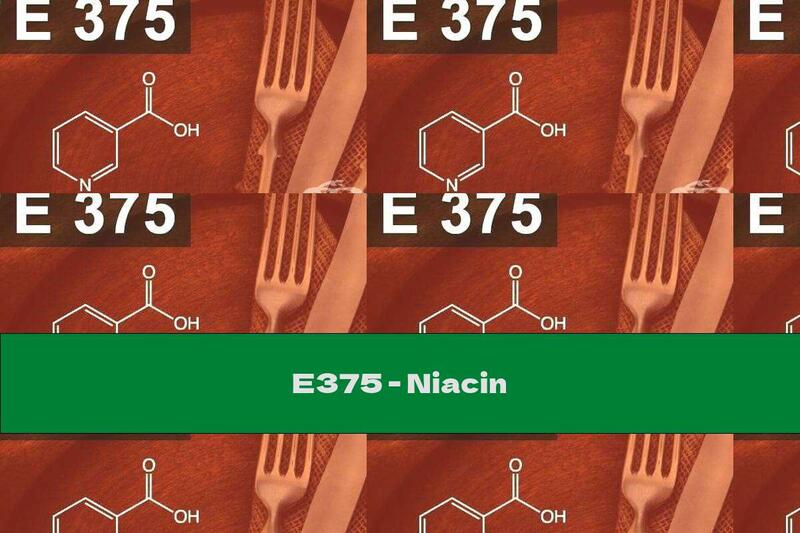
Nicotinic acid or niacin (vitamin PP) is a white powder with a crystalline structure or light yellow to white crystals. The additive has no definite odor, but in rare cases a slight odor can be detected; the taste is slightly sour. The melting point of E 375 is about 235.5 C-236.5 C. The powder dissolves well in warm and hot water, in cold solubility is difficult, in ethanol - very low, and in ether - extremely weak.
Natural sources of nicotinic acid are: pineapple, beans, peas, rye bread, meat, buckwheat, liver, mushrooms, kidneys, wheat and rye bran.
Use
Niacin is used as a dietary supplement in order to enrich products with vitamins. Vitaminized ones can contain from 20% to 40% of the required daily amount of vitamin PP. E 375 is added mainly to flour, cereals, dietary foods, rice, pasta. In addition, the products receive a deep yellow color.
Nicotinic acid is widely used in medicine.
Impact on humans
Insufficient niacin can lead to vitamin PP hypovitaminosis, expressed in the form of pellagra. The symptoms are dermatitis, dementia, diarrhea. It is also possible the appearance of hyperemia on the skin and upper body, dizziness, paresthesia, arrhythmia, dryness of the eye and skin mucous membranes, nausea, vomiting, itching, peptic ulcer.
Nicotinic acid is suitable for people in whom an unbalanced and poor diet leads to rapid weight loss. A complex of vitamins containing vitamin PP is recommended for pregnant and lactating women. Nicotinic acid E 375 is needed by those who suffer from diseases of the gastrointestinal tract.
The maximum daily dose that is safe for the human body is 15-25 mg.
Top Nutrition Articles Today
- . Health Benefits And Harms Of Cocoa, How To Drink, Recipes
- . Grapefruit - For Colds And Flu
- . How To Freeze Quince
- . The Role of Sodium Malate in Nutrition: Benefits, Concerns,...
- . The Ultimate Guide to Potassium Nitrate in Nutrition
- . Myra E: Benefits for Nutrition, Diets, and Recipes
- . The Truth About Potato Chips: Health Effects and Alternative...
- . The Ultimate Guide to Hickory Smoked Bacon in Nutrition and...
- . Nutrition By Blood Type: Table Of Allowed And Prohibited Foo...
- . Steak Label