E627 - Disodium Guanylate
 Author: Alexander Bruni
Time for reading: ~1
minutes
Last Updated:
August 08, 2022
Author: Alexander Bruni
Time for reading: ~1
minutes
Last Updated:
August 08, 2022
CHAPTERS (Table Of Contents)
Characteristics: Disodium guanylate is in the form of colorless or white crystals, may be a white crystalline powder. It has no characteristic odor and the taste is specific. Completely dissolves in
Characteristics of disodium guanylate
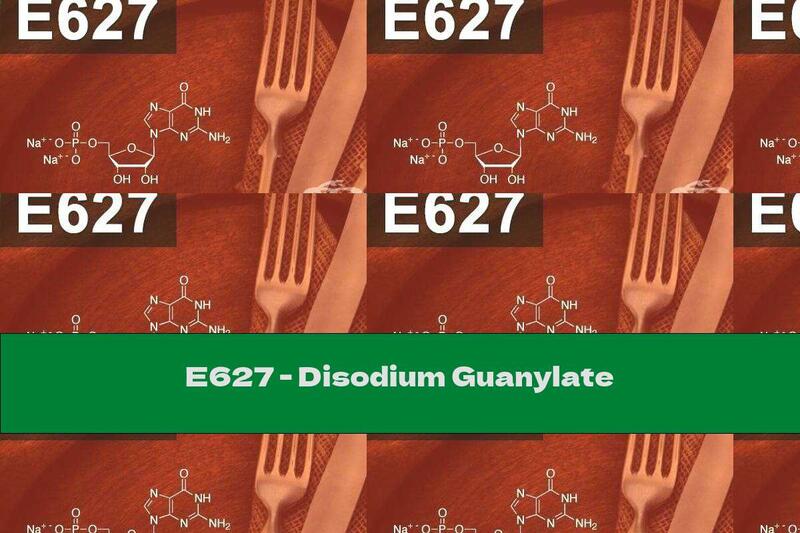
Disodium guanylate is in the form of colorless or white crystals and may be a white crystalline powder. It has no characteristic odor and the taste is specific. It is completely soluble in water, its degree of solubility in ethanol is average, in ether it is absolutely insoluble. The substance is contained in various fungi, in the tissues of animals and fish (mostly marine). Sodium guanylate is synthesized in the process of glucose fermentation.
Use of disodium guanylate
The effect of enhancing taste and aroma when using E 627 is ten times higher than when using the popular in the food industry sodium glutamate E 621. E 627 finds optimal use in combination with sodium inosinate and sodium glutamate. This gives the products a more harmonious and natural taste.
Sodium guanylate is most often present in sausages, in various meat products, in semi-finished soups and pasta, chips, rusks, in some confectionery, and canned vegetables.
Impact on humans
For insensitive people, supplement E 627 can cause severe allergic reactions. Sodium guanylate has been reported to provoke asthma attacks in people with bronchial asthma. The substance is often the cause of urticaria, dehydration, insomnia, as well as rheumatism, and gout. In the presence of E 627 in baby foods, the child is more likely to develop hyperactivity. The use of foods with the supplement by pregnant and lactating women is not recommended. The maximum daily dose for the use of the substance is not specified.
Related Articles
- The Ultimate Guide to Disodium Diphosphate in Nutrition
- E 631 (Disodium Inosinate): Uses, Safety, and Alternatives
- E+631 (Disodium Inosinate): Uses, Safety, and Health Concerns
- The Role of Calcium Disodium EDTA in Nutrition: Benefits, Uses, and Risks
- E 631 (Disodium Inosinate): Uses, Sources, Health Concerns, and Regulations
Top Nutrition Articles Today
- . One Meal a Day Menu: Benefits, Meal Planning, and Sample Men...
- . Nutrition In Cardiomyopathy
- . Sardines - Good For Bones
- . The Importance of Magnesium Chloride in Nutrition: Benefits...
- . Understanding Emulsifier E471: Functions, Health Concerns, a...
- . 7 Foods That Stimulate The Release Of Serotonin And Dopamine
- . The Power of 100% Cocoa Dark Chocolate: Benefits and Uses
- . The Ultimate Guide to Bolay Nutrition Calories: Balancing, M...
- . List of Foods that Contain Carrageenan: A Guide to Avoiding...
- . 4 phases of digestion