E952 - One Of The Popular Sweeteners In Food
 Author: Marko Balašević
Time for reading: ~1
minutes
Last Updated:
August 08, 2022
Author: Marko Balašević
Time for reading: ~1
minutes
Last Updated:
August 08, 2022
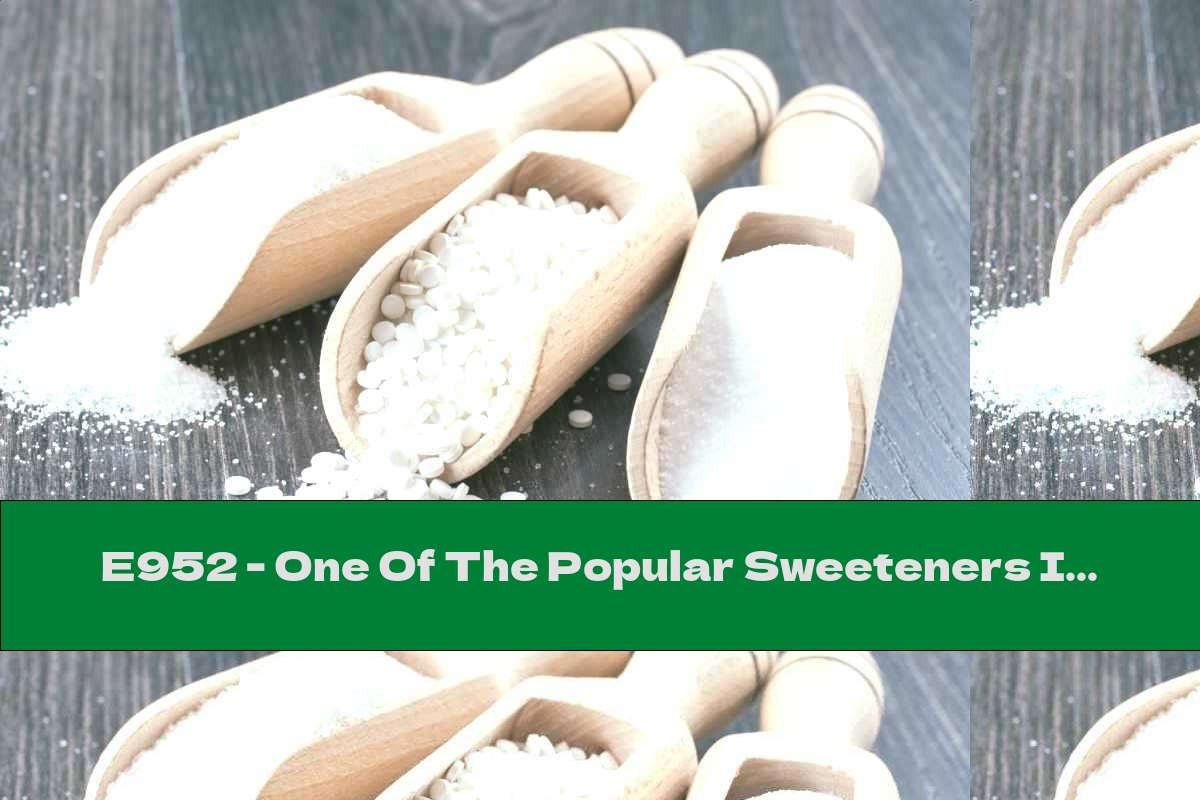
In this article, learn more about E952 - One Of The Popular Sweeteners In Food. Code E952 denotes sodium cyclamate - a potentially toxic sweetener..
The letter E and the first number 9 in the food industry denote 3 types of chemical compounds based on their action on food - gaseous leavening agents, glazing agents and the largest group - sweeteners . One of the most popular among them is denoted by the code E952 . This is sodium cyclamate.
Sodium cyclamate is "barely" about 30-50 times sweeter than the sucrose in white sugar, making it the least sweet artificial sweetener used in the confectionery industry and the food industry in general. Therefore, it is often used in combination with another, much sweeter sweetener - saccharin . They are usually used in a ratio of 10: 1 in favor of cyclamen. Laboratory tests show that this ratio is most suitable for successfully masking the undesirable features of the taste of both sweeteners.
An interesting feature of cyclamen is its resistance to heat - its molecule, and therefore its sweet taste, are not destroyed after heat treatment. This feature, along with the low price, positions E952 among the most widely used sugar substitutes.
Sodium cyclamate is most often used in the production of baked confectionery (cakes, pies), as well as as a sweetener in various juices, nectars and carbonated beverages.
The main disadvantage of E952 , used as a food supplement, is that it creates a very suitable environment for the development of bacteria. Cyclamate has been found to be used as an easily digestible source of energy by bacteria, which process it into cyclohexylamide , a substance that is carcinogenic to animals and humans, especially at higher concentrations. Thus, foods containing E952 may contain such bacteria if they are not produced and packaged in a sufficiently clean environment.
Studies of the potential side effects of consuming sodium cyclamate also associate it with several other risks to human health. It has been found that foods containing E952 can exacerbate the symptoms of migraines and some skin problems such as pruritus - severe itching of the skin.
Despite these data, E952 is freely used as an additive in the food industry within the European Union. However, its use in the United States has been banned.
Related Articles
- Nutrition for Respiratory Health: Supporting Your Lungs with the Right Foods
- The Ultimate Guide to High Gluten Foods: Benefits, Sources, and Recipes
- The Ultimate Guide to High Gluten Foods: Effects, Benefits, and Recipes
- The Ultimate Guide to Lactic Acid in Nutrition: Benefits, Food Sources, and Recipes
- The Nutritious World of Wendy's Salads: A Healthy Fast Food Option
Top Nutrition Articles Today
- . List of Foods that Contain Carrageenan: A Guide to Avoiding...
- . The Importance of Micronutrients in Chicken: A Complete Guid...
- . Sea Buckthorn: Health Benefits And Harms
- . Healthy Food For Modern Man
- . The Truth About Potato Chips: Health Effects and Alternative...
- . 10 Day No Sugar No Carb Diet
- . Calories In 3 Strawberries
- . The Power of Chaga Mushroom in Nutrition: Benefits, Uses, an...
- . Can You Take A Bath When You Have A Cold?
- . The Power of Pear Puree: Nutrition, Health Benefits, and Rec...