Е953 - Изомалт (Isomalt)
 Author: Nia Rouseberg
Time for reading: ~1
minutes
Last Updated:
January 27, 2026
Author: Nia Rouseberg
Time for reading: ~1
minutes
Last Updated:
January 27, 2026
CHAPTERS (Table Of Contents)
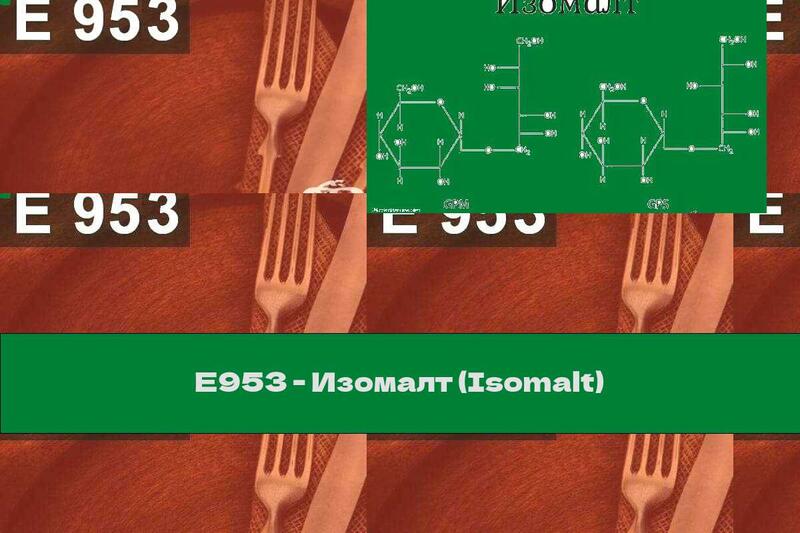
In this article, learn more about Е953 - Изомалт (Isomalt). Isomalt is a mixture of two sugar alcohols - gluco-mannitol and gluco-sorbitol..
Isomalt is a mixture of two sugar alcohols - gluco-mannitol (GPM) and gluco-sorbitol (GPS).
It is artificially produced from sucrose, more precisely from its product isomaltulose, by adding certain enzymes and hydrogen.
Use
Isomalt is used as a sweetener, against sticking and crystallization in candies, caramel, chewing gum, chocolates, ice cream, pastries, muesli, fruit jam, frozen and smoked fish, jams, baby milk powders, cough syrups, multivitamins, film-coated tablets and more. It is marked E953 on labels in the European Union.
Digestion and metabolism of isomalt
Only about 10% of the isomalt taken is absorbed by the body in the form of glucose. Sorbitrol and mannitol pass into the small intestine, and the rest - to the colon, where it is broken down (fermented) by good bacteria into gases and short-chain fatty acids, which are partially absorbed in the colon and used as food by bacteria.
Nutritional value per gram:
- calories = 2 kcal (which is about 50% less than sucrose);
- glycemic index = 9;
- net carbohydrates = 0 grams;
- sweetness, relative to sucrose = 55%.
Benefits
|
Negative effects
|
Physical properties
- It is an odorless white crystal;
- 55% sweeter than sucrose, slowly dissolves in the mouth and has a slight cooling effect;
- Low hygroscopicity - does not easily absorb moisture from the air at a relative humidity of 85%;
- Soluble in water at 25 degrees, slightly soluble in ethanol;
- Melting point = 145-150 degrees;
- Decomposes at temperatures above 160 degrees;
- Isomalt is gluten-free and edible.
Top Nutrition Articles Today
- . The Role of e633 in Nutrition: Enhancing Flavor in Food Prod...
- . 7 Foods For Bigger And Firmer Breasts
- . Peanut Butter - Composition, Benefits And Harms Of Its Consu...
- . The Power of Spinach: Health Benefits and Recipes
- . The Health Benefits of Nori: A Nutritious Seaweed for Thyroi...
- . The Impact of 1517 on Nutrition: Exploring Culinary Traditio...
- . The Role of Cellulose in Nutrition: Benefits, Sources, and T...
- . The Power of Konjac in Nutrition: Weight Loss, Digestive Hea...
- . Coriander Honey
- . To Relieve Constipation - Eggplant