Eggplants - Eating, Nutrition
 Author: Karen Lennox
Time for reading: ~2
minutes
Last Updated:
August 08, 2022
Author: Karen Lennox
Time for reading: ~2
minutes
Last Updated:
August 08, 2022
CHAPTERS (Table Of Contents)
The ancient Greeks considered eggplant to be the apple of madness (whoever eats eggplant will lose his mind), and in the East they called it the vegetable of longevity. In fact, it is a very useful and tasty plant.
The ancient Greeks considered eggplant to be the "apple of madness" (whoever eats eggplant will lose his mind), and in the East they called it the "vegetable of longevity." Since the 19th century, eggplant has taken its rightful place among the delicious and very useful plants.
Eggplant composition
Eggplant contains: sugar, protein, fat, potassium, calcium, magnesium, sodium, phosphorus, sulfur, bromine, chlorine, aluminum, iron, iodine, molybdenum, fluorine, cobalt, copper, zinc, a balanced complex of trace elements and vitamins B1 , B2, B6, B9, C, P, PP, D.
Nutritionists confirm that eggplants contain many of the so-called ballast substances (cellulose, pectin and others), which are practically not processed and absorbed, but contribute to the removal of excess cholesterol from the body. The effect that can be achieved can be significantly greater than from taking drugs. Therefore, vegetable dishes protect against atherosclerosis, ischemic heart disease, kidney stones and other diseases for the development of which is responsible for excess cholesterol.
Copper, the amount of which in the composition of eggplant is significant, helps with blood formation, so the plant is recommended for consumption in anemia.
Useful properties of eggplant
Eggplants are characterized by bactericidal and healing properties. In addition to anemia and lowering cholesterol levels, they are useful in diabetes, kidney and cardiovascular disease, especially in edema associated with weakened heart function. The large amount of potassium in the product strengthens the functioning of the heart and contributes to the removal of fluid from the body.
Consumption of eggplant is also useful in gout, as it increases the excretion of uric acid salts in the urine.
The many organic acids in the composition of vegetables make it effective in the healing diet of atherosclerosis. It has a diuretic effect and stimulates intestinal activity, it is useful for constipation. The soft soft cellulose in the eggplant regulates the acid-base balance, while the amount of cholesterol is greatly reduced, in some cases up to 40%.
The specific bitter taste is due to a substance called solanine M, which in high concentrations is poisonous. In vegetables, the amounts of it are very small and are not a cause for concern. In addition, the bitterness can be easily removed by cutting the eggplant into pieces, sprinkling with salt, and after a while, rinse with cold water and drain the liquid. The bitterness also disappears when the vegetables are boiled or roasted, after which they must be slightly drained.
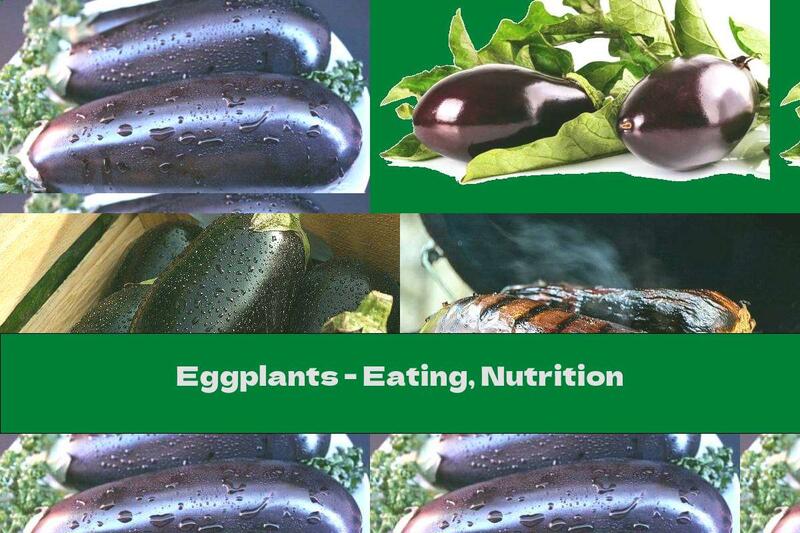
The most useful and tasty aubergines with healing properties are those that have a blue-black peel / skin, are oblong and narrow, do not have many seeds.
Vegetable dishes are very useful for those suffering from liver and kidney diseases. The product contains relatively large amounts of copper and iron, which increase the level of hemoglobin in the blood and improve skin color.
Due to the low content of carbohydrates in the product and its low caloric content, it is suitable for inclusion in the menu of overweight and diabetic people.
Eggplant juice has bactericidal properties and is used to accelerate wound healing.
Vegetables retain their properties when dried or frozen, as well as in other types of processing.
Harm and contraindications
Consumption of overripe aubergines is not recommended, as they contain the alkaloid solanine. After poisoning with this substance, nausea, diarrhea, vomiting, intestinal colic and sometimes shortness of breath are observed.
In cases of poisoning, the effect of the substance can be neutralized with the help of fresh milk or egg white. To prevent side effects, eggplants should be cooked before use.
Related Articles
- The Ultimate Guide to Hickory Smoked Bacon in Nutrition and Healthy Eating
- Fruitskewers in Honey Syrup: Nutritional Benefits and Recipes
- The Ultimate Guide to Buffer 500 in Nutrition: Benefits and Usage
- Nutritional Benefits of Fruit Skewers in Honey Syrup: A Delicious and Healthy Recipe
- Nutrition Guide: Fruitskewers in Honey Syrup - Benefits, Recipes, and More
Top Nutrition Articles Today
- . Foods Containing Carrageenan: A Comprehensive Guide for Your...
- . The Fibroid Diet: Nutrition Strategies for Managing Fibroids
- . The Ultimate Guide to Flour in Nutrition: Types, Benefits, a...
- . List of Foods that Contain Carrageenan: A Guide to Avoiding...
- . The Truth About Potato Chips: Health Effects and Alternative...
- . How To Cook Pork Liver And Mushrooms In Cream Sauce With Che...
- . E551: The Food Additive You Should Know About
- . Bitterness In The Mouth: Causes And What To Do
- . The Ultimate Guide to Creating a Well-Structured Diet Plan f...
- . Nutrition By Blood Type: Table Of Allowed And Prohibited Foo...