Eight Useful Foods That Can Be Dangerous To Health
 Author: Dean Rouseberg
Time for reading: ~1
minutes
Last Updated:
August 08, 2022
Author: Dean Rouseberg
Time for reading: ~1
minutes
Last Updated:
August 08, 2022
CHAPTERS (Table Of Contents)
In this article, learn more about Eight Useful Foods That Can Be Dangerous To Health. Eight useful foods that can be dangerous to health - 2 parts.
We continue with the second part of the list of useful and at the same time dangerous foods, if consumed in unreasonable quantities or in the presence of some health problems.
Useful foods that can be dangerous to humans
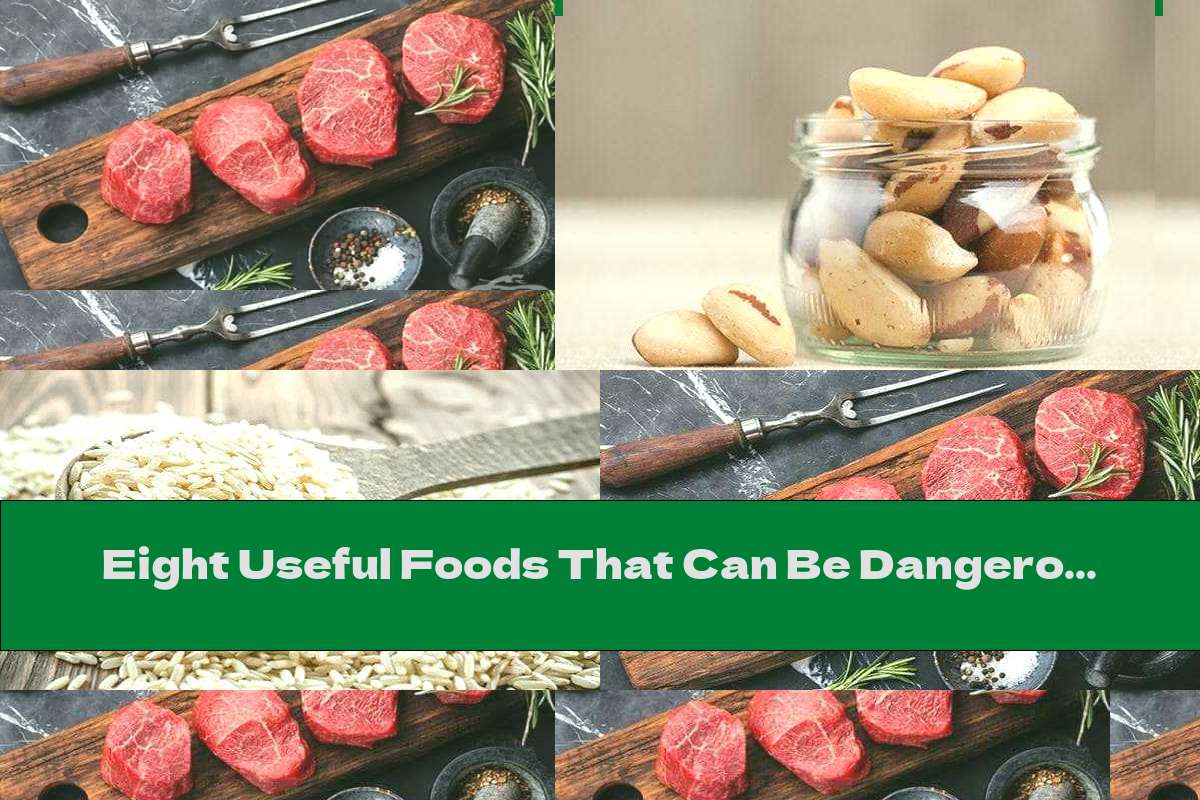
Brazilian walnutThe first in our useful and harmful selection is the Brazil nut. It is a source of selenium № 1 - a trace element that helps the body fight infections. One nut gives the body up to 90 mcg of the substance, which is almost twice the required daily amount. If you eat 30 grams, your body will receive nearly 770% of the required dose of selenium.
Of course, this should not deny you the consumption of Brazil nuts, but do not eat it every day, but just eat 1 nut 2-3 times a week.
Brown rice
Brown rice is considered the most useful variety because it preserves the nutritional value of grains that contain cellulose and slow carbohydrates. But frequent consumption of large quantities leads to the accumulation of harmful substances in the body, including arsenic. Arsenic is a known human carcinogen. There is no specific harmless maximum dose of the element. The advice of experts is not to give up the consumption of brown rice, but to add more other slow carbohydrates to the menu (alternating with quinoa, millet ...).
Red meat and white beans
We end with two products that are often present on our table - red meat and white beans. They are sources of iron - an element that plays an important role in supplying oxygen to the muscles.
Deficiency of the element leads to weakness and fatigue, as well as liver failure. Cases of excessive amounts of the element in the body are rare, but it is good to know that they lead to damage to the brain, kidneys and liver. Symptoms of iron overdose include: yellowing of the skin, enlarged liver, irregular heartbeat, pigmentation, nausea, decreased appetite, stomach pain and weight loss.
- What to "feed" the bile
- How to feed the brain
- How to "feed" the spleen
- How to feed the nerves
Related Articles
- The Power of Honeysuckle: Health Benefits and Recipes
- The Ultimate Guide to Hickory Smoked Bacon in Nutrition and Healthy Eating
- Nutritional Benefits of Fruit Skewers in Honey Syrup: A Delicious and Healthy Recipe
- Nutritional Benefits of Fruit Skewers in Honey Syrup: A Healthy and Delicious Snack
- Nutrition for Respiratory Health: Supporting Your Lungs with the Right Foods
Top Nutrition Articles Today
- . Breakfast Pizza
- . The Ultimate Guide to Metataric Acid in Nutrition: Sources,...
- . Calories In A Piece Of Bread
- . Health Benefits Of Vitamin C
- . Night Nutrition: Importance, Benefits, and Best Foods to Eat
- . The Truth About Potato Chips: Health Effects and Alternative...
- . Sardines - Good For Bones
- . Sushi For Beginners. How Easy It Is To Spin Sushi Rolls
- . 7 Foods That Stimulate The Release Of Serotonin And Dopamine
- . When Is It Better To Eat Fruit?