Fruits And Vegetables Are More Useful With Peels
 Author: Victoria Aly
Time for reading: ~2
minutes
Last Updated:
August 08, 2022
Author: Victoria Aly
Time for reading: ~2
minutes
Last Updated:
August 08, 2022
CHAPTERS (Table Of Contents)
When we prepare dishes from various plant foods, we always throw away parts of them, without suspecting that they contain a number of useful substances for our health or simply because
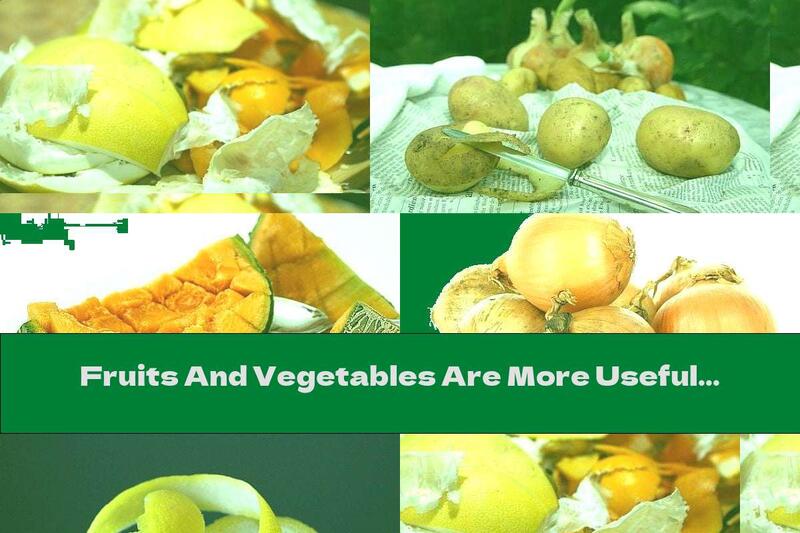
When we prepare dishes from various plant foods, we always throw away parts of them without suspecting that they contain a number of useful substances for our health or simply because we do not know how to use this "waste" to take advantage of the ingredients. them. So now we will look at some of the most commonly used plants in the kitchen and see what is in their shells , whose fate in most cases ends up in the trash.
Useful food waste and how to use them
Peel the potatoes and carrotsMany of the nutrients contained in potatoes and carrots, such as vitamin C and potassium, are stored in their skins. The amount of cellulose contained in them is not small. As for cooking, there is no special way to do this, virtually any dish of potatoes and carrots can be made using unpeeled vegetables.
Broccoli leaves and stems
Like the inflorescences, the leaves and stems of broccoli are tasty and rich in antioxidants and cellulose, but, unfortunately, often fall into the trash. In addition, we must say that these parts of the plant are an excellent source of carotenoids, vitamins A and C. They can be used raw by adding them to salads.
Melon peelMelon peel is rich in citrulline (an amino acid that contributes to better blood circulation). Just grind the fruit with the peel using a blender and you will get a delicious cocktail saturated with antioxidants.
Pumpkin peel
Pumpkin peel contains a range of vital antioxidants, including phytonutrients and fiber. Vegetables can be roasted without peeling. Adding a spoonful of maple syrup and a pinch of sea salt, you will get a unique taste.
Onion peelsOnion flakes are rich in quercetin, which lowers blood pressure and prevents clogging of the arteries. In addition, the scale has anti-inflammatory properties, inhibits the production and secretion of histamine, may be useful for people suffering from hay fever ( Application of onion flakes ).
The heart of the pineapple
The core of the pineapple is hard and not as appetizing and sweet as the soft part, but it has a lot of nutrients. Therefore, eating it raw, you will get all the useful ingredients of pineapple .
Peels of lemons and orangesThe peels of lemons and oranges are a real storehouse of fiber, vitamins and flavonoids. According to unofficial data, the active chemical (D-limonene) contained in the peels of these citrus fruits helps to relieve stomach acids and indigestion. A good concentration of vitamin C helps to strengthen the immune system and prevent respiratory infections. In addition, the peel extract can be used as an antibacterial moisturizer, as an insect repellent and even to clean kitchen utensils from grease. It is also used for teeth whitening. The pectin and fiber in the white layer under the bark can help control appetite and suppress hunger for about 4 hours.
Celery leaves
In addition to having five times more magnesium and calcium in celery leaves than in the stems of the plant, they are also rich in vitamin C and phenols - powerful antioxidants that help fight cancer and heart disease, as well as anti-aging. Just add to the salad.
Beetroot stemsAbundance of glutamine, antioxidants and phenolic compounds - this is inherent in the stems of beets. They, like the leaves, are also edible and can be steamed.
Related Articles
- Fruitskewers in Honey Syrup: Nutritional Benefits and Recipes
- Nutrition Guide: Fruitskewers in Honey Syrup - Benefits, Recipes, and More
- Nutrition for Respiratory Health: Supporting Your Lungs with the Right Foods
- The Ultimate Guide to Vitamin E in Nutrition: Benefits, Sources, and More
- The Ultimate Guide to Avocado Nutrition: Benefits, Recipes, and More
Top Nutrition Articles Today
- . The Role of Nitrogen in Nutrition: Importance and Sources
- . Nutrition In Hyperopia (farsightedness)
- . What To Cook With Sweet Potato
- . 5 Recipes For Potato Casserole In The Oven
- . How To Cook Lunch For School: Pizza, Salad, Raw Candy, Pear,...
- . Cooking A Festive Dinner In A Slow Cooker
- . How To Make Easy Potato Salad
- . How To Fry A Potato With A Crust
- . Understanding Cholesterol in Nutrition: Impact, Types, and R...
- . Nutritional Benefits of Fruit Skewers in Honey Syrup: A Heal...