Heart Health Starts From The Stomach
 Author: Leticia Celentano
Time for reading: ~2
minutes
Last Updated:
August 08, 2022
Author: Leticia Celentano
Time for reading: ~2
minutes
Last Updated:
August 08, 2022
CHAPTERS (Table Of Contents)
Scientists prove that heart health starts from the stomach. Therefore, food should not only be delicious, but also strengthen the heart muscle and blood vessels. Better a poor horse than no horse at all. By
We all know that the food we eat is a key factor in the health of our body. As is known, it can be both a drug and a poison, which depends on the characteristics of the products, the processing of the latter and, last but not least, the quantities. The activity of the heart - this vital organ - is also highly dependent on food. Scientists prove that heart health starts from the stomach. Therefore, the products and dishes we consume should not only be delicious, but also strengthen the heart muscle and blood vessels.
How to eat to have a healthy heart?
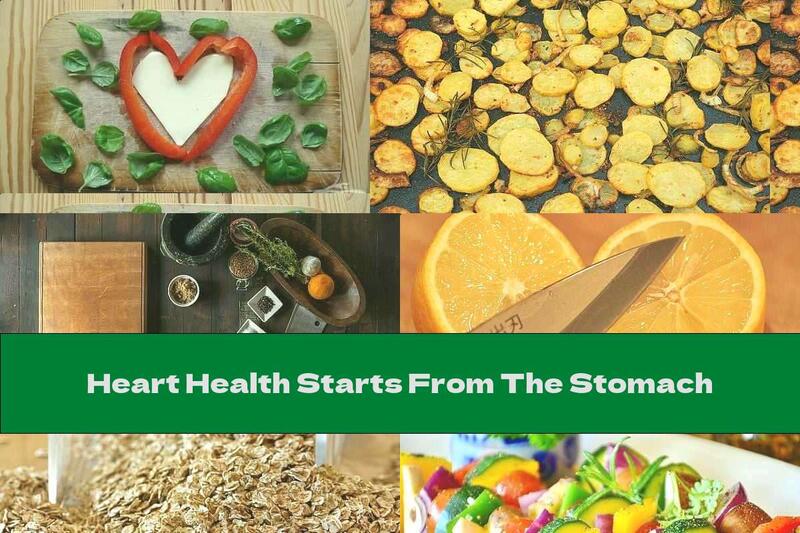
Better a poor horse than no horse at allAlmost all products that are fried can also be baked. Bake in the oven, boil or steam them. Make baked potatoes seasoned with olive oil or other vegetable oil, garlic and fresh herbs. Once you have tried this dish, you will want it again and again. It is easy and quick to prepare, and the taste is incomparable.
Seasoning of all dishes
Choose 2-3 herbs that you like the most as spices, and plant them in the garden or on the terrace. This way you will always have fresh spices on hand. Fresh coriander, parsley, dill, saffron, basil give sophistication to dishes much more than salty, greasy and expensive sauces in stores.
Replacing salt with alternatives
For flavoring soups and salads instead of salt use citrus juices (eg lemon, lime juice), wine (not more than 20-30 grams), wine vinegar, vegetable broths. This is especially true for people suffering from high blood pressure. Only add vegetable oils to dishes. Vegetables cooked in oil from various plants help absorb fat-soluble vitamins.
Cereals have more vitamins than pasta
If you can not imagine eating without pasta, then try to eat barley and oats to give your body a variety and the necessary amount of chromium, magnesium, B vitamins and folic acid. And limit bread to 200-300 grams per week.
"Colorful" nutrition
The brighter the color of fruits and vegetables, the more antioxidants they contain and the more they help regulate cholesterol levels.
Eat less meat and more cereals, legumes, tofu (soy cheese, which is no less useful). Try to look at meat as a side dish, not as a main course.
Healthy foods for a healthy heart
To protect your "motor" from "damage", choose products that lower the level of bad cholesterol. These are:
- red wine, which lowers blood cholesterol, the risk of cardiovascular disease, thrombosis;
- bananas - are rich in potassium, help prevent high blood pressure and prevent the development of atherosclerosis;
- walnuts - the fatty acids contained in them regulate heart rhythm and prevent heart attacks;
- olive oil helps reduce cholesterol levels, 2 tablespoons a day are enough to reduce the risk of heart attack and hypertensive crisis.
Take care of the health of your heart, so that it takes care of you too!
- How to "feed" the stomach
- How to "feed" the spine
- How to "feed" the spleen
- How to feed the nerves
Related Articles
- The Power of Honeysuckle: Health Benefits and Recipes
- The Ultimate Guide to Hickory Smoked Bacon in Nutrition and Healthy Eating
- Nutritional Benefits of Fruit Skewers in Honey Syrup: A Delicious and Healthy Recipe
- Nutritional Benefits of Fruit Skewers in Honey Syrup: A Healthy and Delicious Snack
- Nutrition for Respiratory Health: Supporting Your Lungs with the Right Foods