How To Cook Edible Insects - Types, Tastes And Health Benefits - Recipe
 Author: Alexander Bruni
Time for reading: ~3
minutes
Last Updated:
August 08, 2022
Author: Alexander Bruni
Time for reading: ~3
minutes
Last Updated:
August 08, 2022
CHAPTERS (Table Of Contents)
Learn how to cook "Edible insects - species, taste and health benefits". Delicious recipe.
Insects have recently been advertised as the "protein of the future," and in fact, about 2 billion people worldwide currently consume different types of insects (raw and cooked). In France, there is even a paste made from locusts and crickets.
Are you wondering if insects are safe to eat and healthy? The answer is: yes, if you consume them properly and choose edible species. In this article we will introduce you to edible insects - species, taste and health benefits .
What types of insects can be eaten?
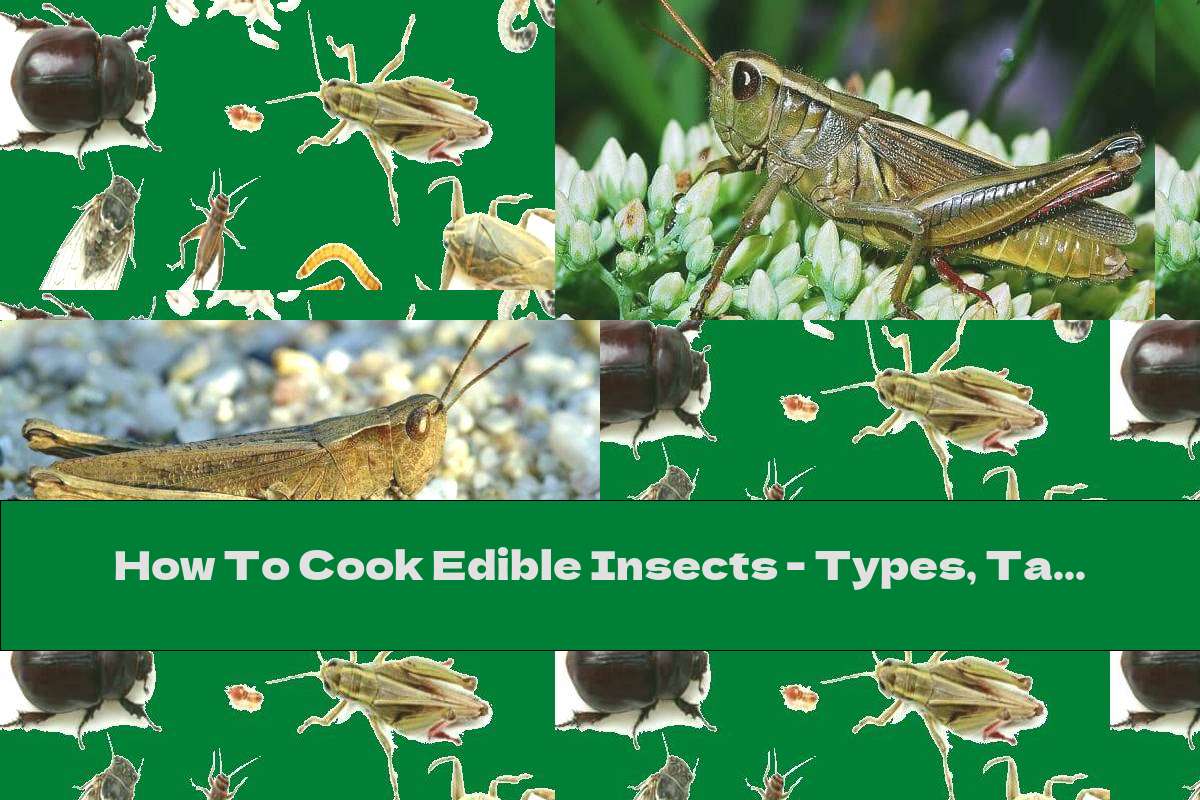
There are about 1900 species of edible insects that you can consume safely. Here are the most common of them:
- Beetles
- Flour worm (the larval form of the flour beetles)
- Crickets
- Grasshoppers
- Silkworms
- Belostomatids (giant water beetle)
- Ant eggs
- Termites
- Laurels
- Cicadas (pupae are usually consumed)
- Bamboo worms
- Bee larvae
- American field grasshopper
- What is their taste?
- Flour worm (larvae) - sunflower seeds
- Raw termites - pineapple
- Red Palm Octopus larvae - veal bone marrow
- American grasshopper - sardines
- Floating beetle - mussels
- Mantises - raw mushrooms
- French fried ants - beef pastrami
- Wax moth larvae - potato chips or beans
- Fried small bees - smoked fish, oysters
- Fried spiders - nuts
Something interesting that can be noted is - for ants, they say they have a different taste - some people who have tried them claim that their taste resembles mint. Others liken it to sour, citrus or vinegar. The taste seems to vary according to the ant's choice.
Health benefits
They provide protein
In general, insects have good nutritional value. Some of them, such as crickets, are particularly impressive in terms of their content. Cricket flour has 81 grams of protein in just one cup of tea (compared to regular flour, which has 6 grams for the same amount). It is right to compare crickets with food, which is generally protein - in 100 grams of them there are 21 grams of protein, and in beef for the same amount of protein is 26 grams. Many edible insects are also rich in fiber, which is not the case with other animal sources of protein.
They help feed the world
Some people believe that insects are the food of the future. As food demand around the world increases, insects are an effective, inexpensive and easy alternative source of protein.
They are more environmentally friendly
Insect farms require a smaller area than animal farms. Also, insects require 12 times less food to produce the same amount of protein as beef sources. And half the amount of food for chickens and pigs provides an equivalent amount of protein. In general, insect feeding is considered to be the source of food with the lowest environmental impact.
Useful informationSome insects can be eaten raw, but cooking makes them easier to digest and tastes better.
Removing the legs and wings is also part of the recommendations. It is a good idea to stick to consuming live insects. Freezing or cooking them is the best way to kill them.
Experts recommend consuming insects that live "far from civilization", thus you will be sure that they have not eaten plants that have been sprayed with dangerous preparations.
Beetles and other insects with hard outer shells often contain parasites. They are on the list of edible if you prepare them before eating them, experts say.
The fact that some insects are edible does not mean that you can safely consume them when you find them in nature. You need to think about how they ate themselves before you put them on your plate.
Most of the worms (larvae) feed on rotting spoiled food, fecal matter and even human flesh. So what if you eat worms that are not specifically bred for the purpose? You can get a number of diseases, namely intestinal myiasis - an infection that is life-threatening.
Contraindications
You should never eat insects, even if you think they are edible. The best choices are the field grasshopper, the common grasshopper and the crickets.
If you are experimenting with other types, make sure you are absolutely sure that they are safe to eat and prepare them properly.
You should never eat insects that are brightly colored, because their color is almost always a warning that they are toxic. Never eat insects such as ticks, flies and mosquitoes. You should also not eat insects that have hairs, those that bite, sting or have a strong odor.
Some sources say that you can consume earthworms, but generally stay away from them. If you decide to eat insects and experience any adverse reactions, see a doctor immediately.
Related Articles
- The Power of Honeysuckle: Health Benefits and Recipes
- The Ultimate Guide to Hickory Smoked Bacon in Nutrition and Healthy Eating
- Fruitskewers in Honey Syrup: Nutritional Benefits and Recipes
- The Ultimate Guide to Buffer 500 in Nutrition: Benefits and Usage
- Nutritional Benefits of Fruit Skewers in Honey Syrup: A Delicious and Healthy Recipe
Top Nutrition Articles Today
- . Steroids in Eggs: Separating Fact from Fiction | Nutrition a...
- . Breastfeeding A Baby With Low Blood Sugar
- . Understanding Acidity Regulators in Nutrition: Types, Benefi...
- . How To Cook Caramel Cream Mousse (for Cakes And Pastries) -...
- . Are Simple Sugars The Culprits For Most Diseases
- . Flatizza: A Healthier Alternative to Traditional Pizza
- . E515: Potassium Sulphates and Potassium Bisulphates - Functi...
- . The Role of Disodium Diphosphate in Food: Uses, Health Conce...
- . Hydrochloric Acid in Nutrition: Importance, Effects, and Sup...
- . Is It Filled With Carbonated Water?