How To Cook How To Choose And Cook Artichokes - Recipe
 Author: Ivan Red Jr.
Time for reading: ~2
minutes
Last Updated:
August 08, 2022
Author: Ivan Red Jr.
Time for reading: ~2
minutes
Last Updated:
August 08, 2022
CHAPTERS (Table Of Contents)
In this article, learn more about How To Cook How To Choose And Cook Artichokes - Recipe. Learn how to cook "How to choose and cook artichokes". Delicious recipe..
Although artichoke is attractive in appearance and very useful, it is often avoided in the kitchen because it is quite special and looks difficult. for preparation. Which is not really true. If you learn how to cook it, it can become your favorite vegetable, so the next time you come across artichoke, take it, and we will now explain everything you need to know how to make it.
Let's get acquainted with the plant first!
Anatomy of the artichoke
Artichoke is a thistle that belongs to the family of flowering plants characterized by prickly leaves. Although usually cooked whole, only parts of it are edible.
The outer part of the bulb is characterized by dark green leaves, which are very hard, tough and fibrous and are not intended for consumption.
However, at the base of each leaf, there is soft "meat", which is the part that is eaten. The outermost layers are very hard, and the deeper you go into the heart of the artichoke, the softer the petals become.
The smaller and softer leaves with purple tips are treated like the others.
The fibrous part, which cannot be consumed, is hidden right in the base. Above it, however, is the heart of the artichoke, which is also the most tender part (this, which they sell in cans).
You may think that this is too much work, but you get so little food. But freshly cooked artichokes are significantly tastier than canned ones, so it's worth taking the time to cook them when you have the opportunity. In addition, artichokes are rich in nutrients, fiber, antioxidants, fiber, vitamin C, K, and folate. It is believed to help lower blood pressure and improve liver function.
How to choose and prepare artichokes for cooking?
Choose bright green artichokes without brown spots. The fresh one has tightly collected leaves. Some vegetables are colored purple on the outside, which is normal. Keep in mind that like most large vegetables, large artichokes cook more slowly.
Using a sharp knife, cut the stalk along with about 2 inches from the bottom of the artichoke. Trim the top of the vegetables, just where the head starts to narrow.
Remove all small and hard leaves from the base and discard them.
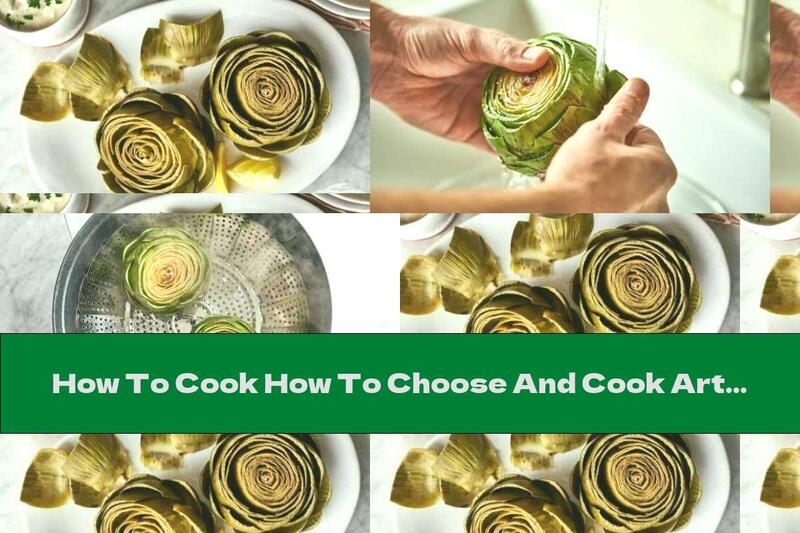
Using scissors, cut about 7-8 millimeters from the top of the leaves. Rinse the artichoke well under running water, gently pulling the leaves to clean well.
If you plan to cook the artichokes later, rather than a few minutes after preparation, soak them in cold water. in which you squeezed the juice of 1 lemon.
The best way to cook artichokes
Most often, artichokes are boiled and steamed. But when cooked, the meat becomes more watery and tasteless, while when steamed, the product retains its taste and nutrients.
Fold put it in a steamer or in a metal colander and stew until soft.
Serving the artichoke
The "flesh" of the artichoke is creamy and slightly sweet, reminiscent of the aroma of fresh corn. And the leaves combine extremely well with various milk dips and sauces.
You do not need utensils for consuming artichoke, tear the leaves with your fingers, and scoop from the selected sauce, squeeze the inside of the leaf with your teeth, which then discard.
When you reach the purple petals, you will notice that they are hard, so discard them carefully. Remove the fibrous part and enjoy the most tender inside, which is also the most delicious of the artichoke.
Related Articles
- The Power of Honeysuckle: Health Benefits and Recipes
- Fruitskewers in Honey Syrup: Nutritional Benefits and Recipes
- Nutritional Benefits of Fruit Skewers in Honey Syrup: A Delicious and Healthy Recipe
- Nutrition Guide: Fruitskewers in Honey Syrup - Benefits, Recipes, and More
- The Role of Flour in Nutrition: Types, Benefits, and Recipes