How To Cook How To Make Mashed Potatoes - Recipe
 Author: Ivan Red Jr.
Time for reading: ~4
minutes
Last Updated:
August 08, 2022
Author: Ivan Red Jr.
Time for reading: ~4
minutes
Last Updated:
August 08, 2022
CHAPTERS (Table Of Contents)
In this article, learn more about How To Cook How To Make Mashed Potatoes - Recipe. Learn how to cook "How to make mashed potatoes". Delicious recipe..
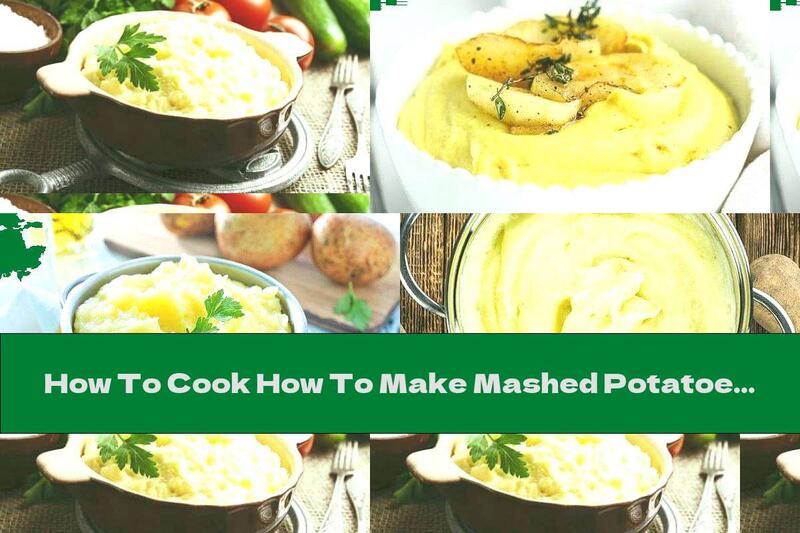
Mashed potatoes are a well-known and preferred garnish for meat, fish, mushrooms. At first glance, its preparation is simple, but the end result is not always perfect. Lump formation, stickiness or lack of taste are just some of the common imperfections of the finished garnish, which are present if we do not know some moments that directly affect the process of cooking the puree. Those who think it is easy to make do not take into account starch - a capricious substance whose content in potatoes is high. And the way you approach it determines the quality of the puree. Let's learn more about this and other important points from the preparation of mashed potatoes .
The variety of potatoes
Rarely does anyone think about the variety of potatoes when they decide to puree them. White and red species are not suitable for this purpose, as they require more effort to turn them into a mousse. Therefore, it is best to use potatoes with more starch in the composition, because this substance is responsible for the airiness and delicate texture of the finished puree. In the trade network there are also inscriptions for what purpose the potatoes are suitable, so for mashed potatoes the inscription is "cooking potatoes".
Salt water
The water in which you boil the mashed potatoes must be salted. Of course, salt can also be added when mashing potatoes, but the taste will be completely different. This is because when cooked in salt water, the starch granules swell and absorb salt from the water, thanks to which the taste of the puree will be emphasized evenly with the help of salt, and the dish is unlikely to be oversalted.
Boiling water
Many people think that they should cook mashed potatoes the way pasta is made, ie put the potatoes in boiling water. If this is justified in the case of pasta, then things are different with potatoes. They must be placed in a container with cold water, which will boil when the tubers themselves get hot. If you put them in an already boiling liquid, the potatoes will not cook evenly: the surface will boil and begin to disintegrate while the core is still raw.
Dried potatoes
When the potatoes are cooked, it is important to drain the water in which this happened. After doing so, it is necessary to dry each of the tubers so that the taste of the decoction can not affect the taste of the puree and its texture is not watery. It is also an option to dry the potatoes lightly in a pan over low heat, but not to allow them to bake and form a crust.
Warm ingredients
It is practically impossible to prepare good mashed potatoes without cow's butter, fresh milk and liquid cream. In order not to adversely affect the texture, temperature and taste of the puree, it is necessary to remove them from the refrigerator in advance and leave them in a warm place to warm to room temperature. This will allow them to more easily combine with the total mass and will not make the dish cold.
No bigotry
When using a mixer or blender to give a smooth structure to the puree, do not overdo it. The swollen starch granules, which make the garnish light and airy, are too delicately arranged. You have to be gentle and careful with them. If you whip the puree like cream, you can ruin their texture and then the end result will be sticky and tasteless.
Submit immediately
Sometimes we prepare food long before it is served. However, this should not happen when we talk about mashed potatoes. Of course, it can be warmed, but it is better not to do it unless you want a garnish with a taste of cardboard. The only trick that won't hurt the puree much and will help in case it won't be served right away is to leave it on the stove. In order not to burn, let this happen in a water bath. This technology should not be used for more than two hours.
Classic mashed potatoes step by step
The products:- 250-300 grams of potatoes (these are about 3 medium-sized tubers)
- 100 milliliters of fresh milk (1/2 cup)
- 1 incomplete teaspoon of butter
- pinch of salt
Wash the potatoes well, peel them, put them in a saucepan and pour hot water, the level of which should be 1 centimeter above the tubers. Add salt, cover with a lid and leave on the stove.
Meanwhile, bring the milk to a boil without allowing it to boil. Melt the butter in it.
Use a fork to check the readiness of the potatoes. When they boil, drain the water and dry them, then pass through a sieve.
Finally, add the milk and butter and beat until fluffy.
* Tip: If you add cold milk to the potatoes, the puree will not be fluffy, it will look raw and unappetizing.
Related Articles
- The Power of Honeysuckle: Health Benefits and Recipes
- Fruitskewers in Honey Syrup: Nutritional Benefits and Recipes
- Nutritional Benefits of Fruit Skewers in Honey Syrup: A Delicious and Healthy Recipe
- Nutrition Guide: Fruitskewers in Honey Syrup - Benefits, Recipes, and More
- The Role of Flour in Nutrition: Types, Benefits, and Recipes
Top Nutrition Articles Today
- . Steak Label
- . Health Benefits And Harms Of Cocoa, How To Drink, Recipes
- . The Nutritional Benefits of Yellow Maize: A Versatile Grain...
- . Nutrition By Blood Type: Table Of Allowed And Prohibited Foo...
- . Herbs for Fibroids: Natural Remedies and Recipes for Fibroid...
- . Subway Footlong Calories Chicken
- . Nutrition For Edema: Diagnosis Of The Body And The Preparati...
- . The Ultimate Guide to Hickory Smoked Bacon in Nutrition and...
- . List of Foods that Contain Carrageenan: A Guide to Avoiding...
- . Persimmons - Benefits And Harms To Health