How To Cook Paraguayan Chicken Soup (Vori Vori) - Recipe
 Author: Maryam Ayres
Time for reading: ~2
minutes
Last Updated:
August 08, 2022
Author: Maryam Ayres
Time for reading: ~2
minutes
Last Updated:
August 08, 2022
CHAPTERS (Table Of Contents)
In this article, learn more about How To Cook Paraguayan Chicken Soup (Vori Vori) - Recipe. Learn how to cook "Paraguayan chicken soup (Vori Vori)". Delicious recipe..
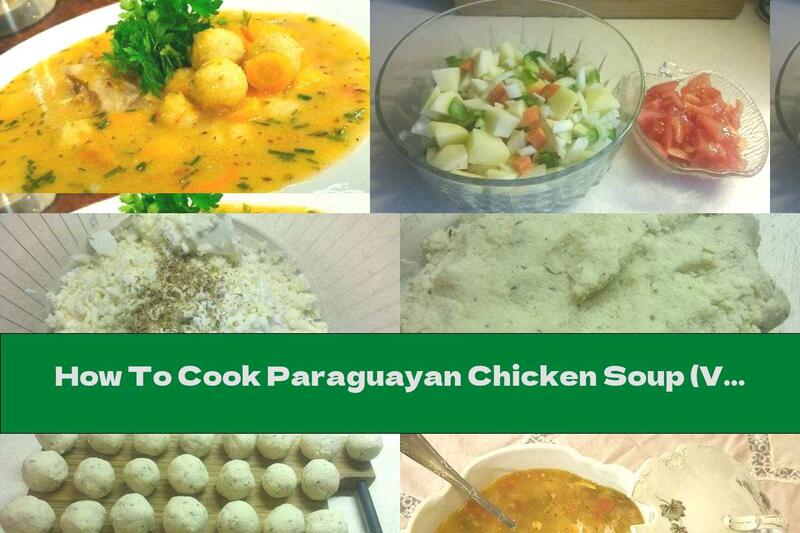
Vori vori is a thick Paraguayan yellow soup with small balls made from corn flour, semolina and cheese. Like any dish in Paraguayan cuisine, vori vori is rich in protein and calories, a fact that has historical causes. More than 150 years ago, in 1864, a war broke out between Paraguay and the Triple Alliance led by Argentina, Brazil and Uruguay, in which Paraguay lost almost its entire population. After the war, food in the country became limited and food was difficult to find. This is the reason why Paraguayan cooking is mainly high in protein to compensate for food shortages.
Necessary products for Paraguayan chicken soup:
- chicken meat from legs or breasts
- 1 pepper, cut into cubes
- 1 tomato, cut into small cubes
- 1 carrot, finely chopped
- 1 pepper, cut into small cubes
- 2-3 potatoes, cut into small cubes
- 3 cloves garlic, chopped
- 1/2 teaspoon cumin
- 1 large onion, cut into small cubes
- oregano, salt, pepper to taste
- parsley for serving, optional
- cooking fat (oil or other)
- 150 grams of corn flour
- 50 grams of semolina
- 100 grams of ricotta cheese
- 1 egg
- 50 grams of mozzarella cheese, finely grated
- salt and oregano to taste
- 1/2 cup chicken broth
How to prepare Vori Vori chicken soup:
Put the chicken in a saucepan with water and bring it to a boil, froth, and chop into pieces. In the boiling water add the chopped vegetables and oregano, along with the chicken and leave to cook.
Prepare the cheese balls by mixing the flour with the semolina, the egg, the mozzarella, the oregano and a pinch of salt.
Knead a thick dough and add a little chicken broth, if necessary, to obtain the desired density.
From the resulting cheese mixture form small balls.
About 20 minutes before the soup is ready, add the cheese balls and let it cook until they come to the surface.
Serve the Paraguayan dish warm with black pepper and parsley if desired.
Enjoy your meal
Tips for an even tastier Paraguayan chicken soup:
- To enhance the taste of the dish, use several types of cheese and season with spices as desired. Lovers of spicy taste to season with a little hot red pepper.
- The soup can be prepared in many other ways, for example by adding ingredients such as butter, garlic, onion, pumpkin, milk and rice.
One of the most common recipes for this soup is by adding a piece of grilled chicken. Vori vori is one of the few Paraguayan dishes eaten by both the poor and the rich. It is consumed both at fabulous banquets and at modest meals in the countryside.
For Paraguayan cuisine and the name of the dish:
The name of the soup comes from the Guarani language, one of the two official languages of Paraguay (the other is Spanish). In Guarani, one way to clarify abundance is by repeating a word.
The word "vori" is derived from "bolita" (small ball), which refers to the small corn balls in the soup. Vori vori is traditionally served during the cold winter months, but is also consumed in summer.
Paraguayan cuisine is easy to prepare due to the simplicity of the products and recipes used. This chicken soup would look like the traditional Bulgarian one, if no pasta cheese balls, similar to the Italian gnocchi, were added to it. Some would say that it resembles a combination of chicken soup and soup balls, but instead of meat, the balls are made with cheese and flour. The taste is completely different, precisely because of the balls, which give the characteristic feature and taste of the dish.
Related Articles
- The Power of Honeysuckle: Health Benefits and Recipes
- Fruitskewers in Honey Syrup: Nutritional Benefits and Recipes
- Nutritional Benefits of Fruit Skewers in Honey Syrup: A Delicious and Healthy Recipe
- Nutrition Guide: Fruitskewers in Honey Syrup - Benefits, Recipes, and More
- The Role of Flour in Nutrition: Types, Benefits, and Recipes
Top Nutrition Articles Today
- . Steak Label
- . How To Fry Porcini Mushrooms
- . Beer Also Protects Against Osteoporosis
- . Understanding Gassy Foods: Impact on Digestion and Low-Gas D...
- . The Importance of Supplements in a Healthy Diet - A Comprehe...
- . The Ultimate Guide to Calcium Inosinate in Nutrition: Benefi...
- . Net Zero
- . How To Cook Lunch For School: Meatballs, Babaganush, Sarma,...
- . How To Deal With Cancer Overweight
- . How To Cook Tacos With Fish Halibut And Vegetables - Recipe