Improper Nutrition Provokes Allergies And Obesity In Children
 Author: Marko Balašević
Time for reading: ~3
minutes
Last Updated:
August 08, 2022
Author: Marko Balašević
Time for reading: ~3
minutes
Last Updated:
August 08, 2022
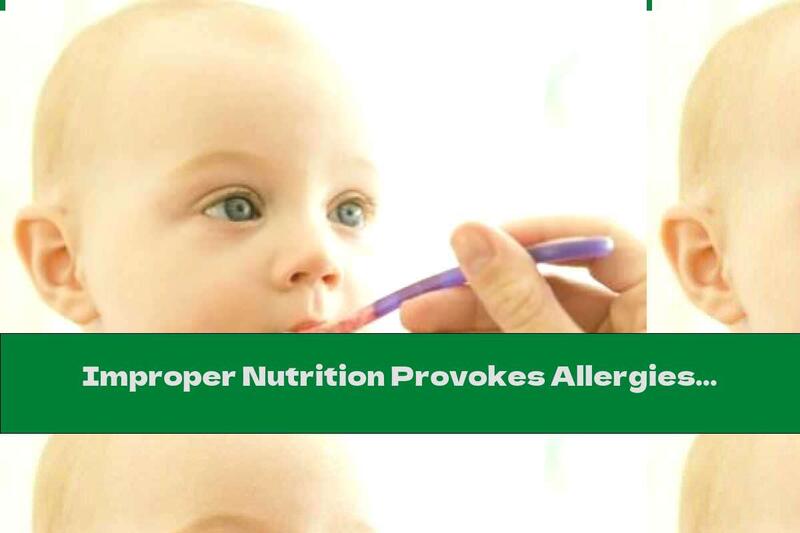
The children's diet must comply with the advice and recommendations of the pediatrician ...
We talk about allergies and obesity in children, and how to deal with the problem, with Dr. Lyubomir Subev, a pediatrician who worked as a neonatologist at the First General Hospital.
The lack of children's and women's counseling is a big problem in raising children. Even when gynecologists and neonatologists are very good, the mother's knowledge and skills in raising the child must be acquired before the baby is born.
It should be noted that there is a clear genetic predisposition to the development of allergies . When one of the parents has a strong allergy to something, the child has a 40% chance of developing the same allergy.
In comparison, with parents without allergies, children are at risk of developing intolerance in 15-20% of cases. If both parents have different allergies, the risk to the child is 65-70%. In case both have the same allergy - the risk for the child is over 85%. The increasing risk of allergic reactions in early childhood and even infancy is mainly associated with total pollution and high levels of contaminants in food, water and air.
The child's body, which has a predisposition and has not yet built a strong immunity, reacts faster and more violently to allergens. Although there are standards for what can be contained in baby food, small doses of heavy metals, bacteria, etc. can be found in some of them.
Parents should be aware of all the risks before the child is born. To reduce the risks of developing allergic reactions, there are certain standards of nutrition and prevention.
To avoid intolerance reactions, it is especially important to feed children from day one. Up to 5 months, babies should be fed only breast milk . Then breastfeeding should continue, with only part of the diet being replaced by new foods.
In children who are considered to have a predisposition to develop allergies, the so -called step-by-step diet is used. Feeding begins after 6 months, and a new product is imported every 5-7 days. This makes it easier to track whether there is an intolerance reaction to new foods. Power is slower, but if a problem occurs, you can respond in a timely manner.
It is important to pay attention to the mother's diet , not only during pregnancy but also during breastfeeding. For example, high-protein foods and high-fat milk should be avoided. Goat products are best because they are closest to breast milk and do not cause allergies. Processed and French cheeses should also not be consumed. Red fruits and honey are also allergens and should be taken very carefully and in small amounts.
Unicef's advice on feeding and raising newborns prohibits the feeding of infants with formula in maternity wards . In Bulgaria, unfortunately, these tips are not followed. It is a common practice in the Bulgarian maternity wards to give formula milk to children who cannot immediately cope with breastfeeding or cry a little.
There is even a link between the feeding of infants with formula and their overweight at a later age.
For several years, the policy of companies producing formula has been to reduce the protein content of milk to 1.2-1.4, as in the past it was around 2.4. This huge reduction in protein content is due to the increased signs of obesity in early infancy.
There are no statistics on childhood obesity in Bulgaria, but it is clear to all specialists that being overweight is a big problem that is getting worse over the years. Overweight and obesity are predisposed to the development of diabetes, cardiovascular disease and metabolic syndrome. Unfortunately, parents still ignore the problem, and weight is the most important indicator of children's health.
The diet must comply with the advice and recommendations of the pediatrician. Parents should not be misled by widespread advice from relatives, newspaper articles and magazines. Under no circumstances should babies be given sugar water, as has been the case in the past.
Related Articles
- The Ultimate Guide to Hickory Smoked Bacon in Nutrition and Healthy Eating
- Fruitskewers in Honey Syrup: Nutritional Benefits and Recipes
- The Ultimate Guide to Buffer 500 in Nutrition: Benefits and Usage
- Nutritional Benefits of Fruit Skewers in Honey Syrup: A Delicious and Healthy Recipe
- Nutrition Guide: Fruitskewers in Honey Syrup - Benefits, Recipes, and More